
Gamescom Awesome Indies 2026 gave strange games room to explain themselves
From political arguments and supernatural hotel renovations to a car controlled by two people making engine noises, Gamescom's indie showcase made specific ideas more important than familiar names.
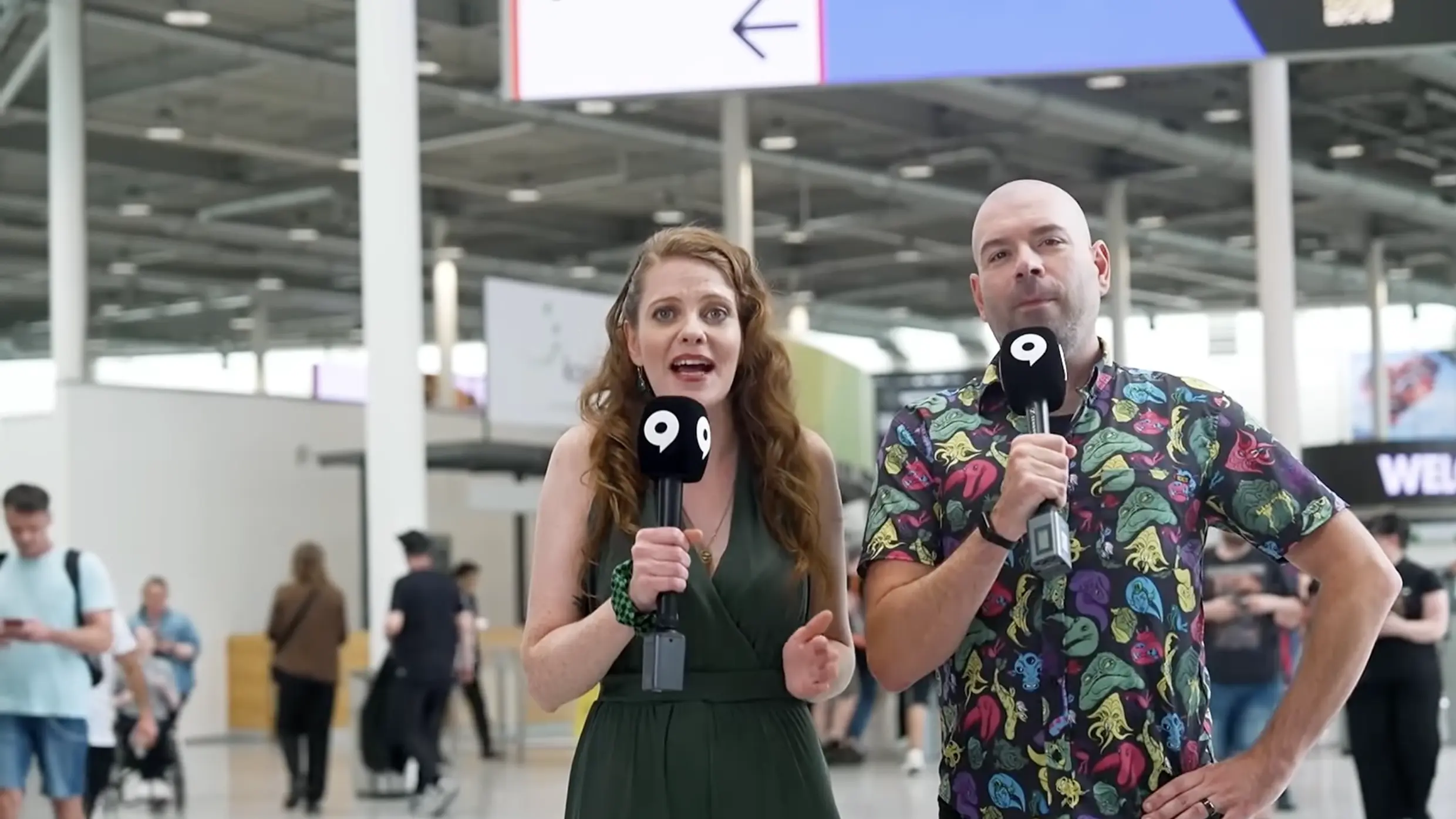
Gamescom Awesome Indies presented 34 games across roughly 76 minutes on August 27, 2026. Hosted by Jane Douglas and Daemon Hatfield, the Gamescom and IGN production mixed new trailers with developer interviews, hands-on impressions and longer explanations of individual mechanics. The result was not simply another rapid list of Steam pages. Games such as Glasshouse, 4 and Dungeon Lurker were given enough time to show why their unusual premises matter in play. The full Gamescom Awesome Indies broadcast remains available through IGN's YouTube channel.
The show also occupied a useful place in Gamescom's crowded schedule. Opening Night Live concentrated on established series changing direction, while the Future Games Show assembled a much broader release calendar. Awesome Indies focused more narrowly on discovery. Several projects already have public demos, others arrived with firm 2026 dates, and the best segments explained a design problem instead of relying on a cinematic promise.
The show treated explanation as part of the reveal
Awesome Indies moved between three formats. Short montages introduced games that could communicate their premise in seconds, including the pinball shooter Appulse and Windows screensaver horror game Pipes.exe. Longer demonstrations examined one defining system, such as 4 allowing players to copy and place physical objects. Interviews from the show floor then connected projects such as About Cannons & Sparrows, Snow Track and Dungeon Lurker to the experiences that shaped them.
That structure prevented the 34-game lineup from becoming completely interchangeable. The developers of About Cannons & Sparrows explained why its tiny cannon believes it is a bird and initially cannot fire. Snow Track became more than a quiet winter sandbox once its solo developer described moving close to the Arctic Circle and building a game about childhood curiosity rather than objectives. Dungeon Lurker used an old game manual and a fictional retro console to carry a much more personal idea about revisiting the work of a lost friend.
The approach did not give every title equal attention. Several games appeared only long enough to establish a genre, setting and release window. However, the longer sections generally earned their place by revealing how the player would interact with the central idea. In a week crowded with trailers, that practical detail was more useful than another claim about an expansive world or emotional story.
The hottest games from Gamescom Awesome Indies 2026
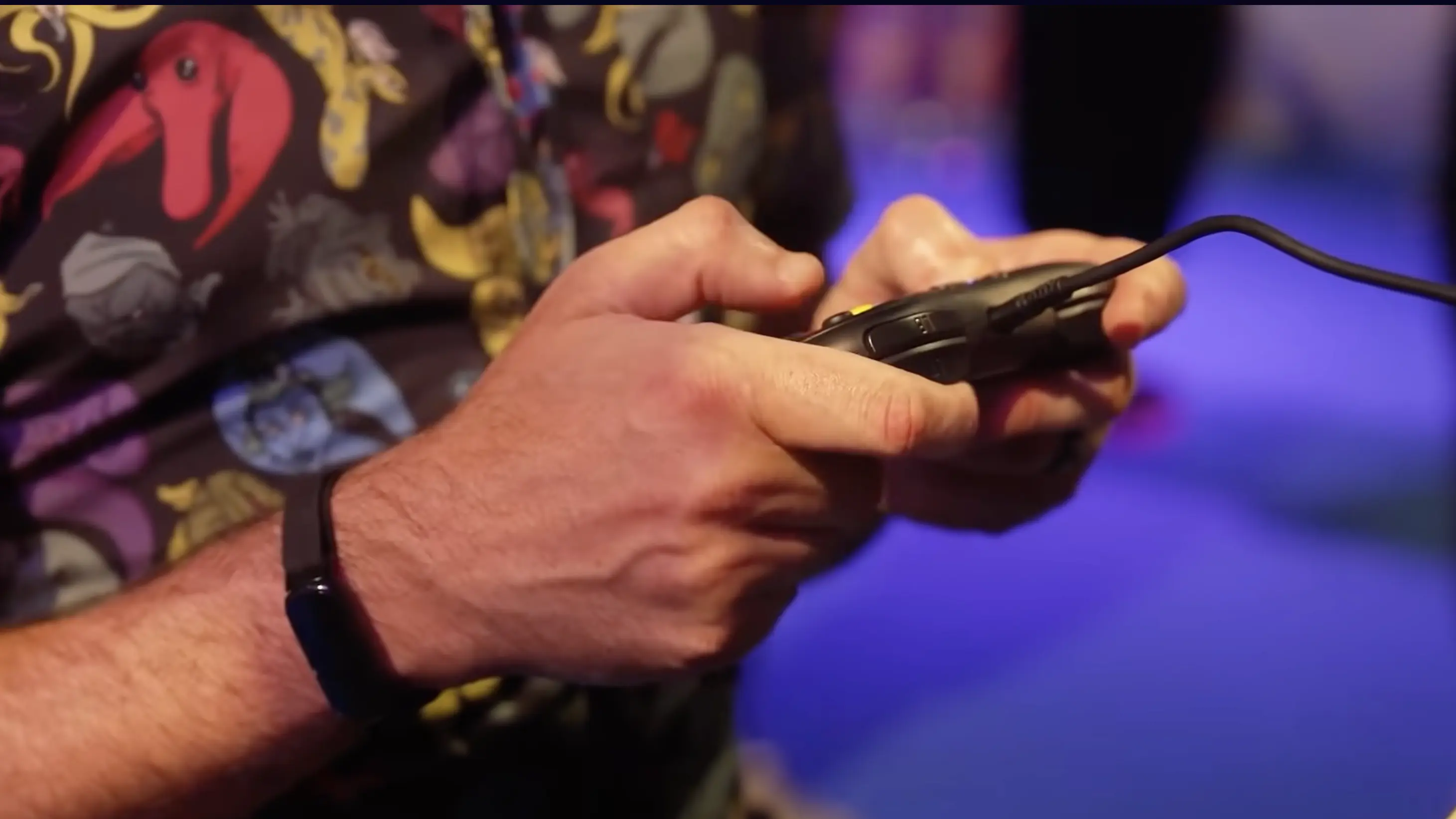
The strongest presentations were not necessarily the largest productions in the show. They were the games that connected an unusual premise to a clear mechanical consequence, then supplied enough footage to test whether the combination made sense. These five left the most complete impression.
Glasshouse makes politics mechanical
Glasshouse is an isometric CRPG set inside an apartment block placed under lockdown at the beginning of a world war. A triple murder provides the immediate mystery, but the demonstration spent more time on the arguments, shortages and competing beliefs developing among the building's residents.
Its turn-based encounters can target physical health or an opponent's willingness to continue. A threat, accusation or ideological argument therefore sits alongside a conventional attack. Characters adopt "points of view" that unlock dialogue options, influence statistics and change how neighbours respond. Supplies can be consumed, shared or used for crafting, turning apparently practical choices into political ones. Developer Flat28 plans to release a new Glasshouse demo in October 2026.
4 turns copy and paste into a stealth tool
4 combines a cinematic side-scrolling structure with a system called N.O.D.E. Protagonist Aila can copy a physical object and place it somewhere else, allowing a light source, platform or electrical component to become part of a solution. Fire, water and electricity continue to interact after an object has moved, so the system is intended to produce several answers rather than one fixed puzzle sequence.
The mechanic supports a dystopian setting consumed by a phenomenon called the Yellow, where light can attract danger as easily as it reveals a route. Optional interventions also let Aila risk herself to help other people. The footage still carried obvious traces of Inside and Limbo, but the object-copying system gave the comparison a meaningful point of difference. A free 4 demo is already available, with the full game scheduled for the fourth quarter of 2026.
There Are No Ghosts at the Grand makes renovation supernatural
In There Are No Ghosts at the Grand, Chris David inherits a dilapidated English hotel and receives 30 days to restore it. Decorating tools repair walls, remove stains and rebuild furniture during the day. At night, the same devices become weapons used against ghosts and the black substance spreading beneath the town.
That overlap is more interesting than simply attaching combat to a renovation game. Restoring a scene can reveal floating memories, turning decoration into an investigative tool. Conversations can also change the lyrics and relationships within the game's interactive musical sequences. The presentation connected the hotel, surrounding islands, wartime secrets and supernatural attacks without fully explaining how the 30-day structure will work. The game enters PC Early Access in December 2026, while a new demo is planned for October before the eventual Xbox, PC and Game Pass release.
INFERIUS deals tarot cards in Hell
INFERIUS combines first-person survival horror with a tarot deckbuilder inside a Hell inspired by Dante and Lovecraft. Exploration requires players to manage sanity, use a lantern and decide when to hide or run from creatures across nine dominions. Major Arcana encounters then shift into card battles fought across three lanes.
The two halves appear deliberately dependent. Risks taken while exploring affect the cards and resources carried into combat, while victories create upgrades for later attempts through Limbo. Horror roguelikes often turn fear into a resource calculation; INFERIUS makes that calculation visible without abandoning first-person pursuit. Lucid Rain Studios currently lists the game for 2027.
Dungeon Lurker hides grief inside a retro roguelike
Dungeon Lurker initially presents itself as a grimy action roguelike running on a fictional 32-bit system. The player battles through more than 30 handcrafted levels, returns to the surface for upgrades and consults a handwritten manual for secrets. The camera can then pull back from the game to reveal the basement and old hardware surrounding it.
13AM Games creative director Alex Rushdy described the project as a way of revisiting games and ideas shared with a childhood friend who later died. That makes the corrupted save data and "digital ghost" more than a retro-horror trick. The combat still has to carry the experience, but the presentation gave its metanarrative a reason to exist. A Dungeon Lurker demo is available on Steam, while the final release remains undated.
Every other game shown at Gamescom Awesome Indies 2026
The remaining 29 entries covered racing, management, horror, role-playing games and several projects that resist a simple label. Listed in the order they appeared, these were the other announcements and updates in the broadcast.
- Neon Hyperdrive is a rhythm racer built around drifting, surfing and flying through synth-driven courses; its Gamescom demo is available on Steam.
- Chronoscript: The Endless End moves an editor trapped inside an unfinished manuscript between a three-dimensional manor and the two-dimensional pages hidden within it.
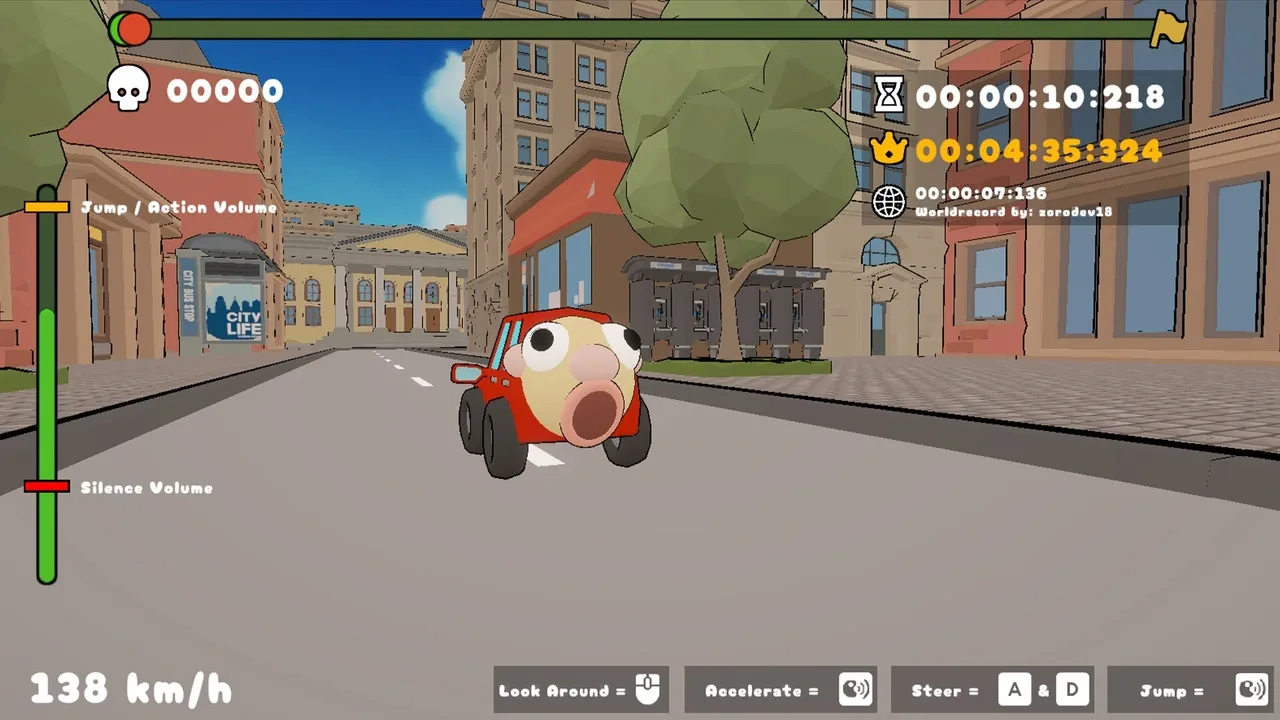
- CAAAHR asks two players to control one small car through timing, cooperation and vocal engine noises, with its Steam launch set for November 2, 2026.
- Cat Secretary follows an office cat completing administrative work by day and investigating a corporate AI replacement plot by night.
- TANUKI: Pon's Summer turns deliveries across a Japanese town into a summer adventure filled with minigames, friendships and a festival deadline.
- About Cannons & Sparrows is a Metroidvania about a cannon raised by birds that must initially solve problems without firing itself.
- Far Far West: Frostburn adds the Hellfire map, ice magic, new weapons and more than 30 Jokers to the cooperative Western roguelite.
- Appulse combines a top-down roguelite shooter with pinball, letting every projectile ricochet through arenas filled with bumpers and targets.
- SacriFire blends pixel art, a hybrid real-time and turn-based combat system, and music from Motoi Sakuraba in a 2026 role-playing game.
- Deadly Days: Roadtrip sends survivors across a zombie-filled map to gather fuel, weapons and supplies before returning to an upgradable bus.
- Dead Root shrinks its world to insect scale and follows a snail warrior named Kitt through battles against enormous bugs.
- Inkblood casts the player as an inquisitor following a trail of murders, a missing predecessor and evidence of a hidden cult.
- CONQUISTA: Tide of Wills combines colony management and 4X strategy with citizens who pursue jobs, desires and ambitions of their own.
- NINE ROUNDS RAPID is a hand-painted twin-stick action roguelike with time manipulation, nine stages and solo or cooperative play planned for 2027.
- Food Truck Empire turns cooking into an automation and management problem as the player expands from one vehicle into a wider food business.
- Odd Town places small jobs, suspicious residents and a stolen sandwich inside a compact first-person town when it launches in September 2026.
- Cairn – On the Trail: Deep Water adds Marco, three climbing locations and an energy mode through free DLC that launched on August 13.
- Future? No Thanks! follows an elderly resident finishing a bucket list before scheduled euthanasia in an apparently successful ecosocialist future.
- Duskfade is an action platformer set in a clockwork world, with Zirian attempting to rescue his sister; it launched on August 13, 2026.
- Pipes.exe turns the old Windows pipes screensaver into a one-to-four-player horror game about testing a dangerously broken operating system.
- Wishseeker is a fast turn-based tactical roguelite in which players assemble and reposition a four-character party against escalating encounters.
- Snow Track is a quiet winter sandbox about a child exploring, building and throwing snowballs without a score-driven objective, currently planned for 2027.
- SATED is a horror cooking roguelite set on a tram moving through a decaying megastructure, where eldritch passengers must be fed.
- Deck of Memories sends a lighthouse keeper through diorama-like memories of his grandfather in a deckbuilding adventure planned for 2027.
- Book Nook provides a miniature diorama builder for arranging tiny rooms, shelves and stories, with a public demo already available.
- AGNI: Village of Calamity is an Indonesian survival horror game about an investigator searching a remote village for her missing partner.
- Usual June combines third-person combat, a supernatural conspiracy and conversations with ghosts; it launches on PC on October 28, 2026.
- Isle Goblin lets one player or a group of up to eight goblins rebuild an island town, explore dungeons and push back human occupiers.
- Being & Becoming is an atmospheric Metroidvania about challenging a prophecy within a dying kingdom sustained by a collective dream.
Several announcements can be played now
The most useful part of the broadcast was the number of ideas that did not require faith in a distant trailer. At the time of publication, demos are available for Neon Hyperdrive, Chronoscript: The Endless End, Cat Secretary, Appulse, Food Truck Empire, Future? No Thanks!, 4, Book Nook, Usual June, Being & Becoming and Dungeon Lurker. That selection covers almost every major format in the show, from management and rhythm racing to horror and action adventure.
Two other presentations concerned content that is already out. Cairn received the free On the Trail: Deep Water DLC on August 13, and Far Far West released its Frostburn update alongside the broadcast. Duskfade also launched earlier in August. These segments were reminders rather than promises, which made their inclusion more practical than a release window with no playable build.
The next cluster arrives quickly. Odd Town is due in September. Glasshouse and There Are No Ghosts at the Grand plan new demos for October, while Usual June launches on October 28. CAAAHR follows on November 2, and There Are No Ghosts at the Grand is targeting PC Early Access in December. 4 is also scheduled for the fourth quarter of 2026.
Gamescom Awesome Indies did not produce one announcement large enough to define Gamescom week. That was part of its value. It gave 34 smaller projects a shared stage, then allowed the most distinctive of them to demonstrate an argument system, a supernatural renovation tool or an object-copying device. The broadcast worked best as an invitation to test those ideas, not merely add another distant name to a wishlist.
Tagged In
Discussion
0We want to hear from you. Share your perspective in the comments below, and please keep the conversation respectful.
Log in to join the discussion - vote, reply, and share your take.
Log In