
Former Dragon Age Boss Says EA's Financial Pressure Left BioWare With Bad Choices
On the Pembridge podcast, Mark Darrah said BioWare kept its decision-making authority but had little room to pursue alternatives.
Former Dragon Age executive producer Mark Darrah believes some of BioWare's most controversial development decisions were driven by pressure from Electronic Arts. The veteran developer argues that EA's financial demands repeatedly left the studio choosing between bad options, even when BioWare technically had the freedom to make its own decisions.
Speaking on the Pembridge podcast released on November 20, Darrah reflected on the circumstances surrounding Dragon Age II, BioWare's adoption of the Frostbite engine and the release of Anthem. His comments come a month after EA announced the studio's closure.
EA's Financial Demands Influenced BioWare's Biggest Decisions

According to Darrah, EA expected BioWare to meet its financial targets without necessarily dictating how the studio should achieve them. Bringing forward major projects such as Mass Effect was not always realistic, leaving the developers searching for alternatives.
Darrah used Dragon Age II as an example. A delay to Star Wars: The Old Republic left BioWare needing another release to meet its financial targets. EA did not explicitly instruct the studio to develop the sequel, but it expected BioWare to find a solution.
Darrah also identified BioWare's adoption of EA's Frostbite engine and its decision to ship Anthem as examples of choices influenced by the publisher's financial expectations. In his view, BioWare retained decision-making authority but had little room to pursue alternatives.
Darrah argued that BioWare had several undesirable choices available and ultimately selected what it considered the least damaging option. He acknowledged that the consequences of refusing EA's demands were never entirely clear. However, the situation appeared serious enough at the time that BioWare felt compelled to act.
Dragon Age and Mass Effect Left Little Room for Other Projects
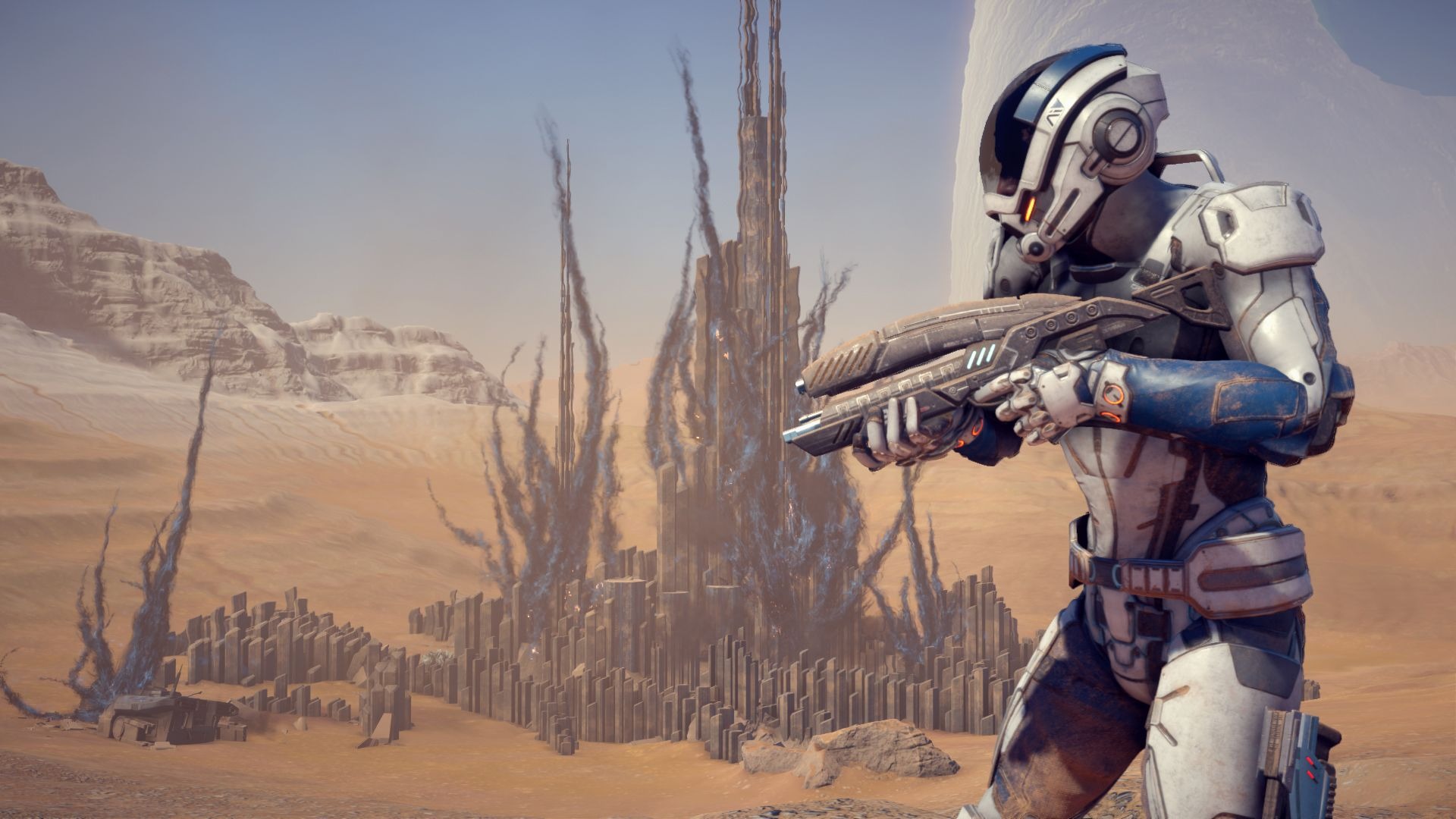
Darrah recalled that BioWare could previously recruit more developers when its projects needed additional resources. After joining EA, expanding one development team increasingly came at the expense of another.
According to Darrah, BioWare abandoned projects such as Revolver, which had originally begun as a sequel to Jade Empire. The studio also lost its handheld development group as resources were redirected towards Dragon Age and Mass Effect.
Darrah believes the studio's approach became increasingly difficult to sustain as development budgets grew. He pointed to Battlefield 4 and The Sims 4 as examples of games that benefited from developers remaining focused on improving them after launch.
BioWare faced a different situation. Darrah recalled that the next Dragon Age project needed additional developers after Mass Effect: Andromeda launched, creating competition for the resources that could have been used to improve the latter.
Darrah believes BioWare's failure to adapt its development model to EA's financial constraints contributed to these difficulties.
EA Cancelled the Next Mass Effect Game Alongside BioWare's Closure
EA announced BioWare's closure on October 21, ending more than three decades of development at the studio behind Dragon Age and Mass Effect. The publisher also cancelled the next Mass Effect project, which was still in early development under a small team.
EA attributed the decision to its broader strategy of concentrating investment on fewer large-scale action-adventure projects. Darrah's comments offer a former developer's perspective on the difficulties BioWare faced before that decision.