
Need for Speed Underground 2 Still Captures the Street Racing Atmosphere
Need for Speed Underground 2 still delivers deep tuning, arcade racing, and unforgettable style, even if Bayview makes its career feel slow.
More than two decades later, Need for Speed Underground 2 still impresses with its customization and atmosphere, although its open world clearly slows down the career.
I remember Need for Speed Underground 2 as a game in which even buying a new bumper felt like an important event. Returning to Bayview after more than two decades quickly reminded me why. A car is not merely a tool for winning races here. It is a project that develops from an unremarkable vehicle into a dream machine.
EA Black Box's game still has a strong identity, excellent customization, and an enjoyable driving model. Its career pacing has aged less gracefully. Bayview can look spectacular under its neon lights, but it too often makes you travel through the same streets without a meaningful purpose. Underground 2 remains one of the most distinctive Need for Speed games, although it is now easier to see how its greatest innovation also became the source of its most serious problems.
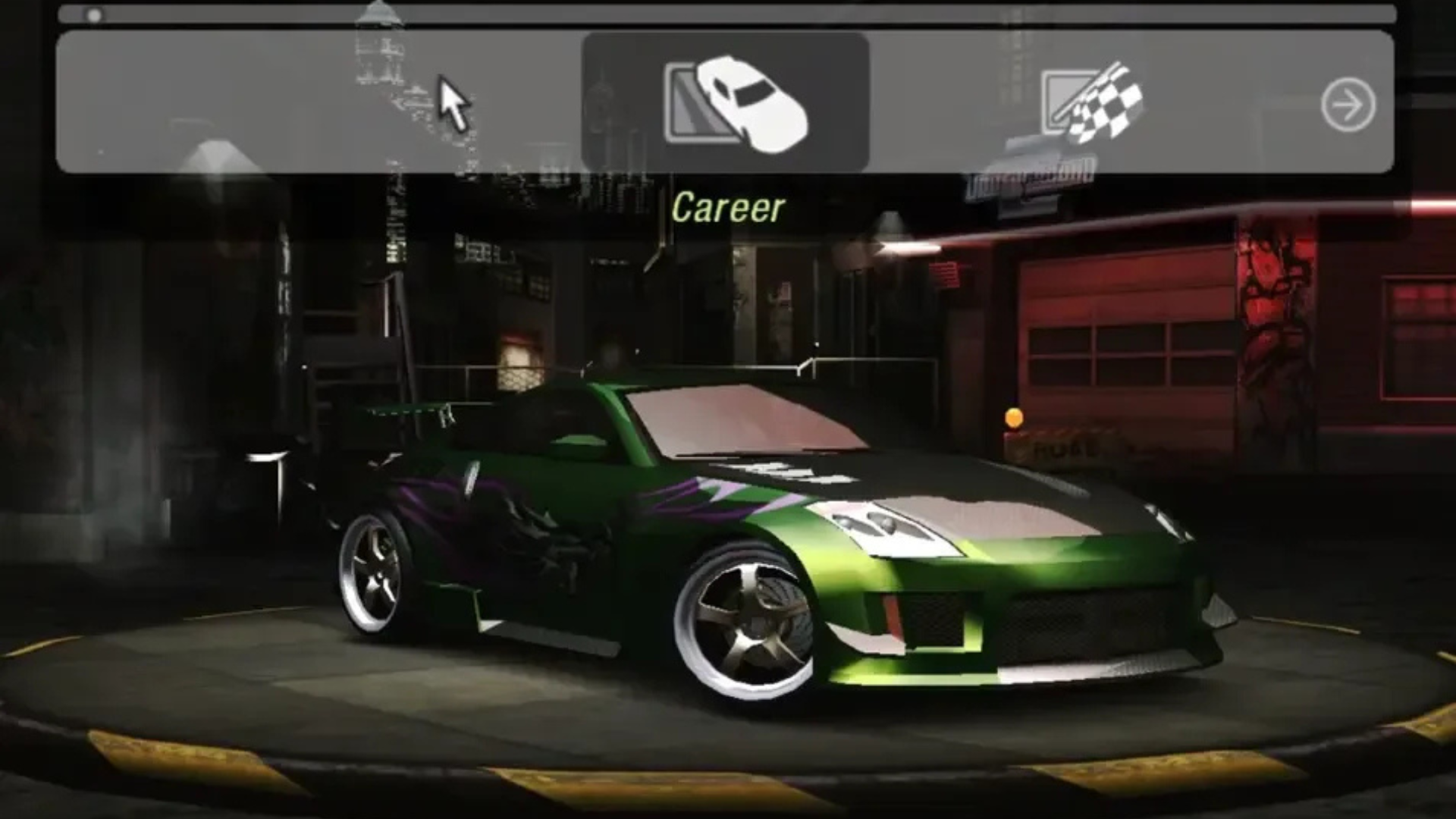
The first Underground moved from one event to the next through a traditional menu. The sequel brought street racing into the open world of Bayview. To enter an event, you first need to find its icon on the map and drive to the starting line. In 2004, this idea created the impression of participating in a nighttime tuning scene instead of simply selecting another track from a list.
The city is divided into districts with distinct identities. The downtown area is filled with wide streets, Beacon Hill runs through tighter urban spaces, and Jackson Heights offers races along winding mountain roads. Everything remains covered in darkness. Wet asphalt reflects the neon lights, workshops hide down side streets, and traffic can turn a quiet drive into a series of sudden evasive maneuvers.
The problem becomes apparent after a few hours. The game lacks a convenient option to travel directly to a selected event. Reaching many races requires driving through locations you have already seen numerous times. Bayview also offers few interesting activities beyond events, shops, and collectibles. The city looks good, but it feels more like an elaborate corridor connecting map icons than a space filled with surprises.
Customization Remains the Game's Greatest Strength
Customization remains the strongest part of Underground 2. The game lets you replace bumpers, side skirts, hoods, spoilers, rims, mirrors, headlights, and exhaust tips. You can also add paint, vinyls, decals, neon lights, tinted windows, hydraulics, and trunk equipment. I could even install speakers and amplifiers that I would barely see afterward. They did not improve performance, but they helped create a car suited to the exaggerated tuning culture of the early 2000s.
Modern racing games offer more detailed editors, but they do not always make modifications feel as meaningful. New parts unlock gradually in Underground 2. Every visit to a shop therefore provides a reason to stop and see what can be changed. By the end of the career, the car itself clearly reflects the journey it has taken.
Mechanical upgrades are equally extensive. The engine, transmission, suspension, brakes, tires, turbocharger, and nitrous system all affect how the car behaves. The dyno allows you to adjust settings including gear ratios, aerodynamics, brake balance, and turbo response. You do not need to explore these options in depth to finish the game, but the ability to prepare a car specifically for drifting or drag racing remains impressive.
The Arcade Handling Is Fun, but the Racing Becomes Repetitive
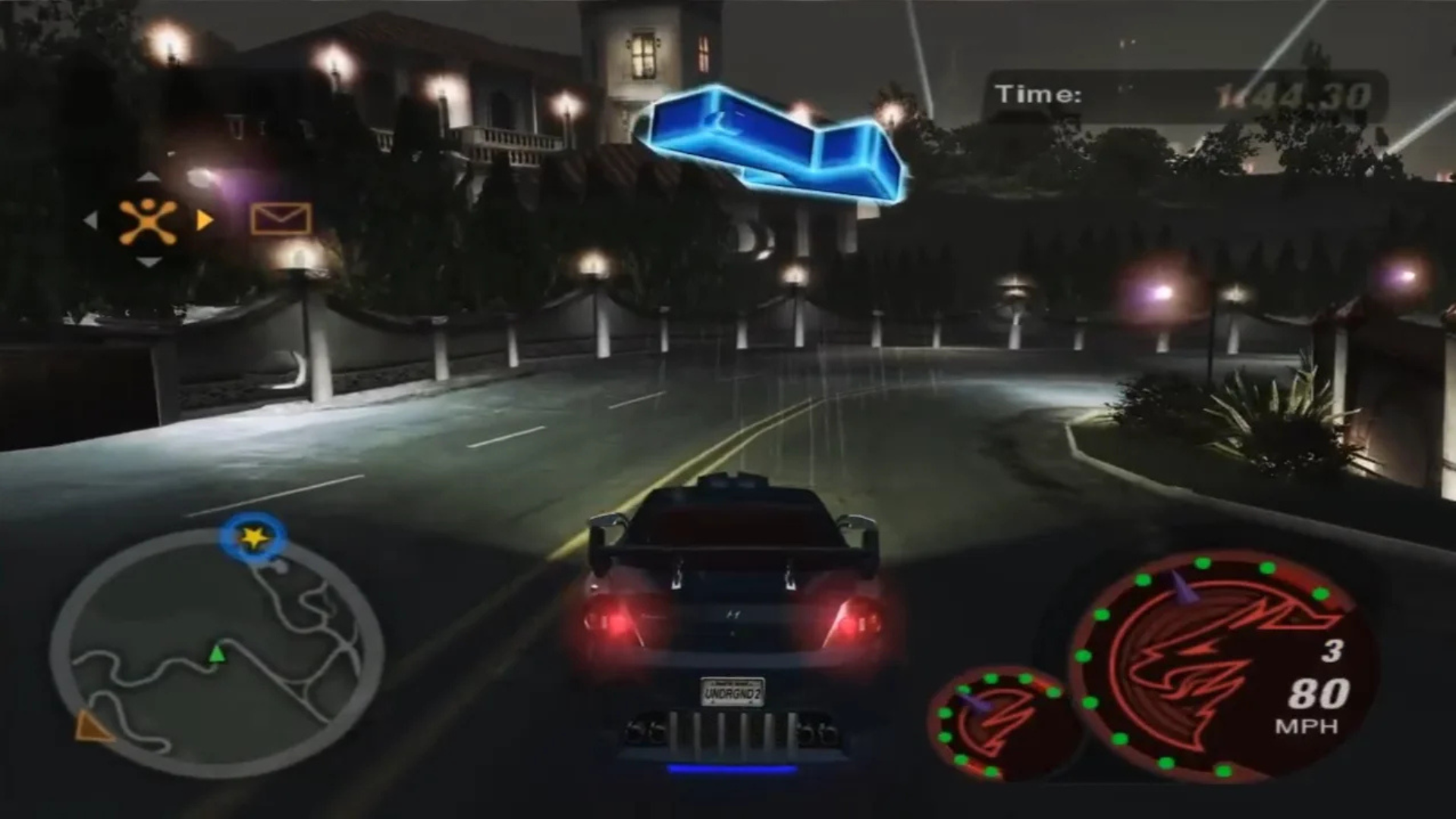
The handling makes no attempt to be realistic. Cars respond quickly to steering, tolerate contact with walls, and allow you to correct your line at the last moment. The differences between front-wheel, rear-wheel, and all-wheel drive are noticeable without requiring an understanding of advanced physics. This makes the game easy to pick up, while performance upgrades genuinely change the pace of its races.
Sprint and traditional circuit events remain the highlights. Their routes run through the streets of Bayview, make use of shortcuts, and regularly force you to react to traffic. Nitrous can be replenished while driving by drifting, traveling against traffic, and narrowly passing other vehicles. This encourages risk-taking instead of calmly protecting a lead.
The individual modes create noticeably different rhythms. Street X moves the competition onto short, narrow circuits where controlling the car without nitrous becomes essential. Drift rewards long, smooth slides. Drag races require manual gear changes and quick reactions to obstacles, while Underground Racing League tournaments introduce larger fields and a points system.
Not every design choice has aged well. The AI can suddenly erase a significant deficit before making a simple mistake just before the finish line. Traffic sometimes appears in positions that almost guarantee a collision. SUVs sound like an interesting addition, but they feel heavy to drive and never develop a distinct style of competition. Repetition, however, remains the greatest opponent. The career is long, and each new race becomes less likely to introduce anything different.
The Game's Style Has Aged Better Than Its Story
Underground 2 draws heavily from the street-tuning culture popular during the first half of the 2000s. Licensed parts, comic-book cutscenes, sponsors, magazine covers, and a distinctive soundtrack create a coherent vision of that world. Even the interface looks like a product of a particular era. It makes no attempt to appear elegant or understated. It is supposed to feel fast, loud, and slightly excessive.
The story is far weaker. The protagonist arrives in Bayview after the events of the first game, meets Rachel Teller, and gradually enters into a conflict with Caleb Reece. The narrative mainly serves to connect the different stages of the career. Characters appear too rarely to develop interesting relationships, while the messages you receive provide little reason to care about the rivalry between the crews. Brooke Burke gives Rachel a recognizable personality, but even she primarily serves as a guide to the game's systems.
The audio makes up for some of these shortcomings. Tracks by Snoop Dogg, The Doors, Queens of the Stone Age, Rise Against, and Killing Joke complement nighttime drives perfectly. Cars sound aggressive, and installing new parts changes their voices. The visuals reveal their age through simple character models, repeated city elements, and sparse traffic. Even so, Bayview can still create striking scenes through its colors, reflections, and consistently maintained nighttime setting.
Is Need for Speed Underground 2 Still Worth Playing?
Need for Speed Underground 2 still delivers enjoyable arcade driving and makes developing your own car enormously satisfying. Customization is not an extra feature opened for a few minutes between races. It forms the foundation of the entire career and provides the main reason each victory matters. Bayview and its soundtrack also create a style unlike anything found in a modern racing game.
New players will need to accept the slow pacing, mandatory travel, inconsistent AI, and a system that forces them to install highly rated visual parts. This is not a perfectly preserved classic. It is still worth experiencing, however, to understand why open worlds and extensive customization later became so important to the genre. Beneath the nostalgia remains a very good racing game that shines brightest when it lets you decide what the next night in Bayview should look like.
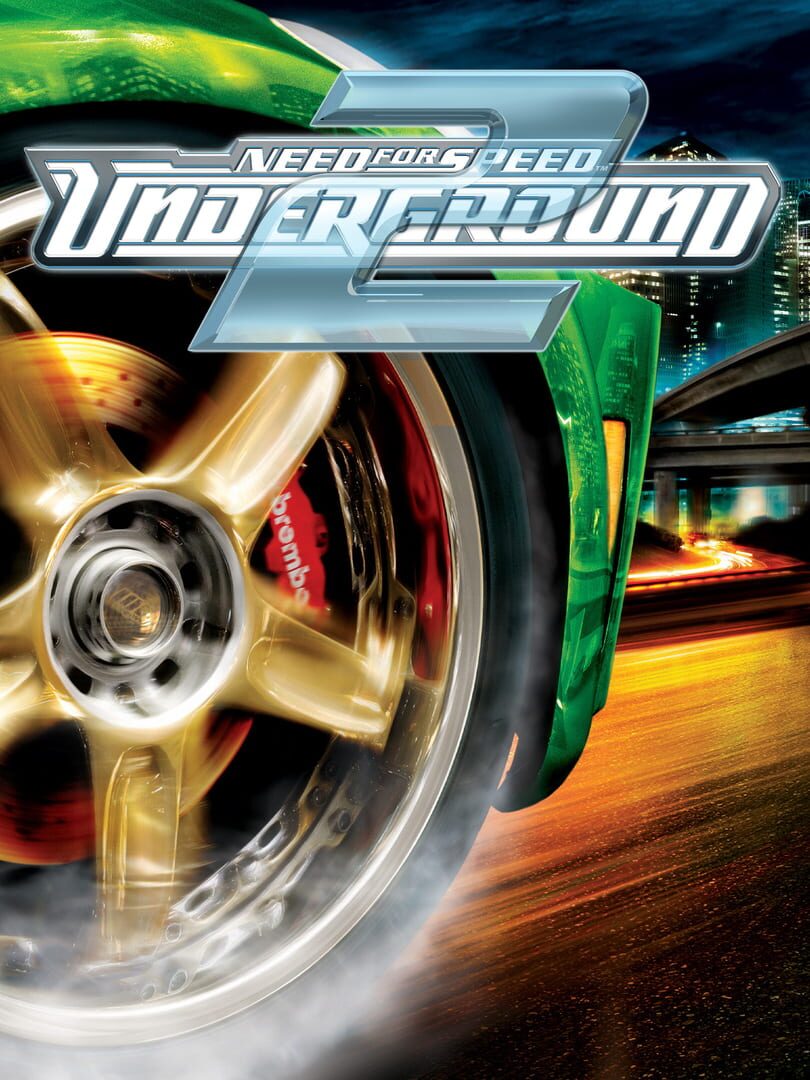
Need for Speed: Underground 2 is a street racing game and the first entry in the series to feature an open world environment. Set in the fictional city of Bayview, players drive freely between events while building their reputation through circuit, sprint, drift, drag, and Street
Released
November 9, 2004
Developer
EA Black Box
Publisher
Electronic Arts


Tagged In
Discussion
0We want to hear from you. Share your perspective in the comments below, and please keep the conversation respectful.
Log in to join the discussion - vote, reply, and share your take.
Log In