Valve Changed the Entire PC Gaming Market
Discover how Valve transformed PC gaming through Half-Life, Counter-Strike, Steam, Source, and Steam Deck while also shaping modern esports.
From Half-Life and Portal to Steam and Steam Deck, Valve has repeatedly created products that changed the entire industry.
At first glance, Valve stands out from the largest publishers because of how few games it releases. Despite this, it remains one of the most influential companies in the industry. Its games demonstrated how to tell a story without taking control away from the protagonist. Valve also transformed mods into globally recognized titles that helped establish the foundations of modern esports.
Games, however, are only part of the story. Valve also controls Steam, develops its own engines, and creates hardware for PC gaming. The company can disappear for years, abandon a promising idea, or leave a popular series without a sequel. When it returns with the right project, it often pushes the boundaries of what audiences can expect from PC gaming.
Valve Key Facts
- Full name: Valve Corporation
- Founded: 1996
- Founders: Gabe Newell and Mike Harrington
- Headquarters: Bellevue, Washington
- First game: Half-Life, released in 1998
- Most important franchises: Half-Life, Counter-Strike, Portal, Dota, Team Fortress, and Left 4 Dead
- Digital platform: Steam
- Game engines: Source and Source 2
- Most important hardware: Steam Deck, Valve Index, Steam Controller, and Steam Link
- Game currently in development: Deadlock
- Main areas of operation: Games, digital distribution, technology, and hardware
Half-Life Showed That a Shooter Could Tell a Story Without Interrupting the Game

Valve began its history with an exceptionally ambitious project. Released in 1998, Half-Life did not separate its story from the gameplay with traditional cutscenes. Gordon Freeman witnessed the Black Mesa disaster from his own perspective, while the narrative developed through exploration, combat, and scripted events. The game felt like one uninterrupted experience.
Half-Life 2 expanded on this idea in 2004. Facial animation, physics, and interactions with the world were not merely technical demonstrations. They brought City 17 to life, helped tell its story, and regularly provided the foundation for puzzles. Valve connected the game's release with the Source engine and the continued development of Steam. As a result, one project simultaneously promoted a new game, new technology, and a new method of distribution.
Valve Can Turn Community Ideas Into Major Franchises
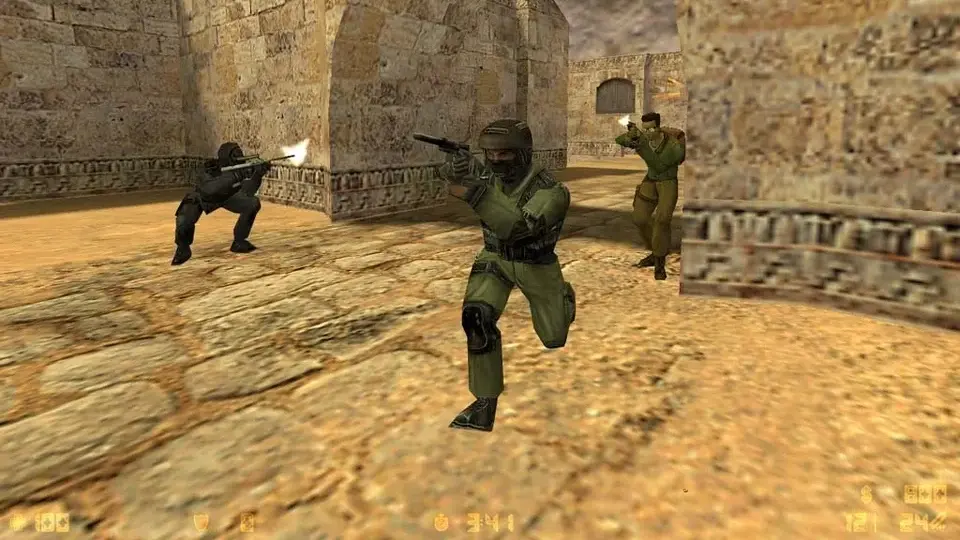
The company quickly recognized that its next important games did not need to originate entirely within its own offices. Counter-Strike began as a mod for Half-Life. Valve later hired its creators and developed the project into a standalone series that is now one of the defining names in esports. Similar openness can be seen in the histories of Team Fortress, Dota 2, and Portal, whose foundations were created by the student team behind Narbacular Drop.
Each of these franchises approached game design differently. Counter-Strike built tension around short rounds and the absence of respawns. Dota 2 created one of the most important esports ecosystems in the world. Portal turned a simple mechanic into a series of puzzles, memorable characters, and one of gaming's most distinctive styles of humor.
Steam Became More Important Than Any Single Release

Steam launched in 2003 as a tool for updating and distributing games. Over time, it became the central hub of PC gaming. Account-based libraries, automatic updates, cloud saves, Steam Workshop, user reviews, and tools for developers changed how games are purchased, developed, and discovered.
The platform's success also changed Valve itself. The company does not need to maintain a regular release schedule to remain an important part of the industry. This gives it the freedom to experiment, but it can also become a source of frustration. Fans wait years for the return of Half-Life, Portal, or Left 4 Dead, while some projects never progress beyond the prototype stage.

Valve Continues to Choose Technology Over Predictability
Half-Life: Alyx demonstrated in 2020 that Valve could still create a groundbreaking game when it found a technology worth exploring. The project was designed from the ground up for virtual reality and treated hand movement, physical space, and direct interaction as fundamental parts of the gameplay.
Steam Deck made a similar move in hardware. The handheld PC combined the Steam library, SteamOS, and support for PC games in a console-like device. Not all of Valve's earlier experiments, including the original Steam Machines concept, achieved similar success. Each one, however, provided knowledge that could be applied to later products.
Valve continues to support Counter-Strike 2, Dota 2, and Team Fortress 2, while Deadlock remains in limited testing at an early stage of development. The company does not operate like a typical developer, which is precisely why its next move is so difficult to predict. Its greatest achievement is not any single franchise. It is the ability to combine games, technology, and communities into systems that the rest of the industry eventually begins to follow.
Tagged In
Discussion
0We want to hear from you. Share your perspective in the comments below, and please keep the conversation respectful.
Log in to join the discussion - vote, reply, and share your take.
Log In