
Capcom Keeps Reinventing Its Biggest Franchises
Explore how Capcom shaped gaming with Resident Evil, Street Fighter, Monster Hunter, bold remakes, and a constant drive to reinvent its biggest series.
From Street Fighter II and Resident Evil to Monster Hunter Wilds, Capcom has spent more than four decades creating games that change the rules of entire genres.
Capcom is both a developer and a publisher. The company builds its own franchises, develops most of its major games internally, and controls how they reach its audience. As a result, its logo has become almost as recognizable as the characters appearing on its covers.
However, Capcom's greatest strength is not simply the number of popular franchises it owns. The Japanese company has repeatedly shown that it is willing to abandon a proven idea when it stops working. Resident Evil has changed its perspective and pacing, Monster Hunter opened itself to a global audience, and Street Fighter 6 was designed to welcome new competitors instead of driving them away.
A Closer Look at Capcom
- Country of origin: Japan
- Founded: 1979
- Began operating under the Capcom name: 1983
- Headquarters: Osaka, Japan
- Founder: Kenzo Tsujimoto
- CEO: Kenzo Tsujimoto
- President and COO: Haruhiro Tsujimoto
- Major franchises: Resident Evil, Monster Hunter, Street Fighter, Mega Man, Devil May Cry, and Ace Attorney
- Other notable franchises: Dragon's Dogma, Dead Rising, Onimusha, Okami, Dino Crisis, and Marvel vs. Capcom
- Biggest franchise: Resident Evil, with more than 213 million copies sold
- Best-selling individual game: Monster Hunter: World, with 22.4 million copies sold
- Best known for: Action games, survival horror, fighting games, demanding boss battles, and bold remakes of classic titles
From Arcades to Home Consoles
Capcom's history dates back to 1979, when Kenzo Tsujimoto founded a company specializing in electronic game machines. Capcom began operating in 1983, with its name derived from the term "Capsule Computers."
Its first successes came in arcades. Vulgus, 1942, and Ghosts 'n Goblins were built around simple rules, high difficulty, and controls that encouraged another attempt. Capcom later drew on that experience when moving into the home console market. Released in 1987, Mega Man showed that the studio could combine precise action with colorful characters and a world suited to expansion through sequels.
Street Fighter II and Resident Evil Changed the Industry
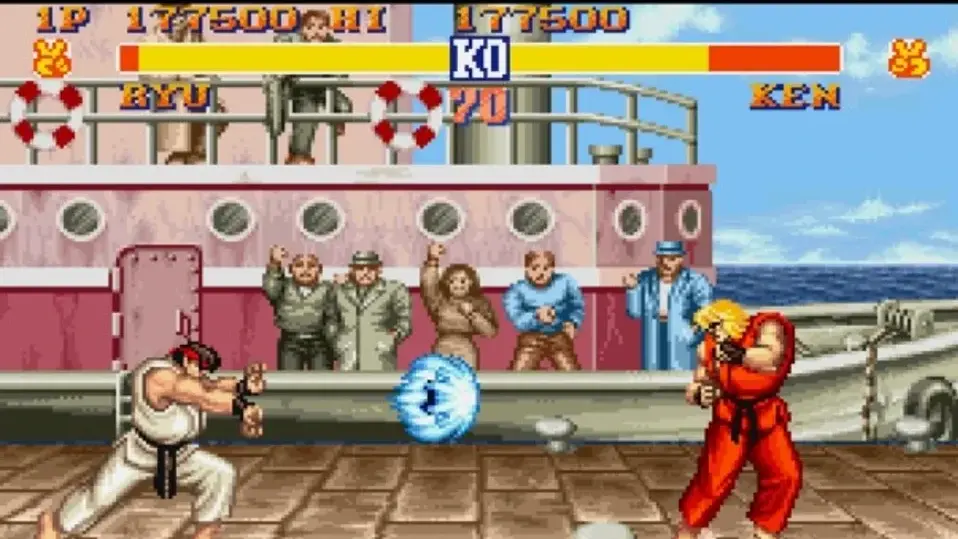
Street Fighter II was not the first fighting game, but in 1991 it established rules that still shape the genre today. Each character had a distinct style, special moves, and weaknesses. Combat was no longer just about pressing buttons as quickly as possible. Players had to understand spacing, timing, and their opponent's behavior.
Arcades became competitive gathering places, while tournaments organized by Capcom anticipated the later rise of esports. The Street Fighter series has sold 60 million copies and remains one of the pillars of the fighting game scene.
In 1996, Resident Evil helped popularize the term survival horror. Limited ammunition meant that encounters with zombies did not always end in a gunfight. Locked doors, fixed camera angles, and restricted inventory space created tension even when no monsters were visible on screen.
Capcom Found Many Ways to Create Action
Devil May Cry grew out of one of the rejected concepts for Resident Evil 4. Instead of making another horror game, Capcom created a title in which the style of defeating enemies mattered. Its scoring system rewarded varied attacks and encouraged players to master combat, influencing the development of the genre now known as character action.
Monster Hunter adopted a completely different pace. Success required observing the monster, preparing equipment, and choosing the right moment to attack. Cooperative hunts helped the series become a phenomenon in Japan, while Monster Hunter: World introduced the formula to a global audience. The franchise has now sold 131 million copies.
Capcom has also moved beyond traditional action games. Ace Attorney turned witness testimony into a series of logical duels, Okami made painting central to its gameplay, and Dragon's Dogma introduced a companion system that allowed players to share their followers with others.
A Remake Does Not Have to Be a Copy
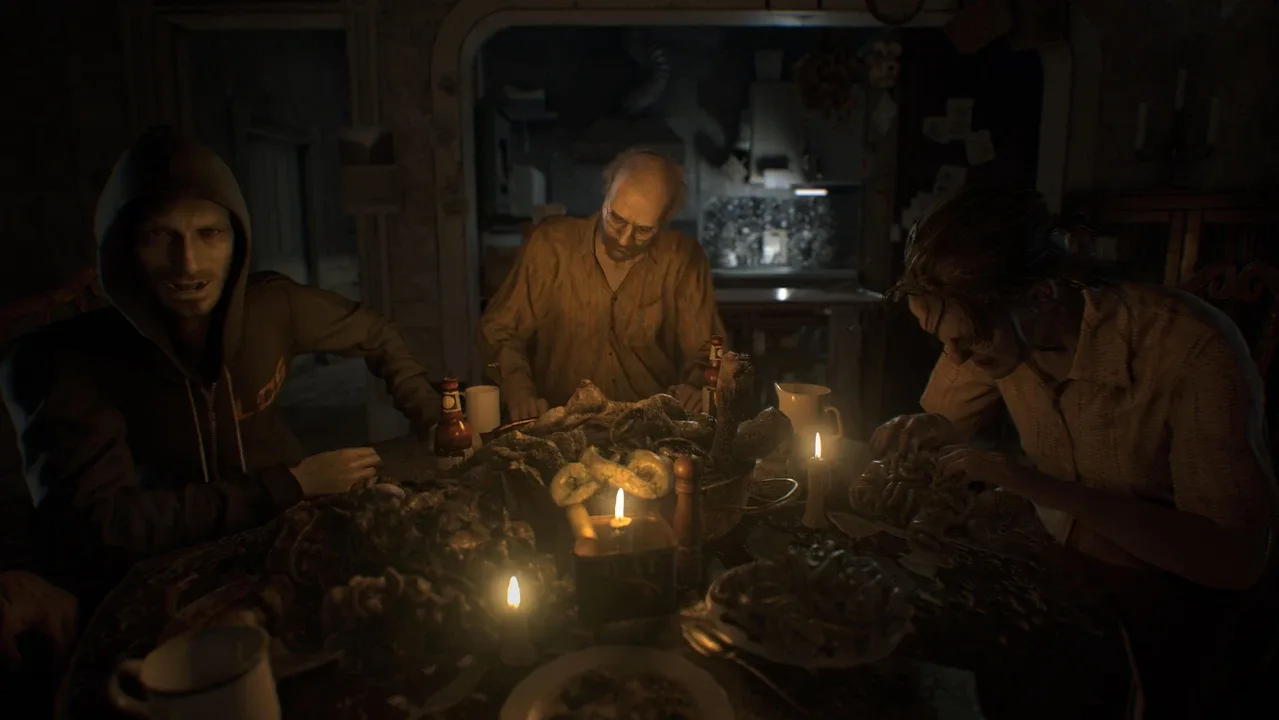
At the beginning of the previous decade, some of Capcom's biggest franchises had lost their sense of direction. The turning point came with Resident Evil 7 in 2017. Its first-person perspective and smaller scale restored the horror's sense of danger. The game also introduced the RE Engine, which became the technological foundation for the company's subsequent releases.
Resident Evil 2 later demonstrated what a modern remake could be. Capcom retained Raccoon City, its characters, and the key events, but rebuilt the controls and encounter design. The subsequent success of Devil May Cry 5, Monster Hunter: World, and Street Fighter 6 confirmed that returning to a familiar franchise does not have to mean copying the past.
This strategy delivered 13 consecutive years of operating profit growth. Released in 2026, Resident Evil Requiem sold eight million copies in its first four months, taking the franchise beyond 213 million total sales.
Capcom Continues to Influence New Games
The company's influence can be found in almost every modern survival horror game, fighting game, and action title that rewards stylish combinations. Capcom was not always the first to come up with a particular idea. However, it often refined that idea until it became a model for the rest of the industry.
The return of Onimusha and other classic franchises shows that the company still has an enormous archive to explore. At the same time, new titles such as PRAGMATA demonstrate that it does not want to build its future entirely on nostalgia. Capcom's history is filled with zombies, monsters, and street fighters, but its most important quality remains a willingness to change the rules before the next round begins.
Tagged In
Discussion
0We want to hear from you. Share your perspective in the comments below, and please keep the conversation respectful.
Log in to join the discussion - vote, reply, and share your take.
Log In