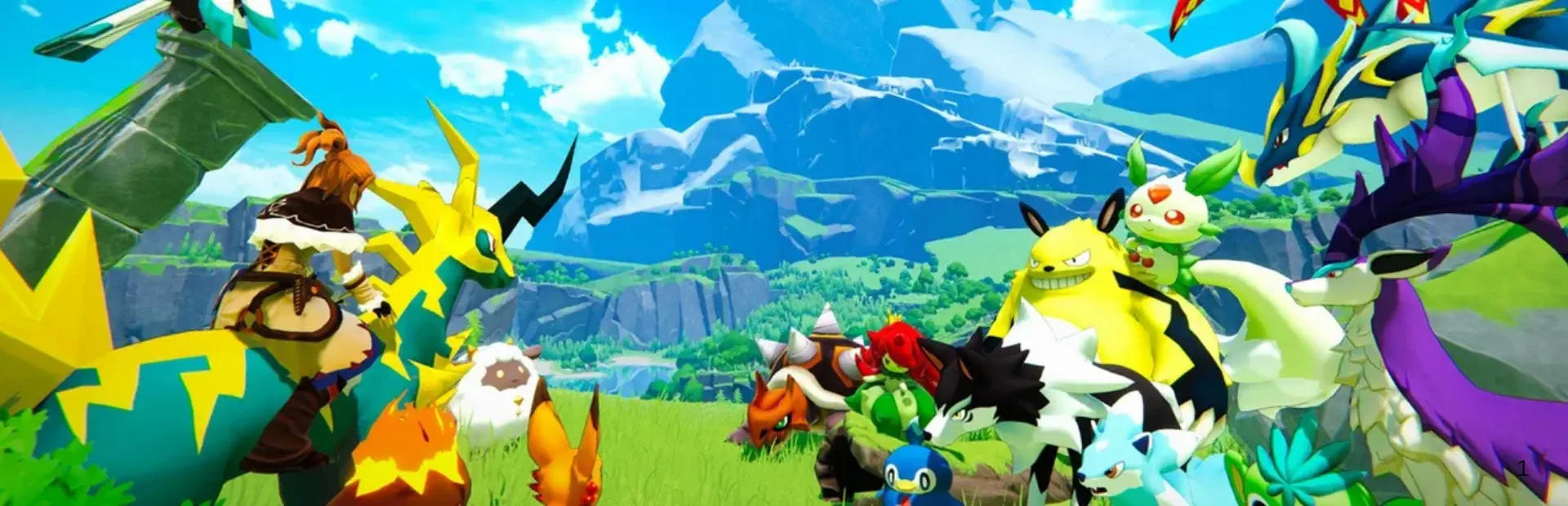
Credit: Pocketpair
featureReview
Palworld 1.0 Shows the Two and a Half Year Wait Was Worth It
July 10, 2026·7 min read
Palworld entered Early Access in January 2024 and turned into an internet phenomenon within days. Mostly on the strength of one simple, effective pitch: Pokemon with guns. I sat down with version 1.0, which closes out more than two years of Early Access, with a fair amount of skepticism. The first reviews back in 2024 described the game as a strange mix of cute critters and ruthless survival that didn't quite know what it wanted to be. After dozens of hours with 1.0, I can say that dissonant identity hasn't gone anywhere, but the game finally knows how to control it.
Palworld works because almost every system feeds into the next one. Gathering resources leads to a better base, a better base leads to stronger Pals, stronger Pals unlock new regions of the map, and new regions hand you more resources to gather. This isn't a game reinventing the survival genre. It's one that understands exactly what makes that genre tick and leans into it consistently. The story is still the weakest part of the package, and base building has a handful of annoying rough edges, but none of that got in the way of how hard it became to put the controller down.
Combat Trades Depth for Choice
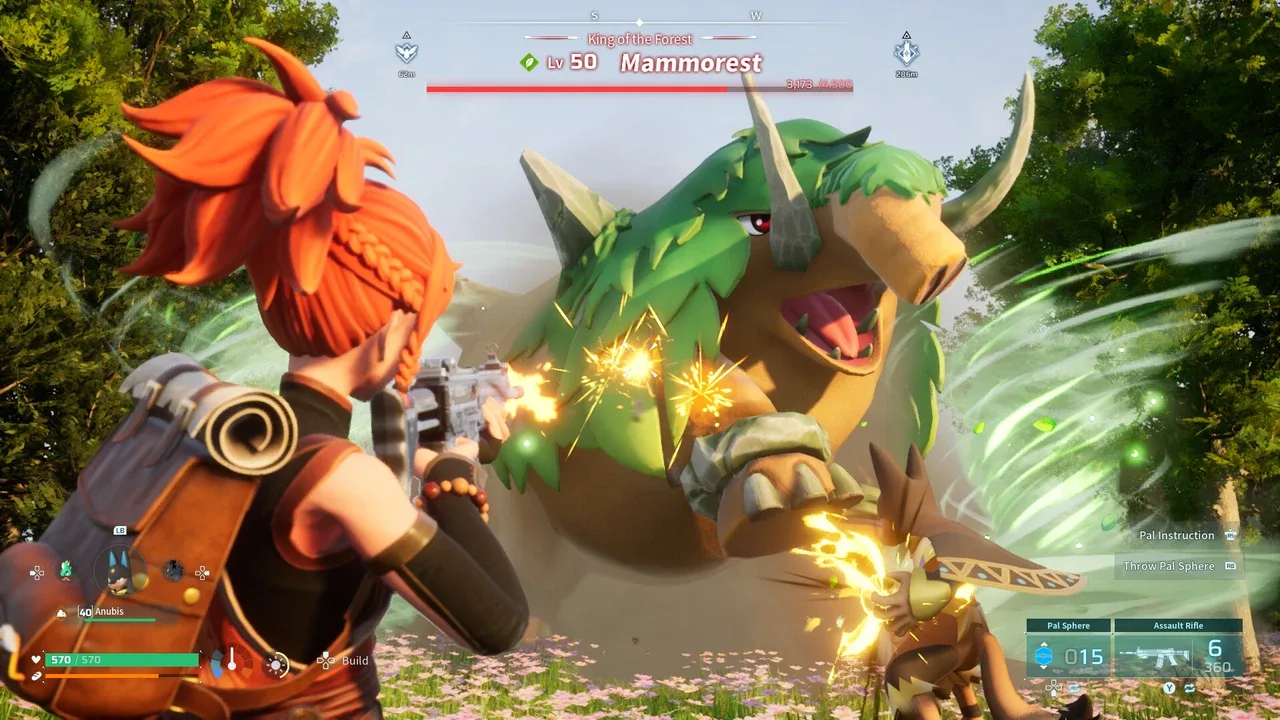
Combat in Palworld is simple by design. You swing a melee weapon, fire a gun, or send out a Pal to handle it for you. Melee works great early on, but the further you get, the more you notice that tougher enemies punish standing close with long attack animations that are hard to interrupt when all you've got is a regenerating shield and a dodge that eats stamina fast.
Guns give you more freedom, since they let you keep your distance and deal damage without risking every single exchange of hits. Naturally, I reached for them more often as the game went on, even though melee technically stays viable the whole way through.
The most interesting decisions happen before a fight even starts, since your Pal party rarely ends up purely combat-focused. My go-to lineup was Direhowl for fast travel, Cattiva for carry weight, and Celaray, because I got attached to not taking fall damage. That left only two slots for anything more offensive. The game never forces one approach, but it keeps reminding you that a party built for exploration is rarely the same party you'd want on hand for a tough boss.
Exploration Rewards Every Detour
I rarely walked straight toward an objective for more than a few minutes before something pulled me off course. Sometimes it was a dungeon hidden behind a cliff, other times a red alert flagging a meteor that had just landed nearby. Dungeons were the biggest culprit. I'd go in expecting a quick stop and come out an hour later with a new building blueprint that completely rewrote my plans for the base.
The grappling hook, my favorite gadget in the game, made climbing cliffs easier and doubled as a private elevator in my structurally questionable four-story shack. It did occasionally refuse to cooperate mid-air or snag on the terrain's geometry.
Version 1.0 finally opens up the World Tree, the giant tree that's been visible on the horizon since Early Access launched and has stayed locked behind an invisible barrier ever since. It becomes a new endgame region, joined by the Sky Islands floating above the map, an entirely new layer of vertical exploration. Then there's the Wing Pack, gear that lets you fly without giving up a precious party slot to a flying Pal, which used to be one of the more frustrating trade-offs in building a team.
Pals Are More Than Something to Catch
At a glance, Pals look like a variation on collectible creatures from other games in this space. The real game starts once you've caught them. Every Pal has its own Work Suitabilities that decide what it's good for around the base, plus passive traits that can turn it into a better worker, a stronger fighter, or someone who burns through food faster than the rest of the crew. The new Genetic Recombination system in 1.0 lets you combine genes from Legendary Pals during breeding, adding another layer to an already deep breeding system.
Watching Pals carry materials between stations, finish crafting jobs I started, or head back to work after a nap makes the base feel alive in a way I didn't expect from a game built around hunting creatures. Swapping out a favorite but weaker Pal for a stronger worker is never forced, but the game keeps tempting you with that trade as your base grows. It's a genuinely tough call once you've grown attached to someone.
Progress Demands Patience, and the Base Has Rough Edges
Palworld's tech tree is simple by design. Each level unlocks a new row of tech, and skill points get assigned freely. In practice, though, that means constant juggling of priorities, since Ingots, Stone, and Coal are all needed at once for gear repairs, new stations, and ammo, so picking one upgrade usually means putting another one off. It's a grindy loop, but I rarely felt it was pointless, since every resource I gathered eventually became part of something bigger.
Base building itself has more flaws. Some structures take up a bigger invisible footprint than their model suggests, which makes it hard to figure out why something suddenly refuses to place, and the Palbox was the worst offender for me. Pals occasionally lose their way navigating around their own base and need a manual nudge to get back to work. These are small frustrations, but frequent enough that base building still feels like a system that could use a bit more polish.
The Story Finally Has Shape, But Still Stumbles
Version 1.0 adds a series of story missions meant to tie together what used to be mostly loose exploration without much direction. The structure still sticks to a formula, though: learn a region's problem, solve it, take on the local Tower Boss, move on. After a few regions, I started predicting the next beat well before the game showed it to me, which drains a lot of tension out of the story's second half.
What saves that formula is the detail scattered around the main path. Tower Boss journals give them human motivations before I even reach them, and side quests keep reminding you how tightly humans and Pals are woven together on Palpagos, even if that colorful surface hides a world where researchers die at the hands of wild creatures and traffickers sell captured Pals without much hesitation. It's a shame the Tower Boss fights themselves rarely put those motivations to use. Once the fight starts, all the attention shifts to their Pals rather than the people who sent them.
Palworld 1.0 Earned Its Full Release Status
Palworld 1.0 is one of those rare cases where a game leaves Early Access genuinely transformed, not just carrying a new version number. The World Tree, the Wing Pack, and the reworked Wildlife Sanctuaries give even veterans who'd already seen everything Palpagos used to offer a real reason to come back. At the same time, the Pal system stays deep enough that I caught myself rethinking my party after almost every trip out. Story and base building still lag behind everything else, but that's hard to mind when nearly every other system feeds smoothly into the next and turns "wrap up the session" into "just one more trip" more often than not.
If you bounced off Palworld back in 2024, version 1.0 is a good moment to give it a second shot, especially since the update is free for anyone who already owns the game. If you've never touched it before, you're walking into the fullest, most polished version that's ever existed.
Palworld
Palworld is a multiplayer open-world survival game that combines creature-collecting with crafting, base-building, and combat. Set on the Palpagos Islands, players capture and tame animal-like creatures called Pals, which can be used as mounts, combat partners, or workers at play
Released
January 19, 2024
Developer
PocketPair
Publisher
PocketPair
Systems
Xbox Series X|S
PC (Microsoft Windows)
PlayStation 5
Mac
Xbox One
Tagged In
Palworld