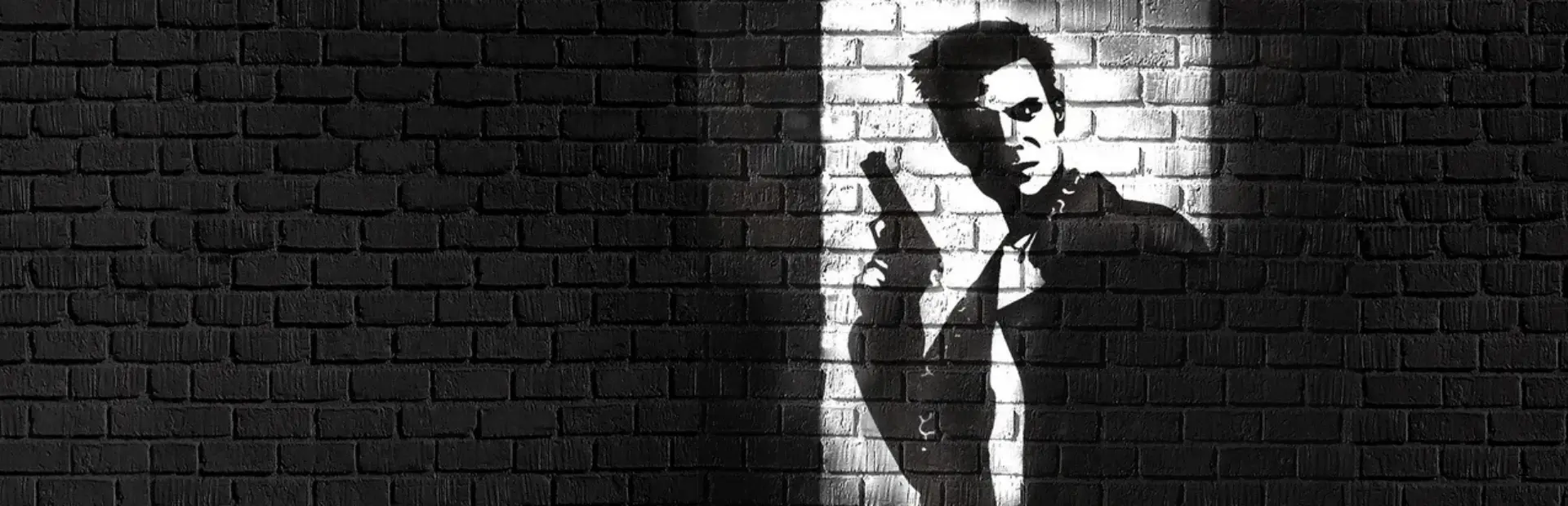
Max Payne Still Hits Hard 25 Years Later
Remedy's 2001 shooter looks rough today, but bullet time and the snowbound streets of New York still give every encounter an incredible atmosphere.
The first thing I noticed when returning to Max Payne was not the low-resolution textures or Sam Lake's famous grimace. I quickly started treating every closed door as a potential threat. A single gangster with a shotgun can take away most of Max's health before you even manage to turn the camera. As a result, even an ordinary hotel corridor can create tension.
Max Payne became famous for its ability to slow down time, but the visual effect alone does not explain why the game still works. Bullet time is connected to Max's vulnerability, enemy placement, and the need to make quick decisions before a fight gets out of control. The story, comic book panels, and empty streets of New York give these encounters a character that many later shooters with slow-motion mechanics failed to recreate.
Bullet time is more than a visual effect
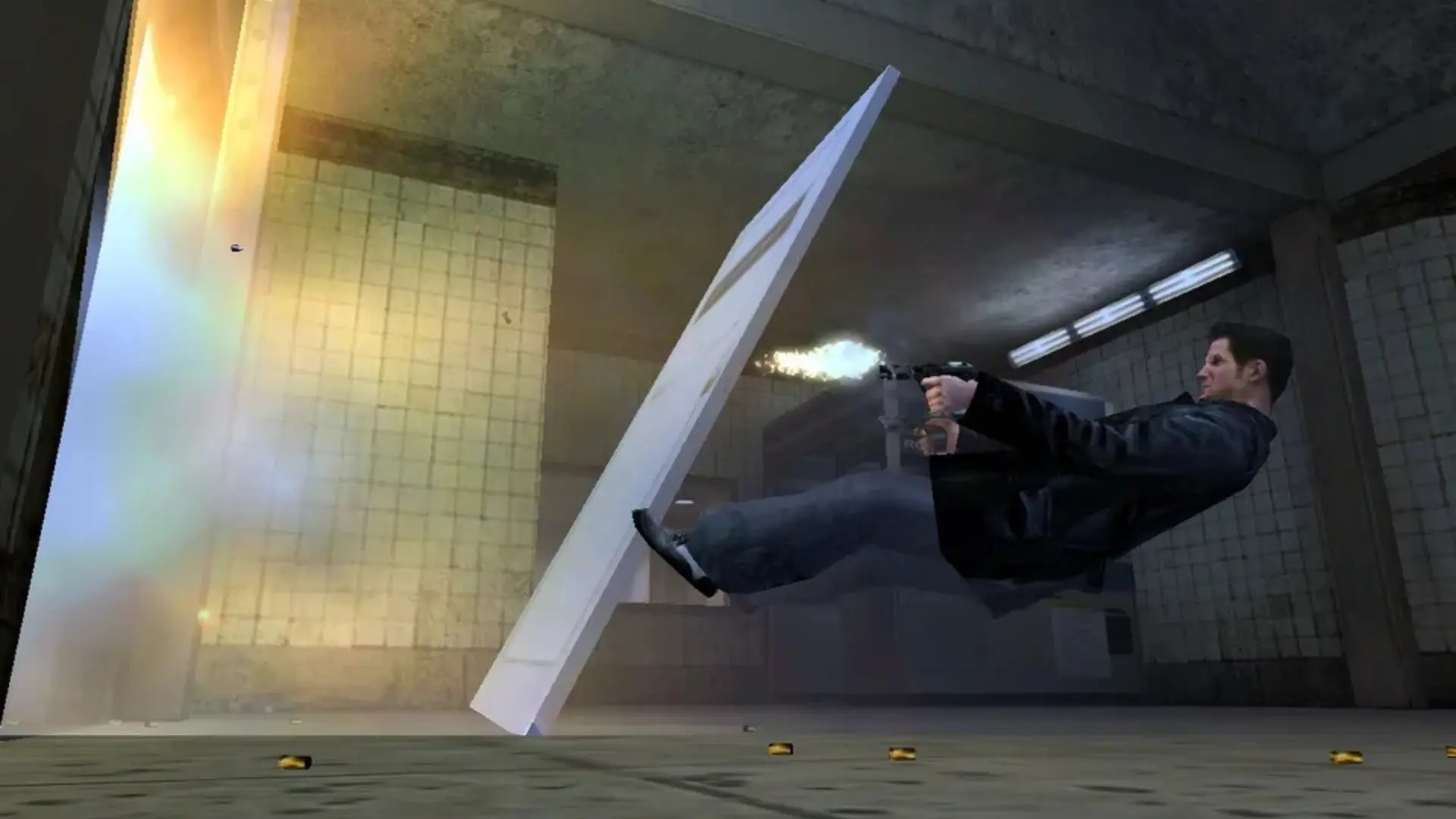
Max Payne does not treat bullet time as a reward reserved for special moments. It is part of almost every fight. When activated, the world slows down, but I still have enough control to adjust my aim, track a moving enemy, or react to a gangster appearing from the side. Kills refill the meter, so an accurate start to a fight can provide the advantage needed to clear the entire room.
Shootdodge is the more spectacular option. Max throws himself forward or sideways while continuing to fire, turning an ordinary entrance into a scene from a John Woo movie. The move looks powerful, but it does not make him invincible. A poorly aimed dive can leave Max lying in the middle of the room while another enemy raises a shotgun. Slow motion gives you more time to understand the situation, but it does not automatically solve every problem.
That balance matters because Max cannot survive many hits. Painkillers restore health gradually instead of immediately removing all damage. Another powerful attack can kill him before the medicine has time to work. I often had to decide whether to use my last bottle immediately or save it and risk entering the next room with a depleted health bar.
The arsenal is conventional, but every weapon has a clear purpose. Dual Berettas work well against more distant targets, while shotguns turn close-range encounters into quick and brutal exchanges of fire. There are no attachment menus or colorful statistics interrupting the campaign. Survival usually depends on the direction from which Max enters a room, the first enemy he targets, and how much bullet time he has left to correct a mistake.
The movement and animations have clearly aged. Max cannot stick to cover or aim down sights in the way familiar from modern shooters. The basic controls remain easy to understand, especially when playing with a mouse. Within a few minutes, I was once again stopping outside doors, listening for voices, and planning the direction of my next dive.
New York remains cold, empty, and hostile
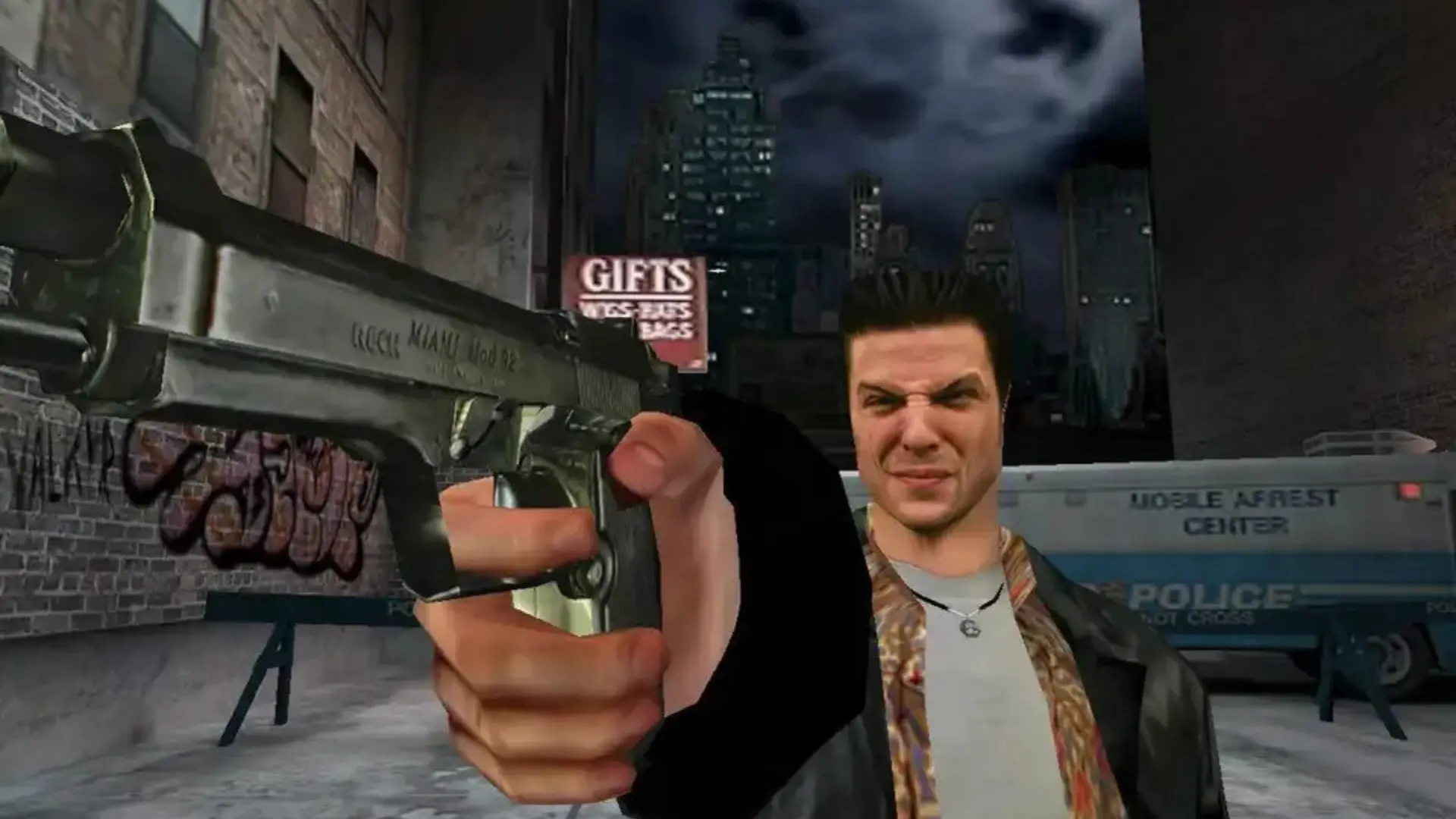
Max Payne takes place during a snowstorm that has forced most New Yorkers to remain indoors. The streets are almost empty, public transport has stopped, and every window seems to belong to a building where something terrible has already happened. The weather provides a convenient explanation for the lack of pedestrians, but it also creates an effective sense of isolation.
The campaign follows a largely linear route through the city. While GTA Vice City uses its streets to provide freedom, Max Payne turns New York into a one-way descent deeper into the criminal underworld. Max begins in a neglected subway station before reaching increasingly well-protected hideouts. By the time he arrives at offices towering above the city, his journey feels like a trip through every layer of an elaborate conspiracy.
Individual locations contain enough detail to reward curiosity. Televisions show strange serials and news reports. Gangsters complain about the weather or rehearse conversations when they believe nobody is listening. A cheap room may hide ammunition, while an apparently decorative door can lead to a better position for the next fight.
These details prevent the locations from becoming little more than shooting galleries. The burning restaurant is particularly memorable because it briefly changes the rules. Instead of clearing every room, Max must find a safe route through a building being consumed by fire. It is a simple sequence, but the spreading flames and collapsing surroundings create pressure without introducing another group of armed enemies.
The technology is no longer as impressive as it was in 2001. Character models have motionless faces, animations change abruptly, and some rooms look unnaturally empty. The art direction has survived these limitations. Snow, darkness, neglected interiors, and hard shadows maintain a consistent atmosphere even when the objects creating it look primitive.
The noir story survives its own excess
The story begins close to its ending. Max stands on the roof of a skyscraper while police sirens sound below. He then recounts the events that brought him to this point. His wife and infant daughter are murdered by people under the influence of a new drug called Valkyr. Max joins the DEA, infiltrates the Punchinello crime family, and eventually becomes a target for both the gangsters and the police.
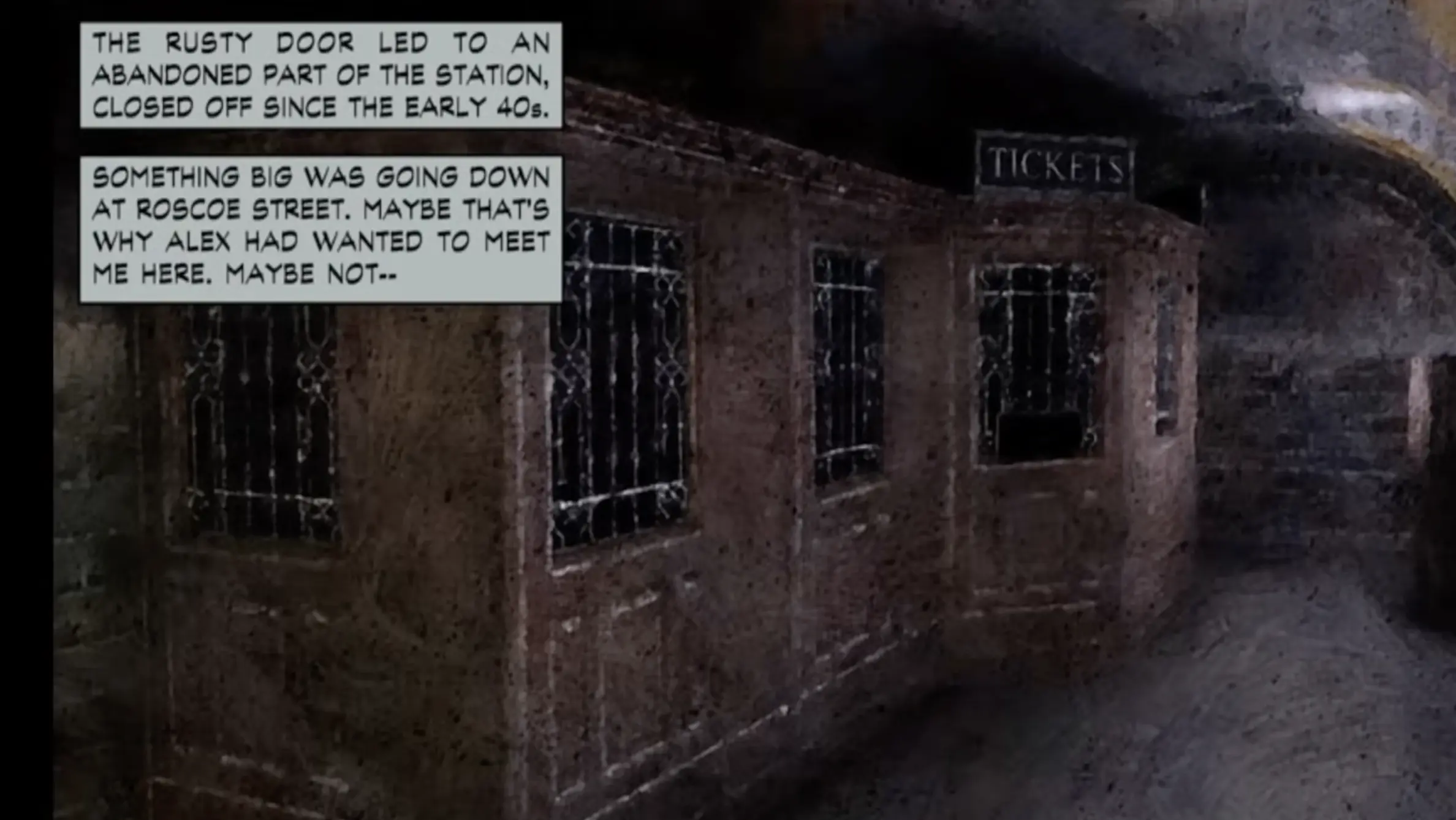
It is a familiar revenge story combined with an increasingly complicated conspiracy. What separates it is the presentation. Instead of long rendered cutscenes, Remedy uses fully voiced panels resembling a graphic novel. Photographed actors were transformed into comic book characters through heavy shadows and filters. The decision partly resulted from a limited budget, but it gave the game an identity that might have disappeared with a more traditional cinematic approach.
James McCaffrey delivers Max's internal monologues with complete seriousness. Almost every thought becomes a metaphor about darkness, death, bad luck, or the state of his soul. Some lines are excellent. Others sound as though Max spent the entire night searching for new ways to describe the same rain cloud.
That excess eventually becomes part of the game's charm. Max Payne understands film noir well enough to imitate it, exaggerate it, and occasionally make fun of it without turning the entire story into a parody. Criminals discuss television shows moments before a gunfight. Character and location names contain obvious references to Norse mythology. Sam Lake's permanently tense face makes Max look as though he is physically holding back another grim observation.
This combination of crime fiction, television, comic books, and self-aware humor later became an important part of Remedy's work. The studio developed these ideas much further in Alan Wake 2, but their foundations are already visible here. Max Payne is less technologically advanced, yet it shows a similar interest in stories that are aware of how they are being told.
Not every part of the story has aged equally well. Max's murdered family mainly serves as the reason for his revenge, while some supporting characters receive too little time to develop beyond their role in the conspiracy. The story moves so quickly that important deaths can become little more than another reason to enter the next building. The comic book panels give the plot a distinctive style, but they cannot provide every character with enough depth.
Old design turns every doorway into a threat
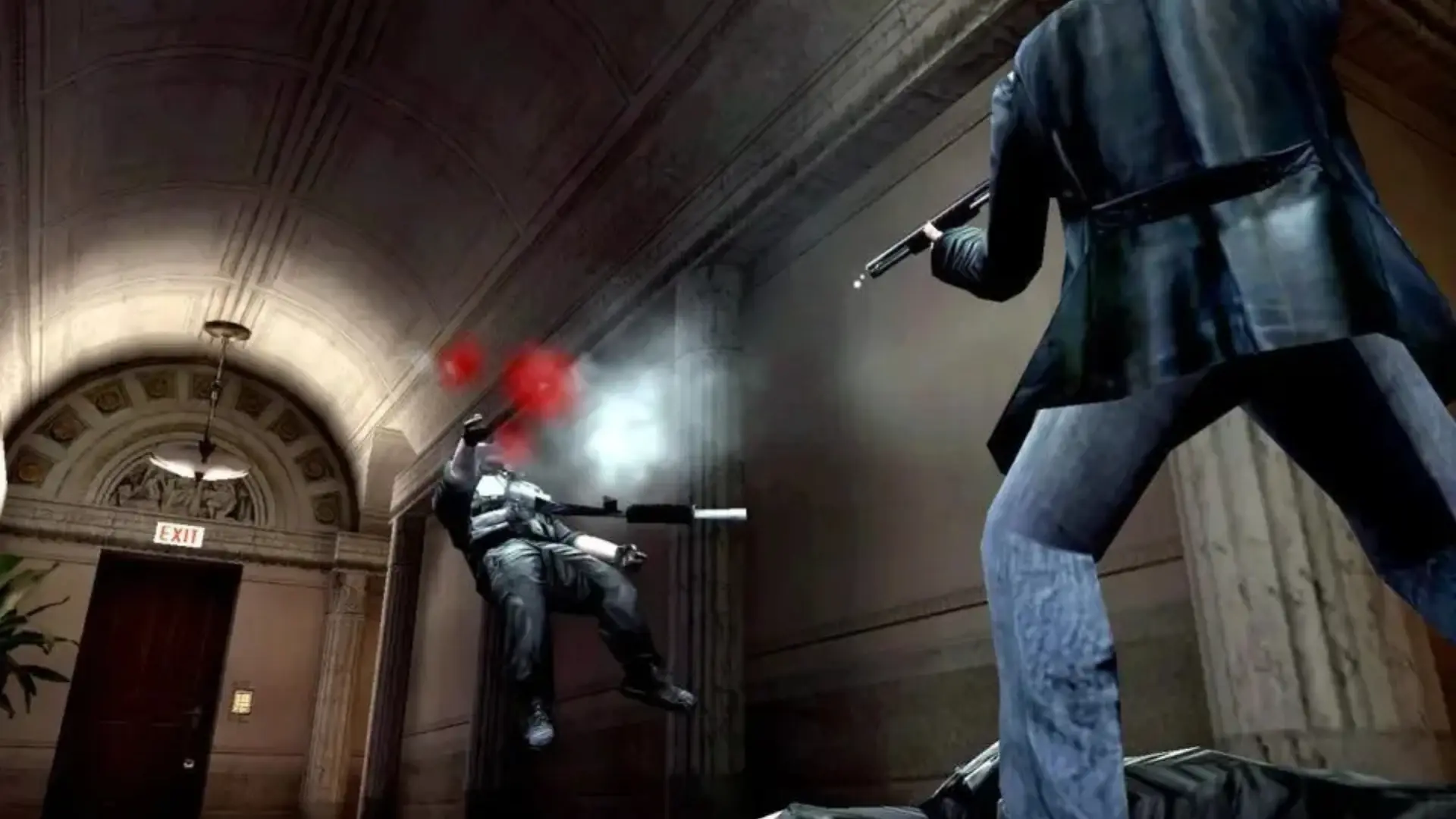
Max Payne requires frequent saving. The PC version allows quicksaves almost anywhere, and the campaign was clearly designed around that freedom. Enemies can wait outside the camera's view or open fire the moment a door is opened. A close-range shotgun blast can end a successful attempt before there is any opportunity to use a painkiller.
This creates a strange combination of tension and memorization. The first attempt reveals where the danger is coming from. The second often involves preparing the correct weapon and diving in the opposite direction. Victory remains satisfying because it still requires accuracy, but some encounters only become easier once you know where the ambush has been set up.
Enemy behavior is inconsistent. Gangsters can change position or rush towards Max while he reloads. At other times, they shoot into walls, remain exposed, or struggle to walk through a doorway. Their high damage still makes them dangerous even when they make poor decisions.
The nightmare sequences have aged much worse. Distorted locations and the cries of Max's child communicate his guilt more directly than the comic book panels. Unfortunately, the most infamous sections force him to follow narrow trails of blood suspended in darkness. Max's movement was designed for gunfights, not precise platforming. Falling and having to repeat the same route weakens scenes that should be among the most disturbing moments in the story.
The mission objectives also offer little variety. Most chapters involve finding a way through a building and killing everyone blocking the path. Occasional environmental hazards interrupt this pattern, but the entire campaign depends heavily on the quality of its shooting.
Fortunately, Max Payne ends before its structure becomes exhausting. A first playthrough takes around ten hours, and the game does not waste time on lengthy tutorials or progression systems. Additional difficulty levels and New York Minute mode provide reasons to return, but the focused campaign remains the main attraction.
Max Payne is still worth the pain
Max Payne has not aged without problems. Enemy placement can sometimes feel unfair, the artificial intelligence is unreliable, and the nightmare platforming turns psychological horror into a fight against the controls. Character faces and animations are now more amusing than realistic.
None of this has taken away the power of its best gunfights. Bullet time works because it gives a vulnerable protagonist exactly enough control to survive against overwhelming odds. The snowstorm, comic book panels, and weary narration make every dive feel like part of the same bleak crime story. Many games copied slow motion. Few understood as clearly as Max Payne that style only becomes truly memorable when the mechanics make it necessary.

Max Payne is a man with nothing to lose in the violent, cold urban night. A fugitive undercover cop framed for murder, hunted by cops and the mob, Max is a man with his back against the wall, fighting a battle he cannot hope to win. Max Payne is a relentless story-driven game abo
Released
July 23, 2001
Developer
Remedy Entertainment
Publisher
Gathering of Developers


Tagged In
Discussion
0We want to hear from you. Share your perspective in the comments below, and please keep the conversation respectful.
Log in to join the discussion - vote, reply, and share your take.
Log In