
How Prince of Persia: The Sands of Time Enchanted an Entire Generation
Two decades on, Prince of Persia: The Sands of Time still enchants with its fluid parkour, time-rewind Dagger, and fairytale charm, despite clunky combat.
Few games from the PlayStation 2 era announced their brilliance as quietly as Prince of Persia The Sands of Time. Then that voice cuts in, calm and a little amused: no, no, that is not how it happened. Plunge into a pit of spikes and the clock simply poured backward before your eyes, spinning the world in reverse until you were standing safely on the ledge ready for another attempt.
That single mechanic hooked me instantly, and more than two decades later it remains one of my favorite games of all time. I still vividly remember sitting on the floor in front of a heavy CRT television, a wired controller in my hands, mesmerized by the way golden palace dust drifted through the light.
Sands of Time gets remembered mostly as the blueprint for modern 3D parkour and the game whose team went on to build Assassin's Creed.
That might be true, but its real magic was never the mechanics. It was the Arabian Nights atmosphere, the tightly wound pacing, and a fairytale charm that even its own sequels could not recapture. The combat, on the other hand, aged like milk left out in the desert sun.
The Art of the Flow: Parkour Before It Was a Buzzword
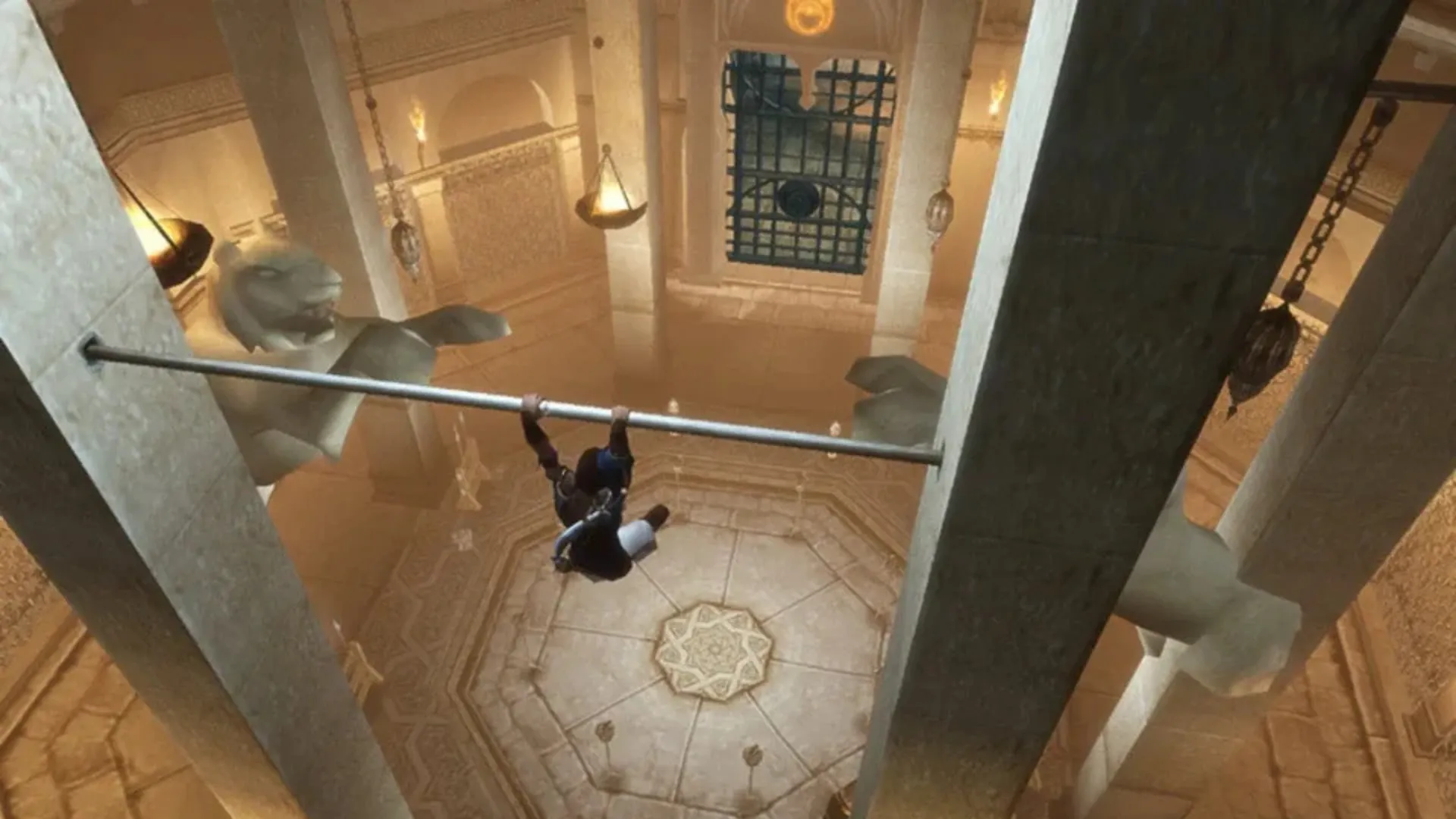
The whole fairytale atmosphere only worked because of how effortlessly the Prince moved through it. While most early platformers controlled like heavy machinery, Ubisoft Montreal made the Prince move like water.
He ran horizontally along walls, swung between flagpoles, and vaulted saw blades without ever losing momentum. Nothing snapped to a grid, and every jump felt like a choreographed dance rather than a fight against your controller.
I can still feel the muscle memory of holding R1 to start a wall run along a crumbling ledge, then tapping jump at the exact right second to launch off before it collapsed. Miss that timing and the clock would spin backward.
To this day I still get a mild trauma response whenever I remember the Prince calmly chiming in to say no, no, no, that is not how it happened… for the 100th time in 10 minutes.
Put it next to Angel of Darkness from that same year and Tomb Raider suddenly felt ancient. Ubisoft Montreal had cracked the secret to 3D movement, and director Patrice Desilets would soon take those exact climbing mechanics and expand them across an entire city for Assassin's Creed.
The Dagger of Time: Turning Failure Into an Art Form
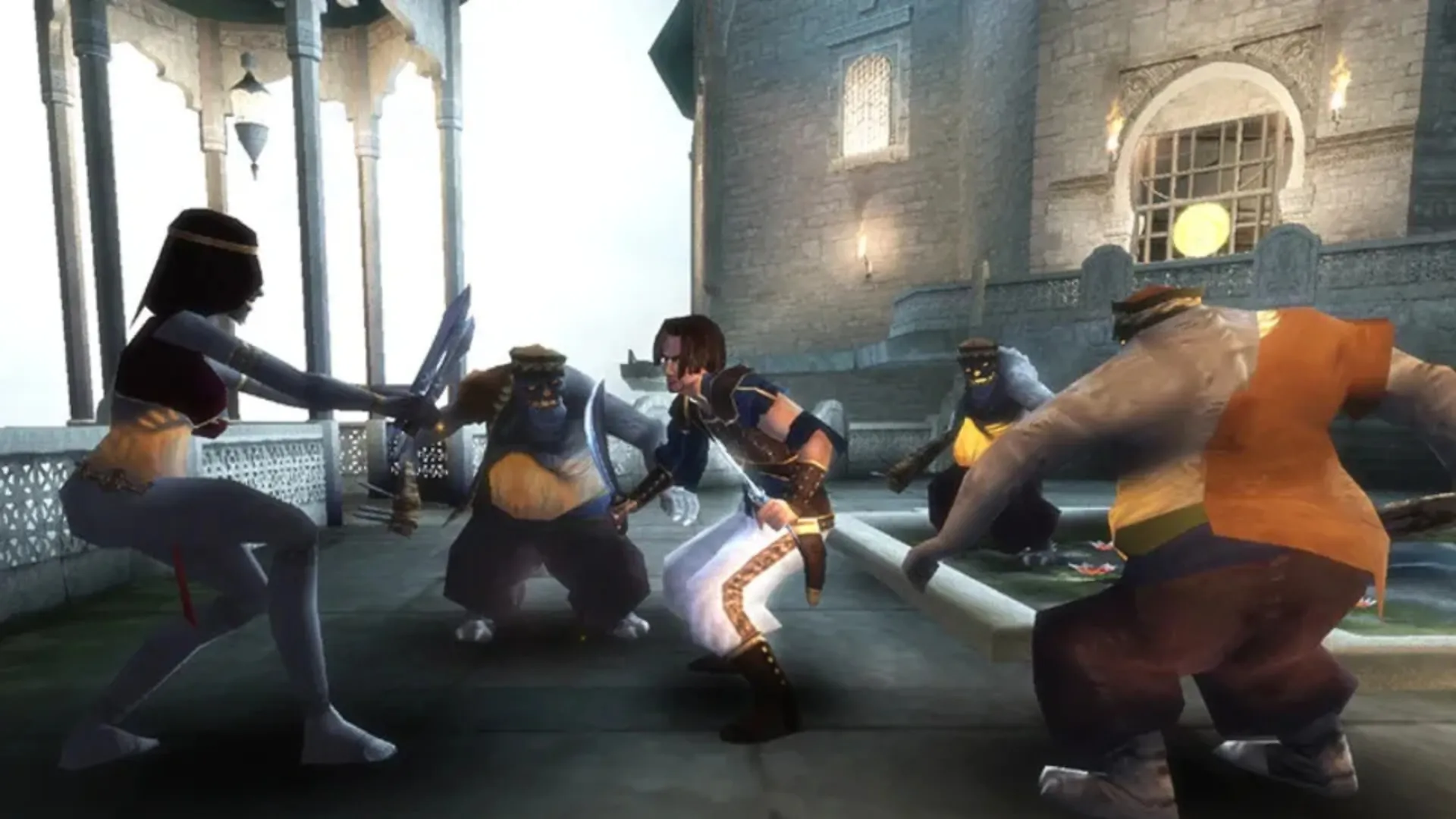
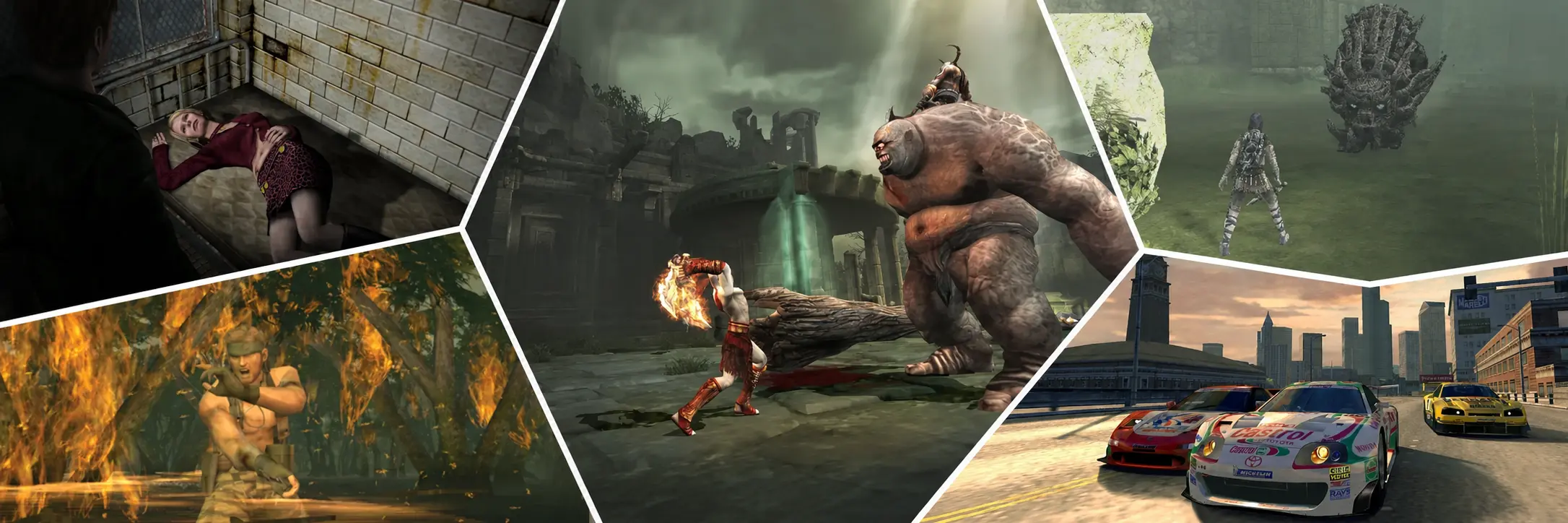
The Dagger of Time rewired how players approached platforming in 2003. Games like Max Payne had already popularized slow motion, and Blinx The Time Sweeper attempted basic time manipulation a year earlier, but Sands of Time was the first to make rewinding a seamless core mechanic.
While a botched jump in Tomb Raider Angel of Darkness or Jak 2 meant a punishing death screen and a tedious reload from a distant checkpoint, Ubisoft Montreal gave you the power to scrub the timeline backward and correct your trajectory midflight.
Because failure cost almost nothing, the game actively encouraged you to attempt the most dangerous leaps instead of playing it safe.
Yet the Dagger was never a mindless cheat button. It operated on a strict economy powered by Sand Tanks that you had to manage carefully. Every rewind drained a tank, forcing you to earn your charges back by absorbing glowing sand clouds hidden around the palace or stabbing enemies with the Dagger during combat.
That resource loop turned the Dagger into an active survival tool. You constantly had to balance storing sand for platforming mistakes against spending it on powerful combat abilities like freezing enemies in place or moving at super speed.
Arabian Nights Atmosphere, "Kakolukia," and the Slow-Mo Sip
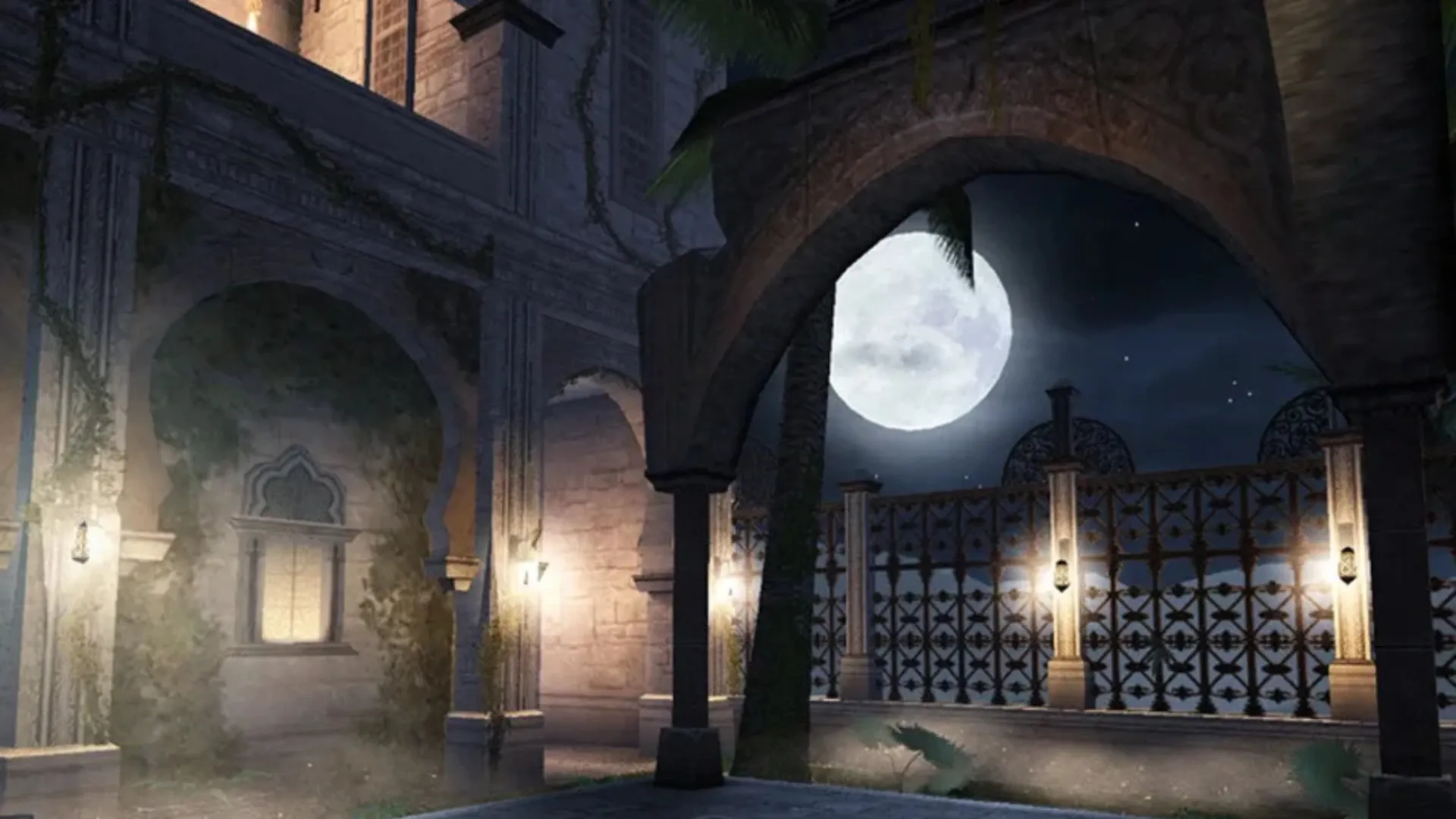
Beyond the climbing systems, the real reason Sands of Time endured is that the Prince felt like an actual human being instead of a silent action hero. He started the game arrogant and deeply flawed, but his constant bickering with Farah forced him to grow up and care about someone other than himself.
His personality as a storyteller even transformed the save system. Whenever you recorded your progress at a glowing fountain, the Prince would announce that he would start the story from there next time. Load back in later, and he would casually recap your exact platforming route, reminding himself how he jumped over a ledge, swung across a gap, and ran across a wall straight into the next part of the tale.
That storytelling style gave the entire journey a warm tone, helped along by Stuart Chatwood blending traditional Persian instruments with electric guitar to give the palace of Azad an unexpected rock pulse.
Meanwhile, his growing bond with Farah built toward a surprisingly mature emotional core. Farah telling the Prince about Kakolukia, the secret word her mother taught her to say whenever she felt afraid, seemed like a throwaway detail early on. By the ending it became the emotional key to the entire plot, proving that the erased events of your adventure actually happened.
That warmth stands in stark contrast to the 2004 sequel Warrior Within. Ubisoft dumped the fairytale charm and self-aware humor for heavy metal angst, proving just how delicate and special the atmosphere of the original game really was.
The Sand in the Gears: Combat, Cameras, and Farah's Friendly Fire
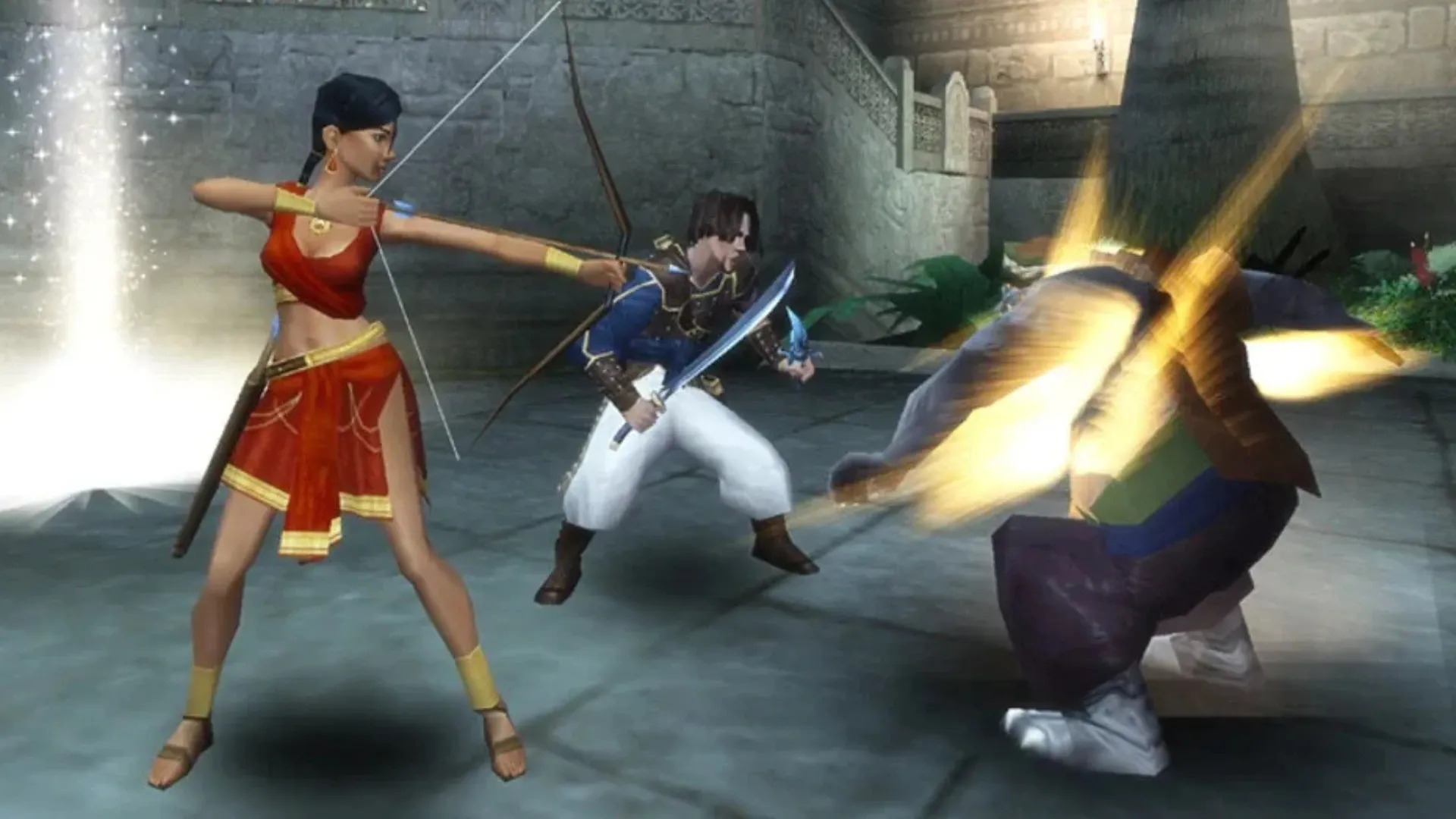
While the platforming in Sands of Time felt like flying, the combat felt like hitting a brick wall. Every fight dragged the pacing to a halt by forcing you through the exact same mechanical checklist.
Because normal sword strikes could never finish an enemy, you had to vault over their shoulders, knock them to the floor, and stab them with the Dagger to absorb their sand before they stood back up. It looked flashy for the first hour, but it quickly became a repetitive bottleneck that kept interrupting the exploration.
Wrestling with the camera only added to the frustration. Whenever the game locked you inside tight corridors or cramped rooms, the view would swing to useless angles right as an enemy lunged from behind.
On top of that, Farah insisted on helping by shooting her bow from the sidelines. In practice, you would line up a clean combo only to take one of her stray arrows directly in the spine. Every person I know who played Sands of Time ended up yelling at their television, begging Farah to watch where she was aiming.
All of those flaws collided in the infamous elevator fight near the climax of the story. Stuck on a rising platform with zero checkpoints, you had to survive endless waves of armored enemies while desperately trying to keep Farah alive in a tiny box.
It was an exhausting endurance test that pushed countless PlayStation 2 controllers to the brink of destruction, and I nearly threw mine across the room more than once.
A Timeless Classic in the Sands of History
Even with clunky combat and that agonizing elevator ordeal, those mechanical flaws never manage to tarnish the experience. They simply feel like the price of admission for a title that was fundamentally ahead of its time. Sands of Time got the most important things so completely right that forgiving its rough edges feels effortless.
The game remains a genuine masterpiece of the PlayStation 2 generation. Beyond redefining platformers and handing the industry the blueprint for Assassin's Creed, it captured a fleeting fairytale atmosphere that almost nothing has matched since, including its own sequels.
Over two decades later the spell still holds, and rewinding the clock for one more run through the palace of Azad is absolutely worth every single spike pit along the way.
The Verdict
Even with its repetitive combat and camera frustrations, Prince of Persia The Sands of Time remains a genuine masterpiece of the PlayStation 2 era. Its revolutionary parkour movement, clever time rewind mechanics, and warm fairytale atmosphere create an unforgettable adventure that still outshines most modern platformers.
The Good
- +Effortless parkour movement that makes navigating the palace feel like a choreographed dance
- +The Dagger of Time rewind system and its rewarding resource management economy
- +Warm fairytale atmosphere elevated by genuine character growth and charming storytelling
The Bad
- -Repetitive combat that forces players through the same mechanical checklist every fight
- -Uncooperative camera angles inside tight corridors and during the grueling elevator ordeal
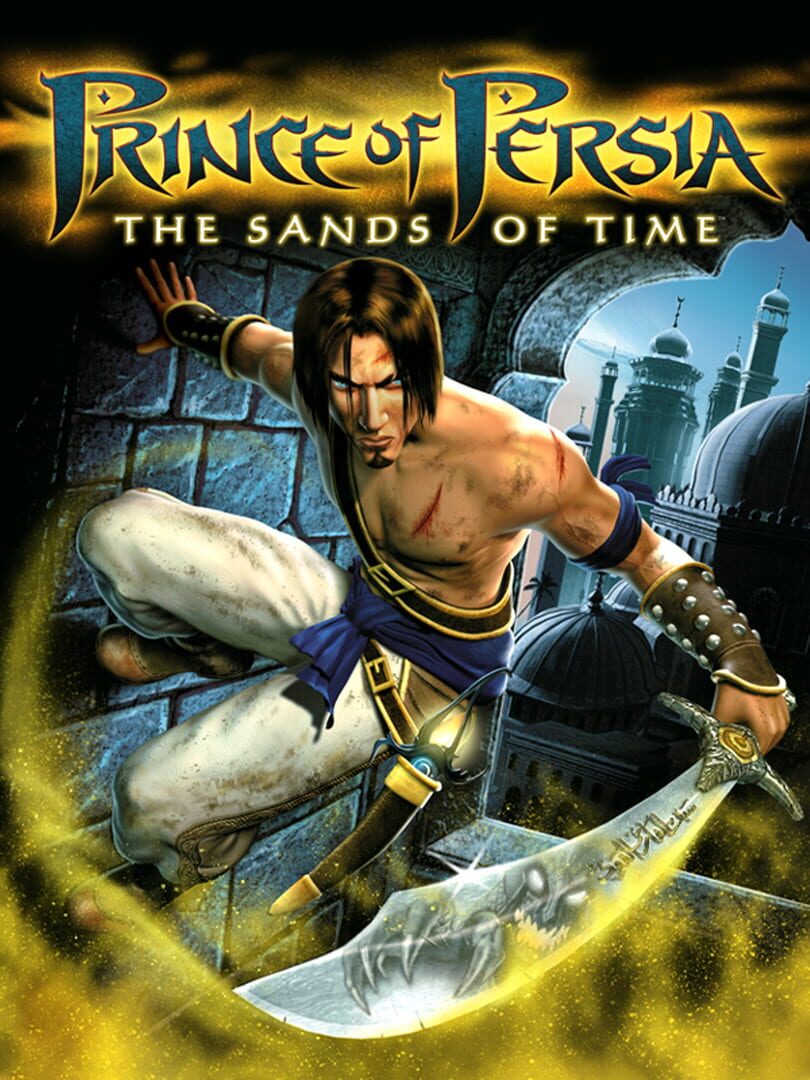
Deceived by the treacherous Vizier, I was led to unleash the Sands of Time curse upon the Sultan's kingdom. With little but an ancient dagger and a devious princess to aid me, I must undo my fatal mistake. Mine is a fight for survival… not glory. • Reverse, accelerate, and slow
Released
November 11, 2003
Developer
Ubisoft Montreal
Publisher
Ubisoft Entertainment


Tagged In
Discussion
0We want to hear from you. Share your perspective in the comments below, and please keep the conversation respectful.
Log in to join the discussion - vote, reply, and share your take.
Log In