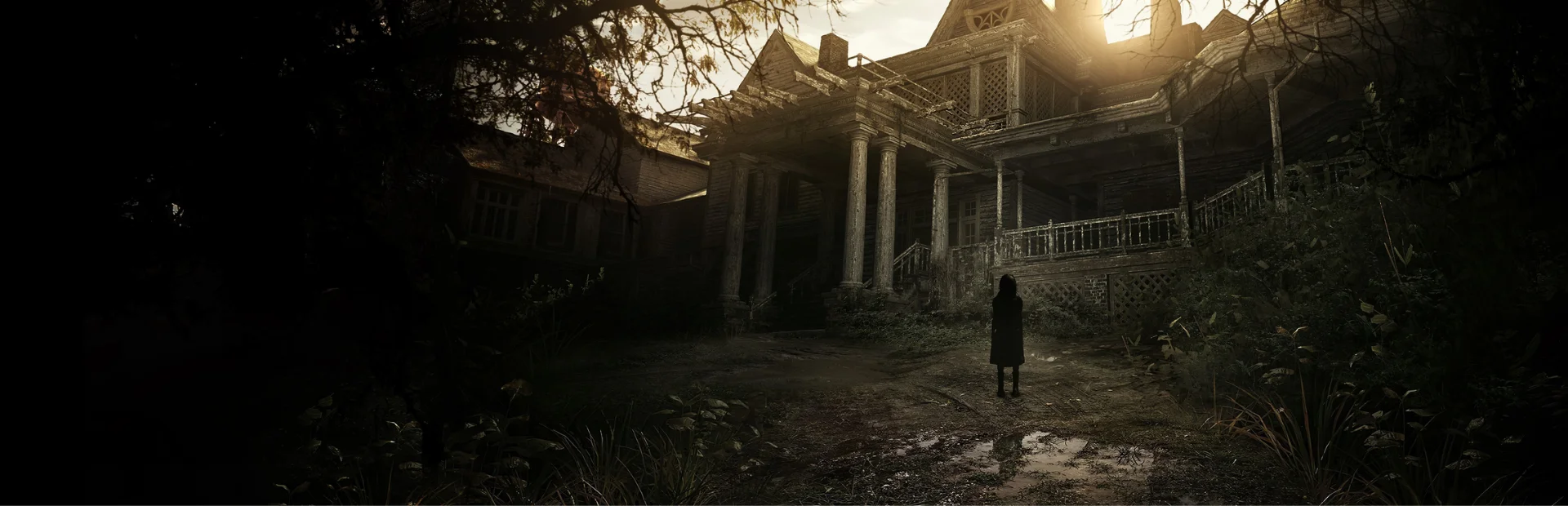
Resident Evil 7 Still Makes the Baker House Feel Unsafe
Resident Evil 7 still makes the Baker estate feel unsafe, with tense exploration, scarce supplies, and unforgettable family horror.
Resident Evil 7 biohazard was Capcom's attempt to pull the series away from the noise and excess of its sixth main entry. Playing it in 2026, I expected the first-person camera, scripted chases, and found-footage tricks to feel more familiar than frightening. Instead, the Baker estate still made me hesitate before opening doors, waste time listening for footsteps, and count shotgun shells before entering a room I had already visited.
The opening hours remain among the strongest in modern survival horror. The house is cramped, filthy, and designed to make every trip away from a safe room feel like a bad decision. The game loses some of that control in its later sections, when repeated enemies and heavier combat replace the more deliberate fear of the Baker estate. Even with that decline, Resident Evil 7 still deserves its place among the best survival and adventure horror games. It is a focused, uncomfortable reset whose best ideas have aged far better than I expected.
The Baker House Still Punishes Curiosity
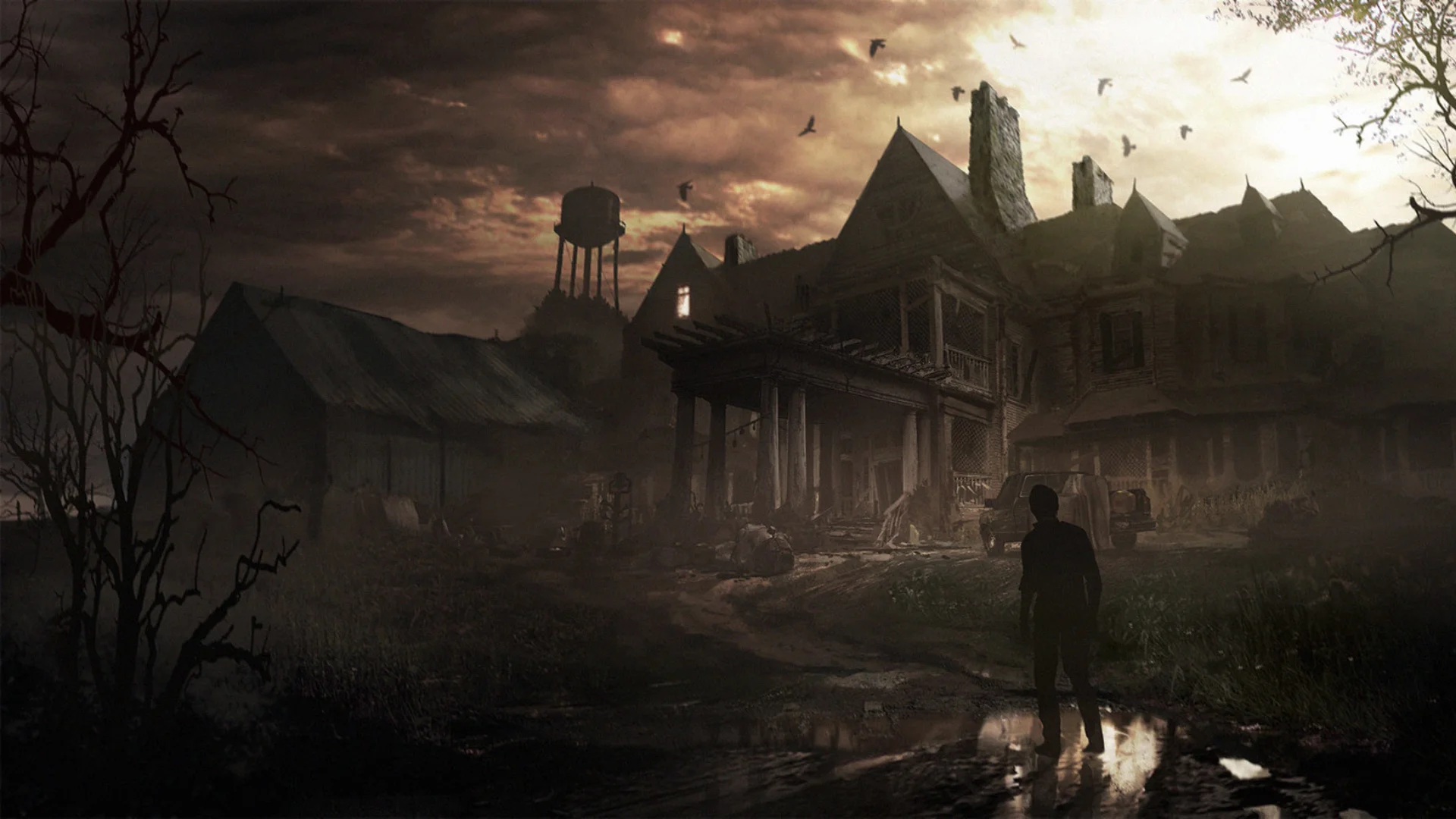
The Baker house is not enormous, but Capcom makes excellent use of its limited space. A locked door gives me a reason to remember a corridor. A new key changes which rooms I can enter. Finding an extra inventory slot feels more valuable than unlocking another weapon because it lets me carry ammunition, healing items, and puzzle objects without returning to a storage box every few minutes.
Backtracking rarely feels like empty repetition. The house changes as I learn its layout, collect tools, and understand which routes are safe. A hallway that initially feels impossible to cross later becomes a useful shortcut. Another room becomes more dangerous after Jack Baker starts moving through the area. Even when I know where I need to go, the journey still carries risk.
Safe rooms provide some of the best relief in the game. The music softens, the door closes, and for a moment I can rearrange my inventory without listening for movement outside. Leaving that safety is never automatic. I check my ammunition, decide whether I really need the shotgun, and wonder if the empty spaces in my inventory will be enough for whatever I find. That pressure gives ordinary exploration a purpose.
Each Baker Brings a Different Kind of Fear
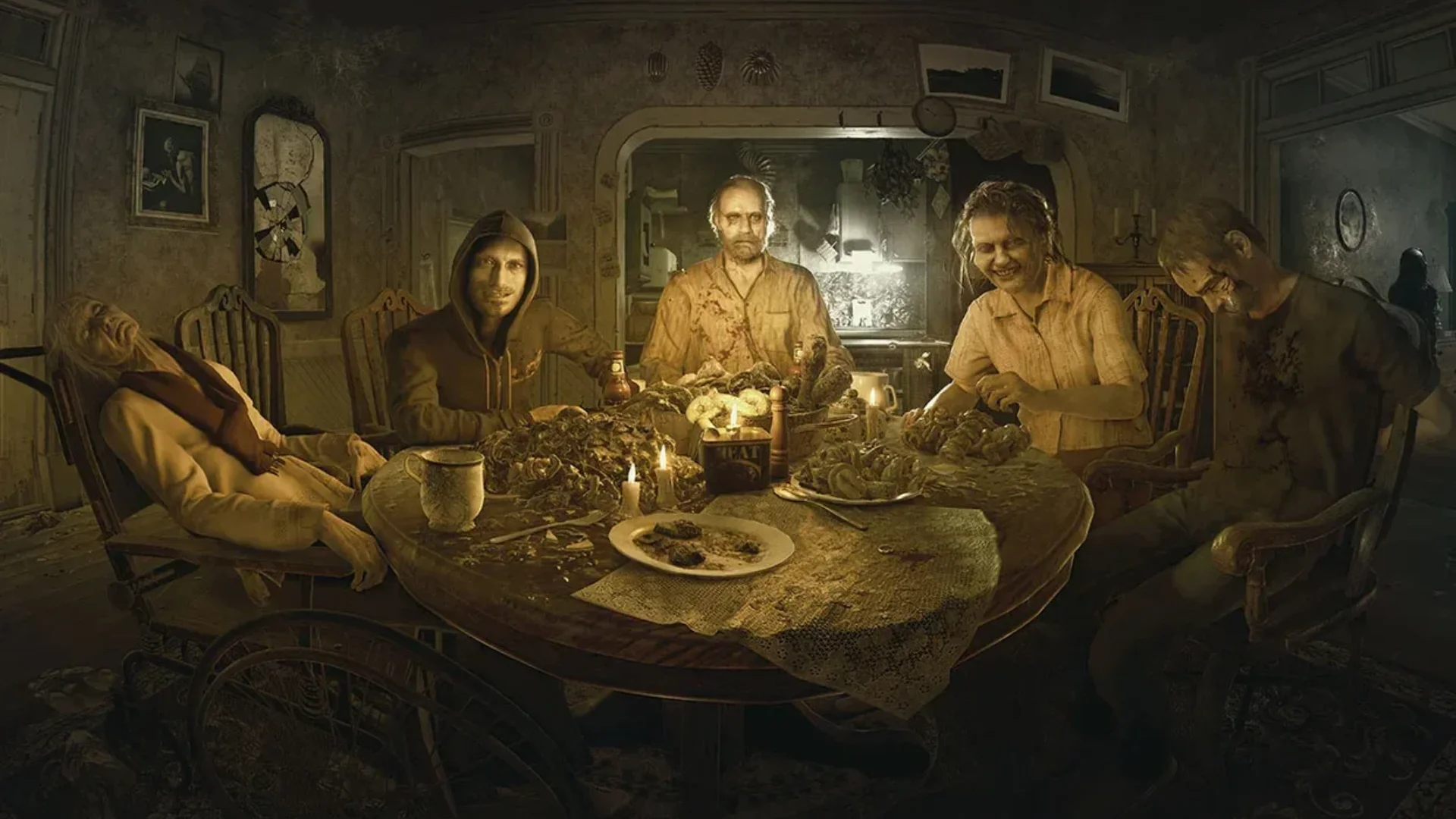
The Baker family remains the game's greatest strength. They are not interchangeable stalkers waiting for their turn to chase Ethan. Each one controls a different part of the estate and changes how I behave while exploring it.
Jack is the most direct threat. He walks through the house, appears in narrow spaces, and forces me to choose between hiding, running, or using precious ammunition to slow him down. His encounters are violent and strangely funny without turning him into a harmless joke. The garage fight and the later chainsaw duel push the game towards absurdity, but they still feel dangerous because Jack refuses to stay down.
Marguerite changes the rhythm. Her section uses insects, tight passages, and attacks from unexpected angles to make the old house feel different from the main building. Lucas prefers traps and games. His puzzles borrow heavily from films such as Saw, turning curiosity into something that can punish Ethan immediately. This structure prevents the estate from settling into one repeated chase. I am not simply meeting stronger versions of the same enemy. I am learning a new set of rules for each member of the family.
The Molded Turn Fear Into Routine
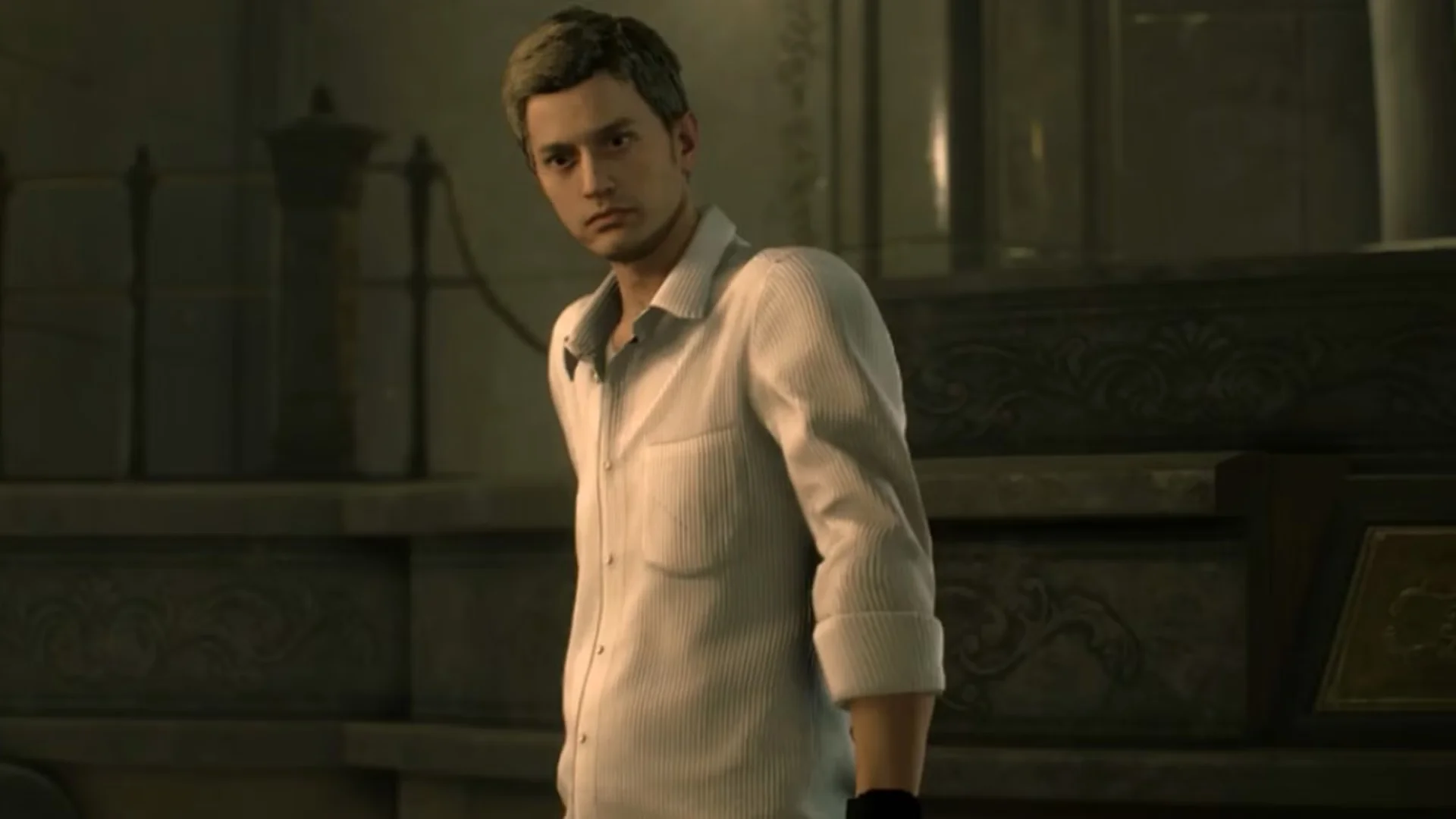
Combat is deliberately awkward at first. Ethan aims slowly, reloads under pressure, and cannot absorb many attacks. Blocking looks like a desperate reaction rather than a reliable defensive technique, but learning when to raise my hands can be the difference between reaching a safe room and losing a healing item.
The limited ammunition creates better decisions than the shooting itself. I often had to decide whether an enemy was guarding something important or whether I could run past it and save a few rounds. A missed shotgun blast feels expensive. Combining chemicals with herbs might give me medicine, but the same resource can also produce ammunition. The inventory constantly asks me to choose what I need now and what I might regret not having later.
The Molded are much less memorable than the Bakers. Their black bodies initially make them difficult to read in dark corridors, but the effect fades once the same shapes begin appearing repeatedly. They soak up more bullets than their limited behavior deserves, and fighting them becomes predictable long before the campaign ends. The lack of enemy variety is especially noticeable in the later areas, where the game places more of them between Ethan and his next objective.
The VHS Tapes Still Have a Purpose
The first-person camera changed more than how Resident Evil looked. It made every interaction more personal. Ethan has to place his hands against doors, reach into contaminated spaces, and bring dangerous objects close to his face. The camera does not let me step back and admire the character model. It traps me inside every bad decision.
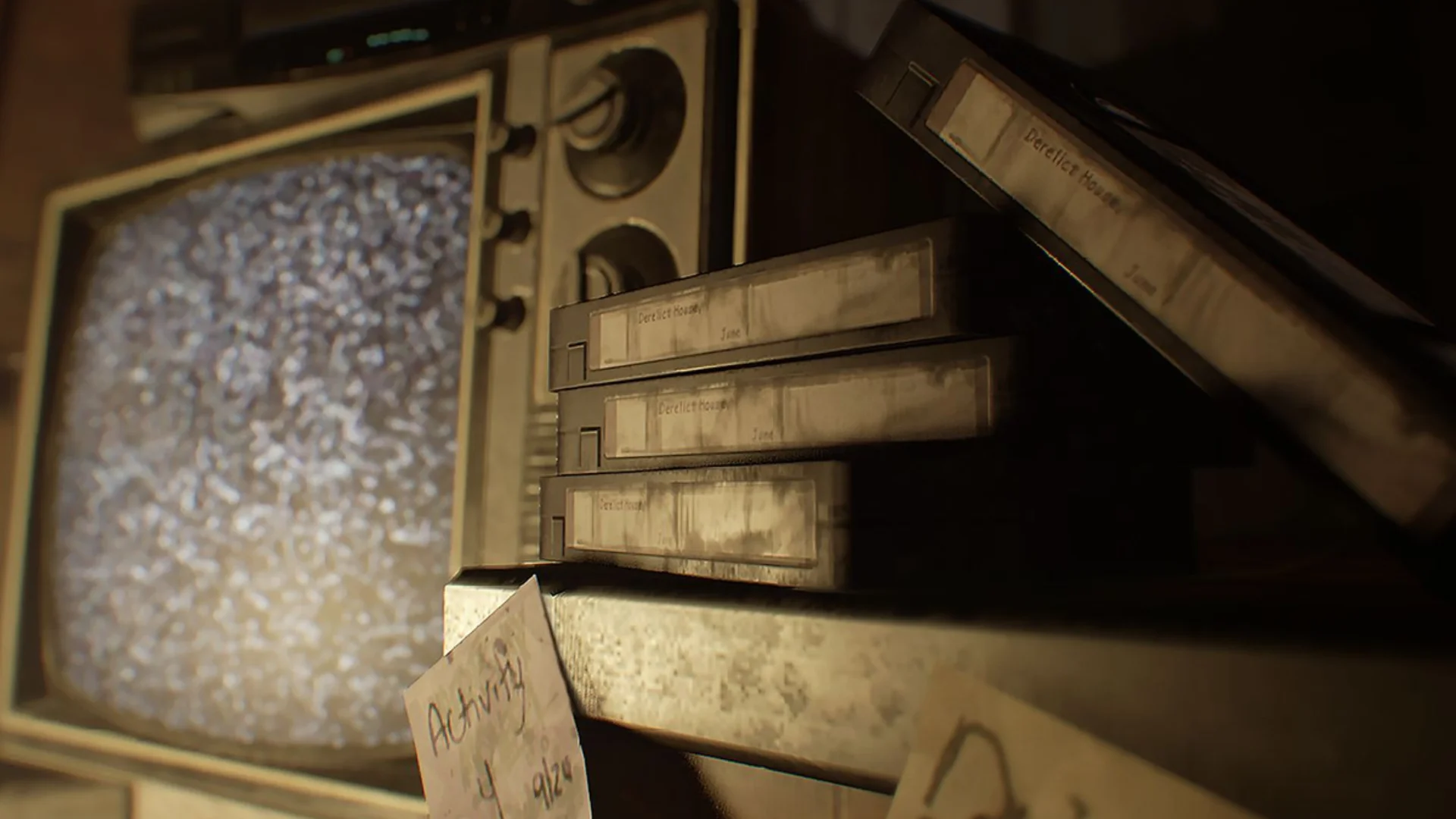
The VHS tapes remain one of the smartest additions. They are playable memories that show events from another character's perspective, but they also let me enter dangerous spaces before Ethan reaches them. A tape can introduce a trap, reveal part of the estate, or teach me something that will become useful later. They break up the campaign without feeling detached from it.
The puzzles are simpler than those in the early Resident Evil games. Most solutions are nearby, and several become obvious as soon as the correct object enters the inventory. I would have liked more puzzles that required me to study the house instead of matching an item to an obvious location. Their simplicity keeps the campaign moving, but it also removes some of the satisfaction that comes from finally understanding a complicated room.
Ethan himself remains deliberately plain. His limited personality makes it easier to occupy his position, though it also weakens some of the story's emotional moments. I was more interested in uncovering what happened to the Bakers than in Ethan's relationship with Mia. The family gives the mystery its tragedy. Ethan mainly gives it a pair of hands.
The Final Hours Cannot Match the Opening
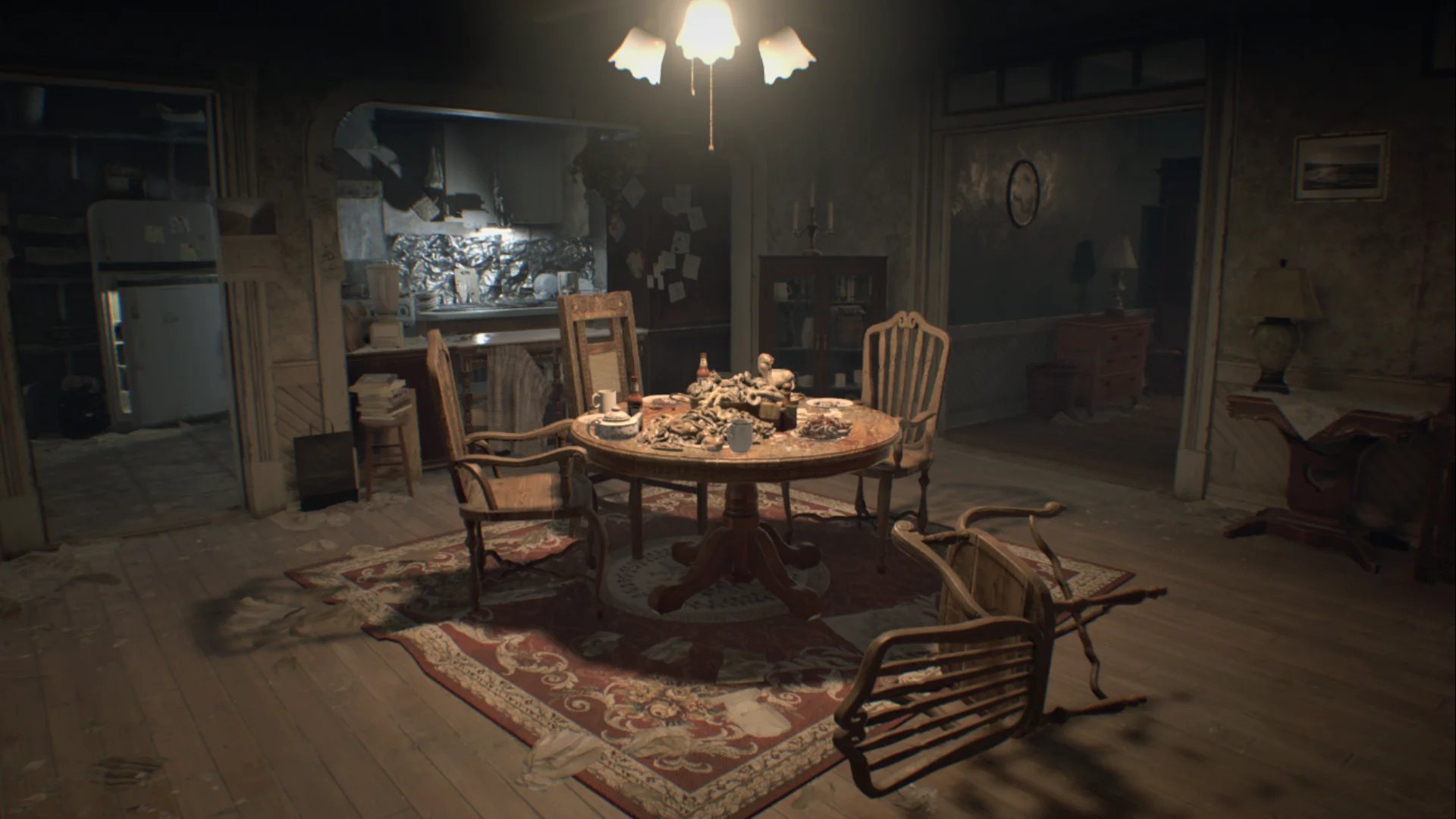
The game becomes less frightening when it moves away from the Baker house. Later locations are more linear, rely heavily on the Molded, and give Ethan enough weapons to deal with most problems directly. Searching a decaying bedroom while Jack walks nearby requires patience. Clearing another industrial corridor with a shotgun and explosives requires far less thought.
This shift is not completely unexpected. Resident Evil has always allowed fear to give way to firepower as the player approaches the end. Here, however, the difference between the opening and closing sections is unusually sharp. The early game makes me learn a hostile building. The final hours often ask me to move forward and eliminate whatever appears in front of me.
Some story revelations also explain more than the horror needed. The Bakers are most effective when their behavior is unpredictable and their condition is unclear. Once the game begins answering every question, parts of the nightmare become standard series exposition. The ending still provides a clear payoff, but it lacks the confidence and restraint of the opening.
Visually, Resident Evil 7 has aged much better than its final act. The damp walls, spoiled food, damaged furniture, and Baker family animations still make the estate feel physically unpleasant. Strong sound design covers the house with creaking wood, distant movement, and noises that are difficult to place. The native Switch 2 release in February 2026, alongside the existing PC, PlayStation 5, and Xbox Series X|S versions, has also made the game easy to revisit without relying on its original console editions.
Resident Evil 7 Is Still Worth Entering the Baker House
Resident Evil 7 does not maintain the quality of its opening for the entire campaign. The Molded become routine, the puzzles rarely demand much, and the final areas trade oppressive exploration for conventional action. Those weaknesses are easier to see in 2026, especially after later Capcom games expanded the same combination of horror, combat, and exploration.
They are not enough to erase what the game gets right. The Baker estate is still one of the strongest locations in the series, and its family remains far more frightening than any collection of generic monsters. New players should absolutely try it, while returning players may be surprised by how little the first half has lost. Nine years later, walking away from a safe room still feels like a decision I might regret.
Resident Evil 7: Biohazard is the first game of the Resident Evil series to switch from 3rd-person to fully 1st-person perspective. A complete refresh of gameplay systems simultaneously propels the survival horror experience to another level. It is as much horror as it is surviva
Released
January 24, 2017
Developer
Capcom Development Division 1
Publisher
Capcom


Tagged In
Discussion
0We want to hear from you. Share your perspective in the comments below, and please keep the conversation respectful.
Log in to join the discussion - vote, reply, and share your take.
Log In