Splitgate Developer Says It's Probably Done Making Arena Shooters
In 2021, 1047 Games had more players than its servers could handle. Five years later, it has two shooters that cannot earn enough to keep those servers running.
1047 Games is ending active development on Splitgate: Arena Reloaded and Empulse. The studio says neither title generates enough revenue to cover its dedicated servers. The transition to peer-to-peer hosting and a server browser was scheduled for September 3, allowing both games to remain playable without conventional matchmaking. 1047 also promised one final Empulse map and a price reduction.
The developer has not explicitly declared that it will never make another arena shooter. Its message is broader: after a decade focused on live-service shooters, its "focus is changing," and the next project "may look very different" from what players expect. The implication is difficult to miss. The route to this point runs through an improbable breakout, a sequel that lost its identity, a corrective relaunch and a second game exposed to many of the same commercial risks.
Splitgate Once Had More Players Than It Could Handle
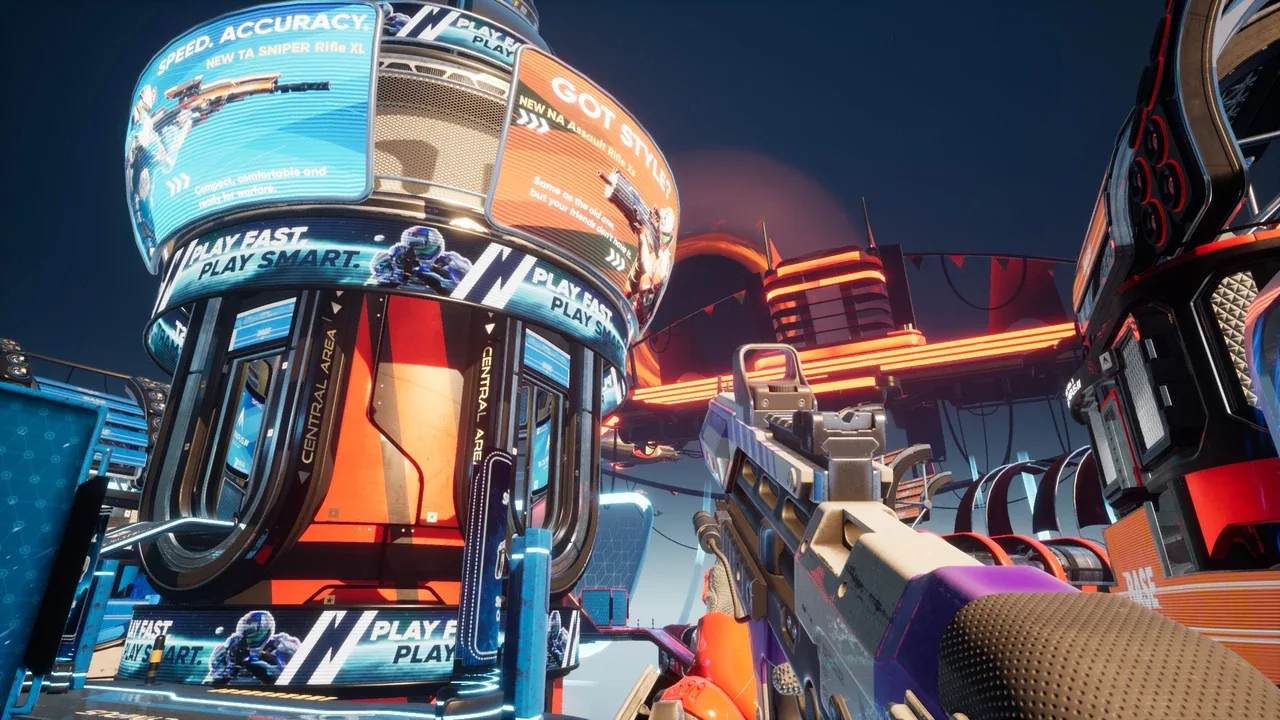
The first Splitgate did not look like the beginning of a $100 million story. It entered Early Access in 2019 and combined Halo-style gunfights with portals that transformed movement and map control. The pitch was immediate, while the portal system created clever plays that belonged specifically to this game.
Its 2021 cross-platform beta changed the scale almost overnight. According to TechCrunch's account of the studio's growth, the original release attracted roughly 600,000 downloads in its first month, while the multiplatform push brought in more than 10 million players during July 2021. Demand became so intense that a database limit capped the game at 65,536 concurrent users. A team with only four engineers found itself building queues while players waited outside.
The launch was delayed, server capacity became the priority and investment followed. A $10 million round was followed by another worth $100 million. Co-founder Ian Proulx described Splitgate as only 25% complete and spoke about building the next Riot Games. The studio had found a large audience in a genre many publishers had treated as commercially exhausted, but the surge did not guarantee long-term retention or that one breakout could support a much larger team. 1047's challenge was expanding the game without weakening the reason people noticed it.
A New Foundation Meant Leaving the Breakout Behind
In September 2022, 1047 stopped producing new features for the original and shifted to a free-to-play project in the same universe. The studio said it was spending too much time working around systems created when its team was far smaller, so Unreal Engine 5 offered a cleaner foundation. Commercially, the move meant replacing a proven game instead of gradually extending it.
That project became Splitgate 2. Its open beta began in May 2025, followed by a full launch on June 6. The sequel retained portals but added factions, character abilities, busier progression and a battle royale mode. None of those ideas was inherently incompatible with a modern shooter. Together, they made Splitgate harder to describe and pulled attention from the clean arena combat that had made the original stand out.
Expensive cosmetics, technical problems and the reduced emphasis on classic modes all shaped the early response. In July, 1047 admitted that it had launched the sequel too early and returned it to beta. The studio announced layoffs, promised more portals, simpler monetization and reworked progression, while the original game's dedicated servers were retired to reduce costs.
The design problem had become a trust problem. Players were asked to wait for a major reconstruction of a newly launched sequel as access to its predecessor became less convenient. Any overhaul also had to persuade them to treat a second launch as a fresh beginning.
Arena Reloaded Fixed the Direction but Not the Momentum
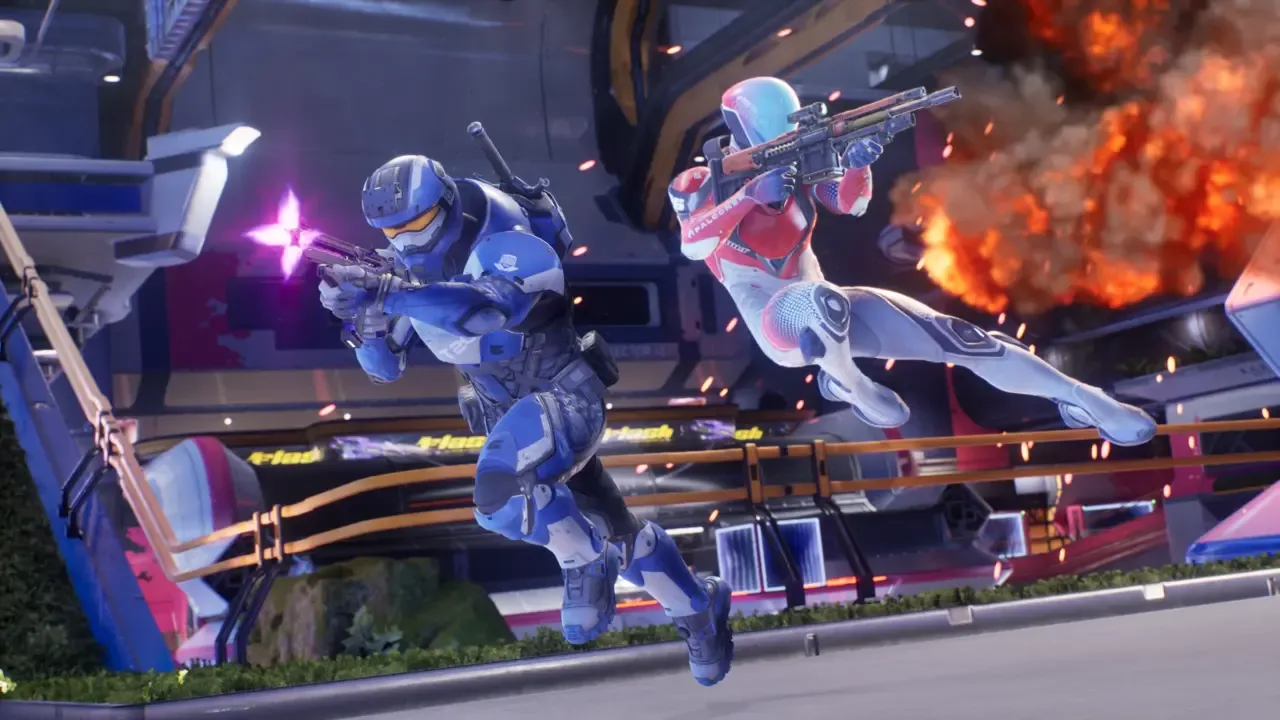
The December 2025 relaunch was a substantial response rather than a cosmetic rebrand. Splitgate 2 became Splitgate: Arena Reloaded, and 1047 removed factions and abilities while rebuilding progression, ranked play and several maps. A Classic Arena mode restored even starts and map pickups. The studio had listened to the clearest criticism, but timing was now the problem. Between May and December, the same game moved from beta to launch, back to beta and then into a renamed relaunch. A better build could not reproduce the surprise of discovering "Halo with portals" during the first game's sudden rise.
The Steam response illustrated the size of the problem. Arena Reloaded peaked at 2,275 simultaneous players on the platform on its relaunch day, then fluctuated between roughly 300 and 900 in the weeks that followed. 1047 correctly argued that Steam charts showed only one part of a cross-platform audience. Eight months later, however, the studio's admission that revenue could not cover server costs confirmed that the concern was not merely a misleading snapshot.
For a competitive game, population is part of the product. It determines queue times, skill matching and whether specialized playlists can remain available. A newcomer also competes with established ecosystems around games such as Counter-Strike 2 and Valorant, where friends, rankings and unlocked content give people reasons to return. Once Splitgate lost momentum, mechanical improvements were not enough to solve that network problem.
Empulse Changed the Mechanics, Not the Risk
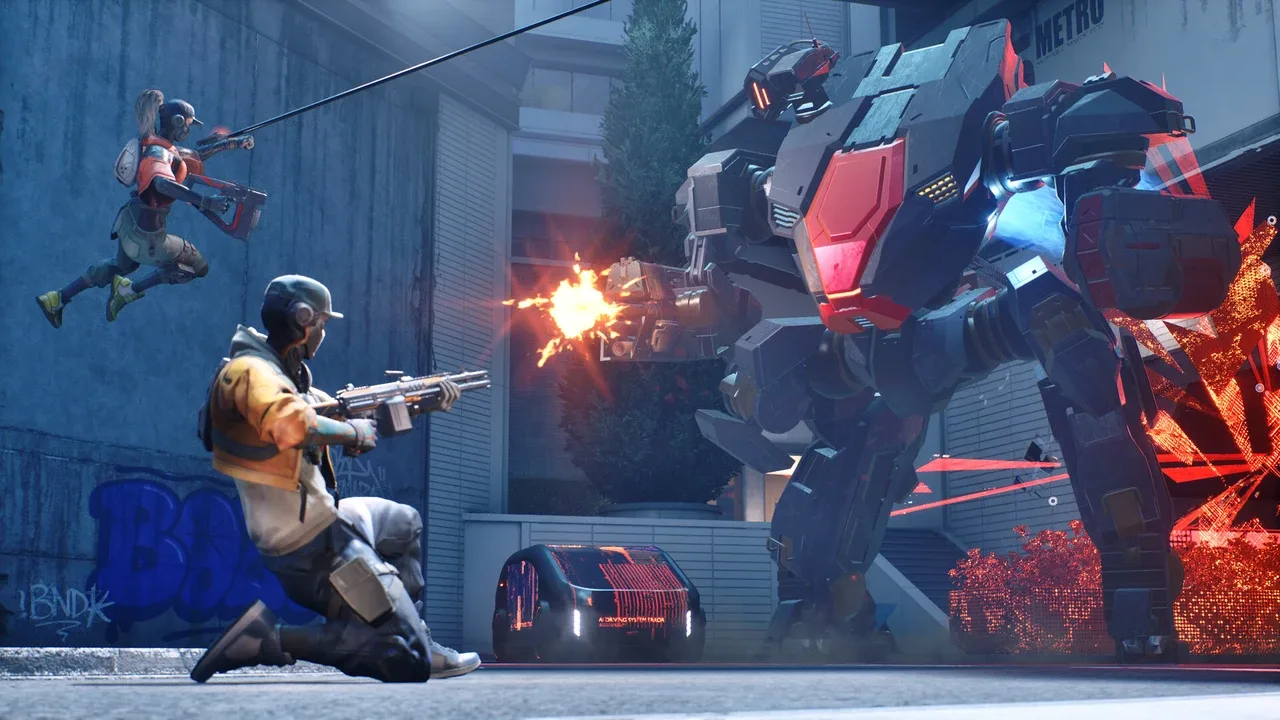
Empulse looked like a clean break from Splitgate. Released into Early Access on June 24, 2026, the $20 shooter built its 6v6 matches around wall-running, grappling, movement-altering paint and contested mechs. Launching as a paid game avoided some pressure to monetize every returning player, but it placed a price between Empulse and an audience surrounded by free alternatives. It also arrived while Arena Reloaded was still fighting for relevance. Despite their different mechanics, both needed matchmaking populations and attention from a studio already shaped by layoffs.
Fewer than four weeks after Empulse launched, reports emerged of another wave of cuts at 1047 Games. Active development ended little more than two months after release. That is barely enough time for an Early Access project to respond to feedback, but the studio's explanation is financial: the audience was not producing enough revenue to justify the infrastructure.
In that sense, Empulse was less of a diversification than it first appeared. 1047 changed the movement system, setting and payment model, but remained inside population-dependent competitive shooters. The studio had moved away from Splitgate without moving away from the business conditions that made Splitgate difficult to sustain.
Splitgate's Fall Is Not Proof That Arena Shooters Cannot Work
It would be convenient to treat this as a verdict on an entire genre. 1047 tried to revive arena combat, attracted millions of players and eventually stepped away, so the audience must never have existed. The studio's own history makes that conclusion too simple. The original game found a remarkable audience because it offered a strong mechanic, a clear pitch and almost no friction to trying it. What it did not establish was a route from temporary scale to reliable long-term spending.
The useful distinction is between a viable arena shooter and a live-service platform expected to support major growth. A focused game can survive with a modest community if its budget, hosting model and update schedule are built for that reality. It becomes far harder when every project needs large matchmaking pools, frequent content and enough revenue to maintain an expanded studio. The mistake was not necessarily making arena shooters. It was repeatedly asking a niche format to produce mass-market live-service economics.
1047 deserves credit for preserving its three recent multiplayer games through peer-to-peer support. A server browser cannot replace ranked matchmaking or updates, but it gives the communities a future that does not depend on the studio paying a monthly bill. There is an unavoidable symmetry to it: the company that became famous because its servers could not admit players is leaving the genre because those servers no longer attract enough of them.
Whatever comes next should carry forward the best lesson from the original rather than the scale of the ambition that followed it. Splitgate worked because its idea was distinct, understandable and well matched to a small team. 1047's next project may indeed look very different. Its chances will depend less on escaping one genre than on building something whose scope can survive after the launch moment has passed.
Tagged In
Discussion
0We want to hear from you. Share your perspective in the comments below, and please keep the conversation respectful.
Log in to join the discussion - vote, reply, and share your take.
Log In