
Halo: Campaign Evolved Does Not Need to Reinvent a Legend
Halo: Campaign Evolved modernizes Master Chief’s first mission with improved combat and co-op, but technical issues and its $50 price hold it back.
Halo: Campaign Evolved does not need long to remind you why Master Chief's first adventure changed console shooters. All it takes is a shielded Elite, a group of fleeing Grunts, and a plasma grenade setting off a chain of explosions. After 25 years, this system can still create unpredictable encounters without relying on skill trees, weapon stats, or rewards constantly appearing on the screen.
Halo Studios has modernized the controls, expanded the arsenal, rebuilt parts of the levels, and added three missions set before the main campaign. The result is a great way to experience the story of Halo, particularly for PlayStation players. However, repetitive corridors, the absence of competitive multiplayer, and inconsistent technical performance prevent this remake from becoming the undisputed best version of Combat Evolved.
Combat still does not need experience bars
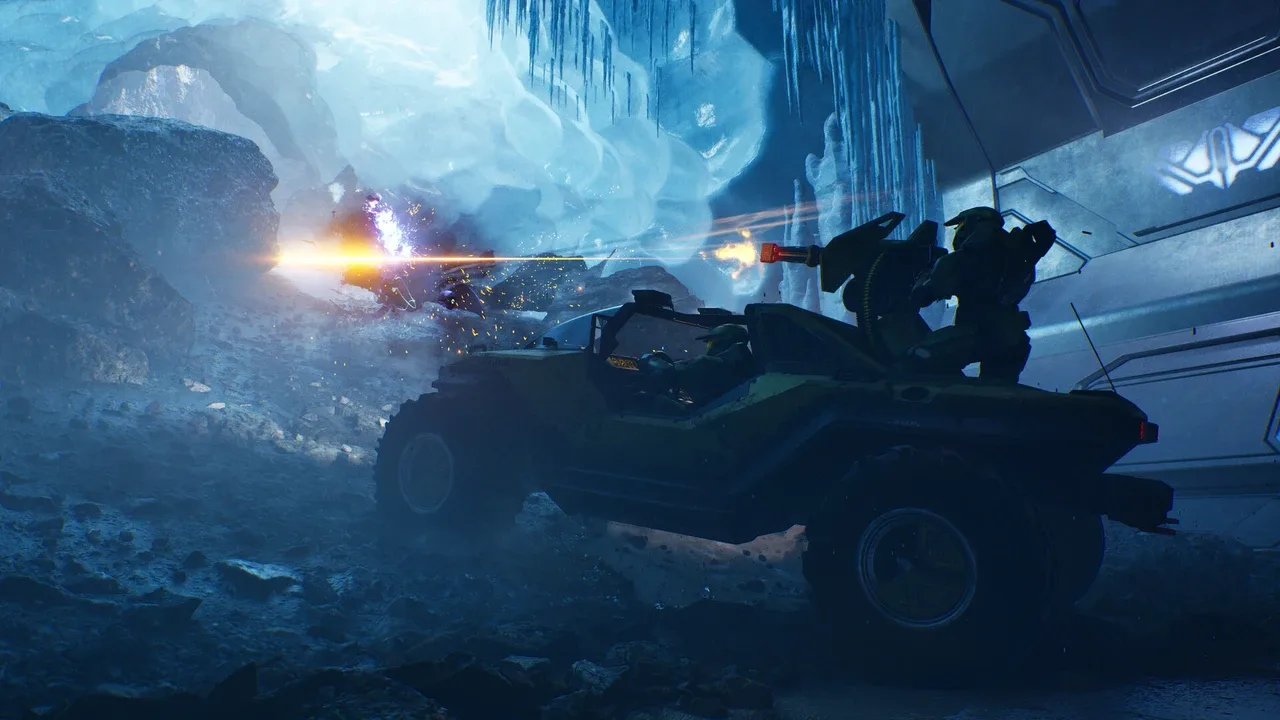
Halo is built around a simple set of rules. Master Chief can carry two weapons, his shield regenerates after a short break, and each enemy requires a slightly different response. The Plasma Pistol removes an Elite's protection, kinetic weapons finish the job, and grenades force enemies out of cover.
The best encounters do not play out in exactly the same way, even when attempted again. Elites retreat after losing their shields, Jackals block incoming fire, and Grunts flee when their leader is killed. At higher difficulty levels, enemies change positions more often and make better use of their numerical advantage. They still make questionable decisions, but this balance between effectiveness and controlled chaos gives combat its personality.
The remake adds sprinting, equipment, vehicle hijacking, and more modern aiming options. Faster movement suits the larger arenas, while players looking for something closer to the original experience can disable it.
The expanded arsenal includes nine weapons from later entries in the series. The Battle Rifle provides a precise answer to targets at medium range, the Energy Sword encourages players to take risks by closing the distance, and the Needle Rifle offers another way to fight enemies behind cover. The additional choice slightly weakens the clear division of weapon roles found in the original, but it also means another campaign playthrough does not have to rely on the same handful of tools.
Beautiful views do not guarantee consistent performance
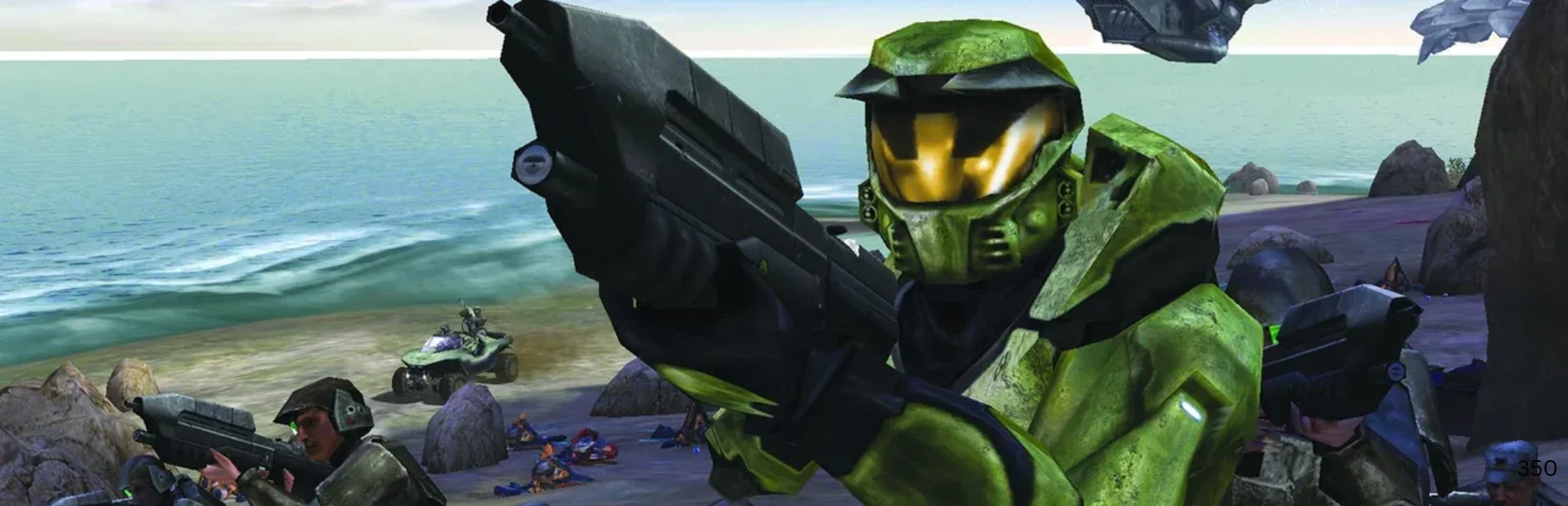
Stepping onto the surface of the ring for the first time is once again an impressive moment. Forests, rock formations, and artificial structures stretching into the sky show a sense of scale that the original Xbox could only suggest. Unreal Engine 5 fills the locations with vegetation, dynamic lighting, signs of battle, and significantly more detailed models.
Xbox Series X and the standard PlayStation 5 offer modes prioritizing either image quality or performance. The first provides a higher resolution at 30 frames per second, while the second targets 60 FPS and is better suited to a fast shooter. It runs smoothly through most of the campaign, but brief stutters appear during large battles and when extensive areas are being loaded. They are not constant, but they can disrupt aiming when the screen fills with enemies, vehicles, and explosions.
PS5 Pro provides a more stable image and retains more visual effects in Performance Mode, although it does not eliminate every drop. Xbox Series S maintains its 30 or 60 FPS targets but produces a noticeably softer image at 1080p. The PC version offers the most flexibility and scales well when the settings are lowered, but stuttering, crashes, and login problems were reported most frequently on computers at launch. Requiring players to connect a Microsoft account before even starting a solo campaign made the release more troublesome.
Loading times are thankfully very short. Returning to the last checkpoint usually takes only a moment, so dying during a difficult fight does not result in a long wait. This matters in a campaign where higher difficulty levels regularly encourage players to repeat the same section with a different weapon or route.
Weapons sound more powerful, but the mix falls behind
The updated audio noticeably increases the force of every fight. The Assault Rifle no longer sounds like a lightweight automatic weapon, plasma shots crackle with energy, and the sound of an Elite's shield breaking immediately signals an opportunity to attack. Warthog engines, passing Banshees, and grenade explosions give open battles more weight.
The audio also continues to provide useful information. A Grunt's voice can reveal an enemy hiding behind cover, the distinctive sound of a grenade warns players to change position, and Covenant weapons remain easy to identify without looking towards the incoming fire.
However, the audio layer is not entirely free from problems. Brief crackling or audio dropouts occasionally occur, while the Dolby Atmos mix rarely makes full use of the height channels. The re-recorded dialogue sounds cleaner, but not every line retains the energy of the original performances. Martin O'Donnell and Michael Salvatori's music remains the strongest element, and it can still turn a routine entrance into an arena into one of the series' most distinctive moments.
The rebuilt levels still remember 2001
Halo Studios has improved some of the campaign's most heavily criticized sections. The Library has more varied rooms, clearer navigation, and changing enemy configurations. It remains a lengthy battle against the Flood, but it is less likely to feel like an endless journey through the same corridor.
The second half of the campaign has not become a completely different game, however. Returns to previously visited locations, similar interiors, and lengthy passages remain part of its structure. Players familiar with Combat Evolved will still recognize many attack directions, enemy positions, and moments when the game prepares another wave.
Despite this, the structure of the story remains impressive. The opening military shooter gradually becomes an exploration of an alien construction before turning into horror with the arrival of the Flood. Campaign Evolved emphasizes this transformation through lighting, signs of infection, and more aggressive sound effects. These are not merely new decorations, as the increasingly contaminated environment communicates the growing threat without requiring additional exposition.
Operation Meteorite and co-op provide a reason to return
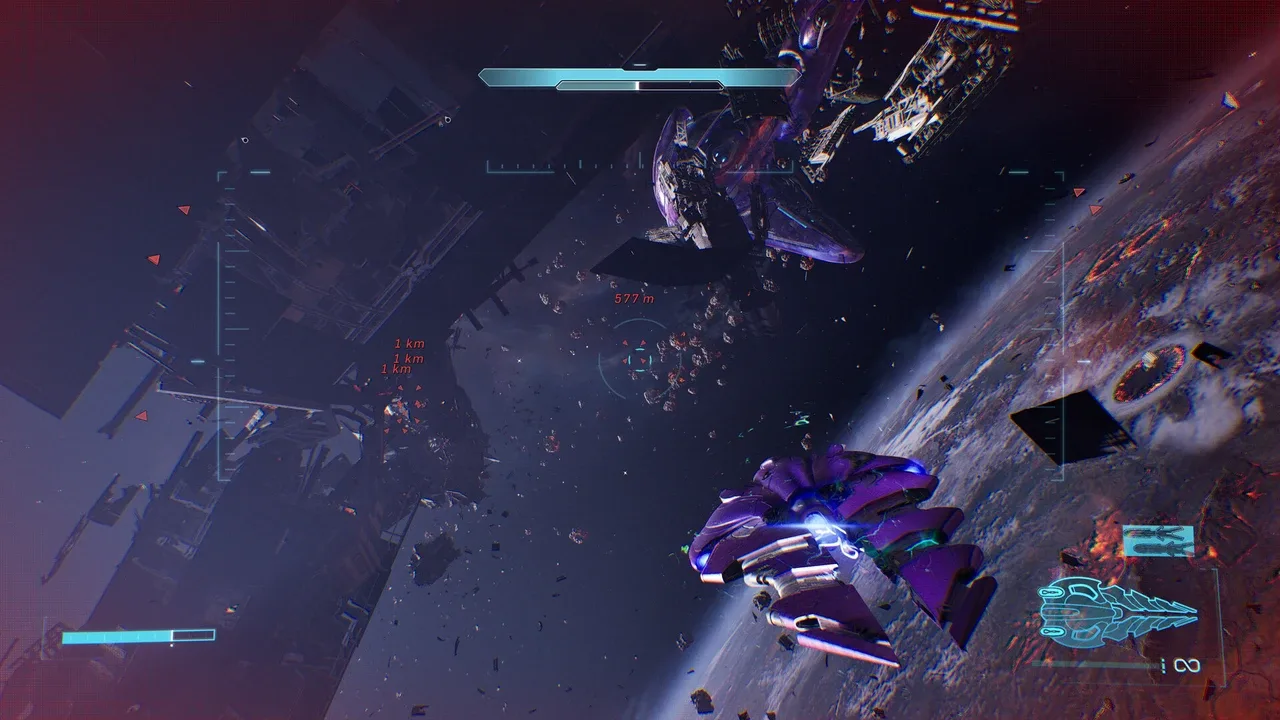
The three new missions form a separate story set before the events of the main campaign. Master Chief fights alongside Sergeant Johnson during an operation aboard a Covenant ship. New locations, enemies, and a broader arsenal allow the designers to move beyond the limitations of maps inherited from a 2001 production.
Operation Meteorite works best during large encounters in which the game uses several enemy and vehicle types simultaneously. The finale shows what a full campaign designed around the new mechanics could look like. The story does not change how the main characters are understood, while the entire addition ends just as it begins developing an identity of its own.
All the content can be completed in four-player online co-op with crossplay and shared progression. The console versions also offer local split-screen for two players. Additional participants increase the number of enemies and the level of chaos, but this is often when Halo is at its best. A plan to hijack a Warthog can turn into a desperate fight beside the overturned vehicle within seconds.
Skulls and Campaign Remix also modify weapon placement, enemy squads, the camera perspective, and the basic rules of combat. This provides more replayability than simply repeating the campaign at a higher difficulty level.
The Master Chief Collection remains the better purchase
The standard edition of Halo: Campaign Evolved costs $49.99 or €59.99. The package includes ten recreated missions, Operation Meteorite, and expanded campaign variants. The game is also available through Game Pass Ultimate and PC Game Pass, making it considerably easier to recommend to players within Microsoft's ecosystem.
A direct comparison with Halo: The Master Chief Collection puts the new remake in a difficult position. The collection officially costs $39.99 and includes six games, 67 campaign missions, more than 120 multiplayer maps, and selected Forge tools. Its version of Combat Evolved Anniversary also allows players to switch between the classic and updated graphics at any time. Campaign Evolved does not offer this option because its rebuilt levels, animations, and mechanics are not simply an overlay placed over the unchanged original.
On Xbox and PC, The Master Chief Collection therefore provides considerably more content at a lower price. It is the better choice for someone who wants to experience the entire series, retain access to the classic presentation, or play multiplayer. Campaign Evolved has the advantage of more modern controls, improved levels, broader co-op support, and significantly better presentation.
The situation is different on PS 5, where the earlier collection is unavailable. For Sony console owners, the remake is the first full way to experience Master Chief's campaign, making its price easier to accept without an existing alternative.
Halo Campaign Evolved is a great return, but not the definitive edition
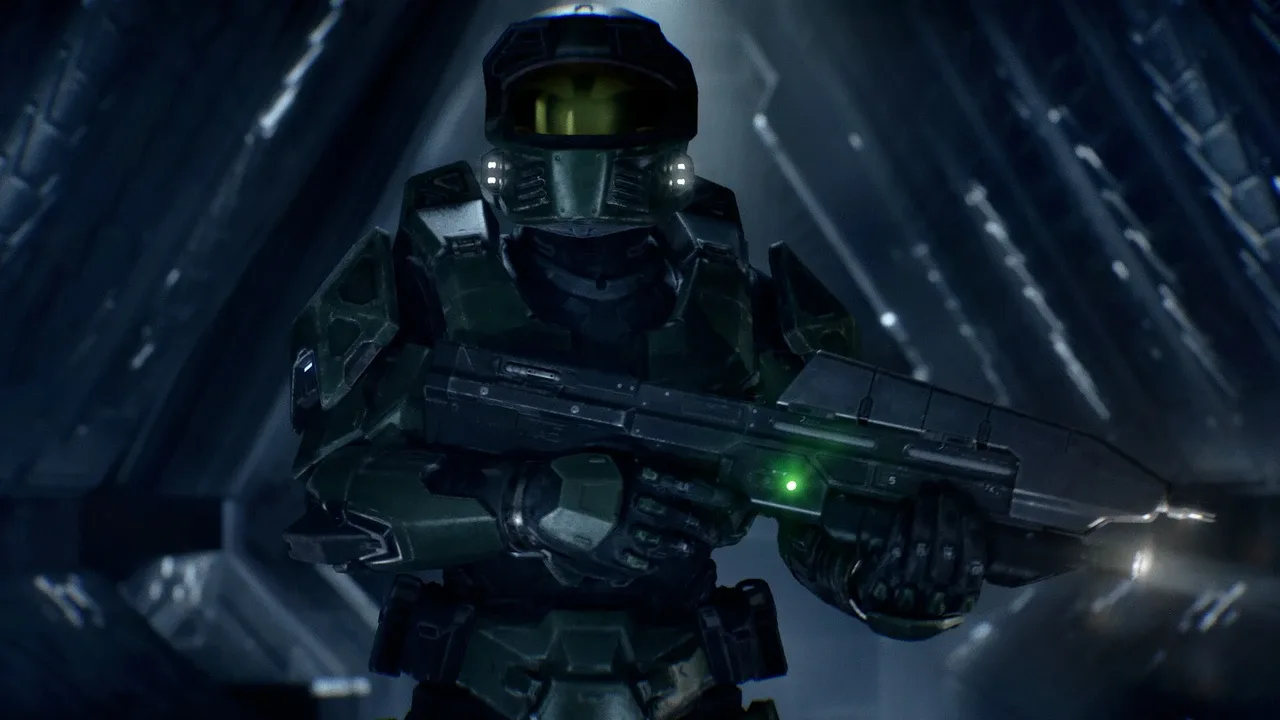
Halo: Campaign Evolved confirms that the foundations of the first game did not need a revolution. Encounters with the Covenant still reward changing weapons, responding to enemy behavior, and using the environment. Modern controls, updated sound, short loading times, expanded co-op, and three new missions make this the most accessible version of the campaign.
The remake does not replace The Master Chief Collection or the original Combat Evolved, however. It lacks competitive multiplayer, some levels still show their age, and problems with performance and launch stability require further improvements. New players receive an excellent introduction to the series. Veterans must decide whether the new presentation and additional missions are worth more than the significantly larger collection.

Halo: Campaign Evolved is a faithful yet modernized remake of Halo: Combat Evolved’s campaign. Experience the original story rebuilt with high-definition visuals, updated cinematics, and refined controls, plus three brand-new prequel missions featuring the Master Chief and Sgt. J
Released
July 28, 2026
Developer
Halo Studios
Publisher
Xbox Game Studios


Tagged In
Discussion
0We want to hear from you. Share your perspective in the comments below, and please keep the conversation respectful.
Log in to join the discussion - vote, reply, and share your take.
Log In