
Credit: Valve
newsLeaks & Rumoursvalves
Possible Steam Deck 2 APU surfaces with 6 CPU cores and 24GB RAM
October 21, 2026·3 min read
A leaked AMD Gainsborough benchmark reveals six CPU cores and 24GB of RAM, fueling Steam Deck 2 speculation without confirming Valve's involvement.
New benchmark data may have provided a closer look at the AMD processor rumored to power Valve’s eventual Steam Deck successor. An engineering sample associated with the previously leaked Gainsborough APU has appeared with six CPU cores, 12 threads and 24GB of LPDDR5 memory.
The result adds detail to earlier Steam Deck 2 speculation, but it does not confirm that Gainsborough is intended for Valve’s next handheld. Neither Valve nor AMD has officially connected the chip to a new Steam Deck.
Gainsborough appears with six CPU cores
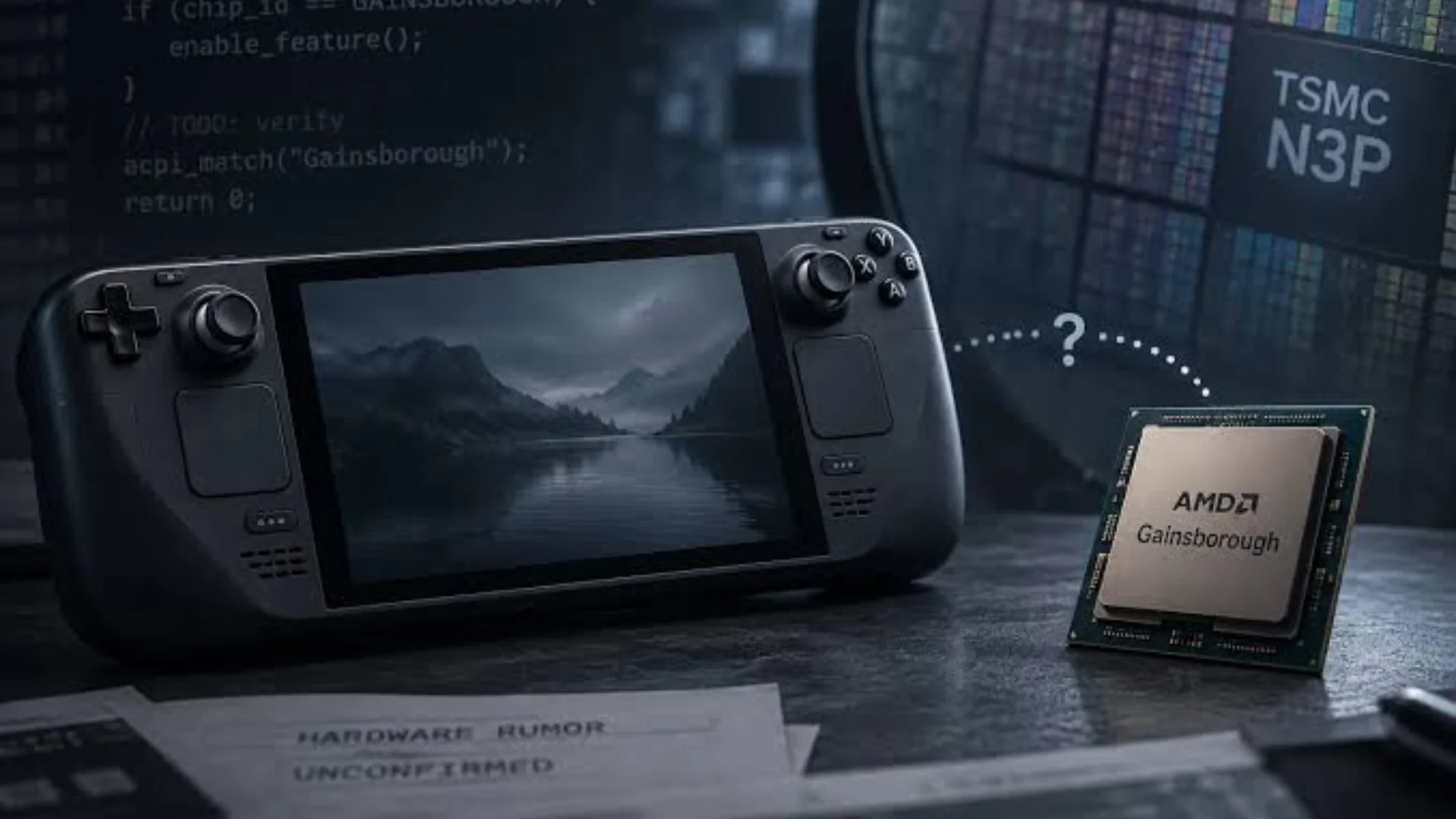
The benchmark lists an AMD engineering sample running on a development board with six cores and 12 threads at 2.4GHz. The system also includes 24GB of LPDDR5 memory running at 9,600 MT/s.
That would be a clear increase over the Steam Deck OLED, which uses a four-core, eight-thread Zen 2 CPU and 16GB of LPDDR5-6400 memory. The leaked configuration therefore has 50% more CPU cores and 50% more memory.
Its integrated GPU is reportedly clocked at 2.4GHz, but the benchmark does not identify the graphics architecture or compute-unit count. Without those details, it is difficult to estimate real gaming performance.
The codename fits Valve’s existing pattern
Gainsborough attracted attention because Valve has previously used Final Fantasy VII-related names for Steam Deck hardware. The original Steam Deck APU is known as Aerith, while the OLED revision uses the codename Sephiroth.
Aerith Gainsborough is the character’s full name, making the new codename an obvious fit with Valve’s existing naming pattern. References to “GBR” in the development board and graphics firmware have further fueled speculation.
The benchmark was also uploaded before the codename became widely discussed online. That makes it more interesting, although it still does not prove Valve is the intended customer.

Early benchmarks do not show final performance
Synthetic results from the engineering sample should not be treated as reliable Steam Deck 2 performance figures. Drivers, power limits, resolution and unfinished hardware can all have a major effect on benchmark results.
The chip is also running at engineering-sample clock speeds, while its final power target remains unknown. For a handheld, efficiency and battery life will matter just as much as raw performance.
Valve still has not announced Steam Deck 2
Valve has confirmed that it expects to make another Steam Deck, but it has not announced specifications, pricing or a release date. The company has repeatedly said it wants a meaningful performance increase without sacrificing battery life and efficiency.
Gainsborough’s six-core CPU and 24GB memory configuration now gives those rumors more technical detail. Until Valve or AMD confirms the chip’s purpose, however, it remains a possible next-generation handheld processor rather than confirmed Steam Deck 2 hardware.
Tagged In
Steam Deck 2AMDValve
Discussion
0We want to hear from you. Share your perspective in the comments below, and please keep the conversation respectful.
Log in to join the discussion - vote, reply, and share your take.
Log In