Crash Bandicoot at 30: the levels aged better than the rules
Crash Bandicoot turns 30 with its best levels still intact, but the PS1 original's fixed camera, save system and punishing gem runs show their age.
September 9 marks 30 years since Crash Bandicoot's North American PlayStation debut. Naughty Dog's platformer sends an escaped laboratory experiment across three islands to rescue his girlfriend Tawna from Dr. Neo Cortex. You jump and spin through jungle paths, ruined temples and factories on the way to his stronghold.
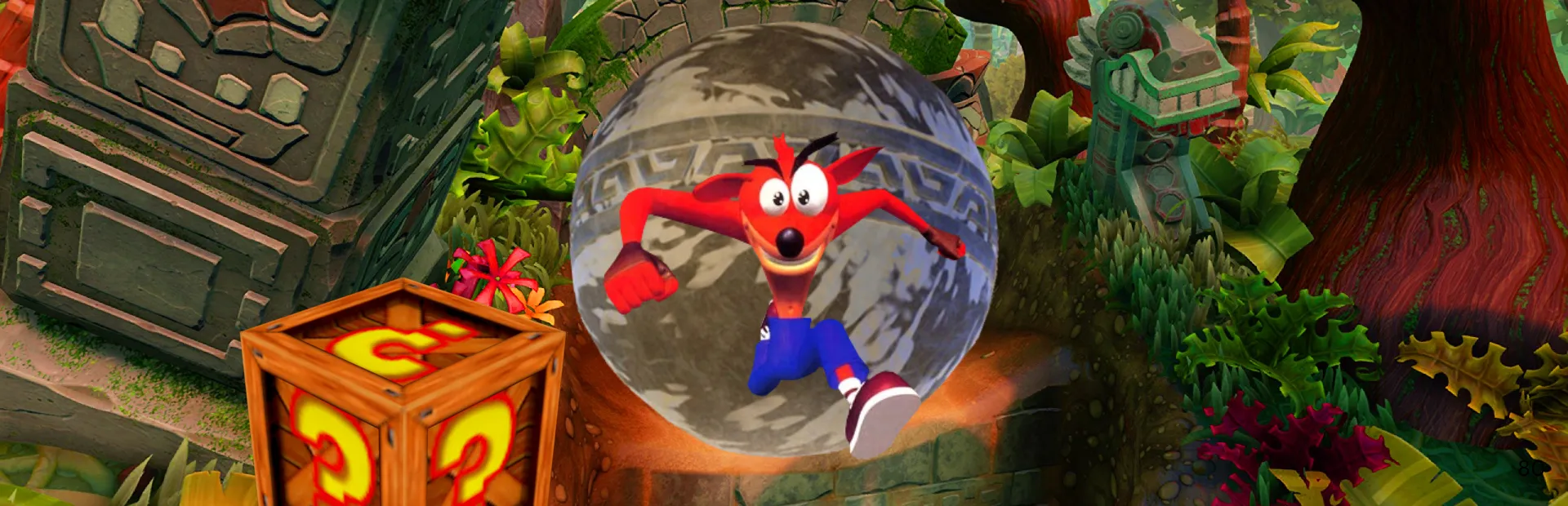
Although the move set is quite small, it still carries a remarkably varied game. A few moving platforms can become a demanding climb, while Boulders sends you hurtling toward the camera with a giant rock at your heels.
The original PS1 release is much less forgiving when you make a mistake. Collecting gems demands flawless runs, and even saving can depend on clearing a bonus stage. Crash Bandicoot remains a good platformer with several excellent levels, but it too often makes you replay familiar ground before you can attempt the part that killed you.
Three islands give the adventure a destination
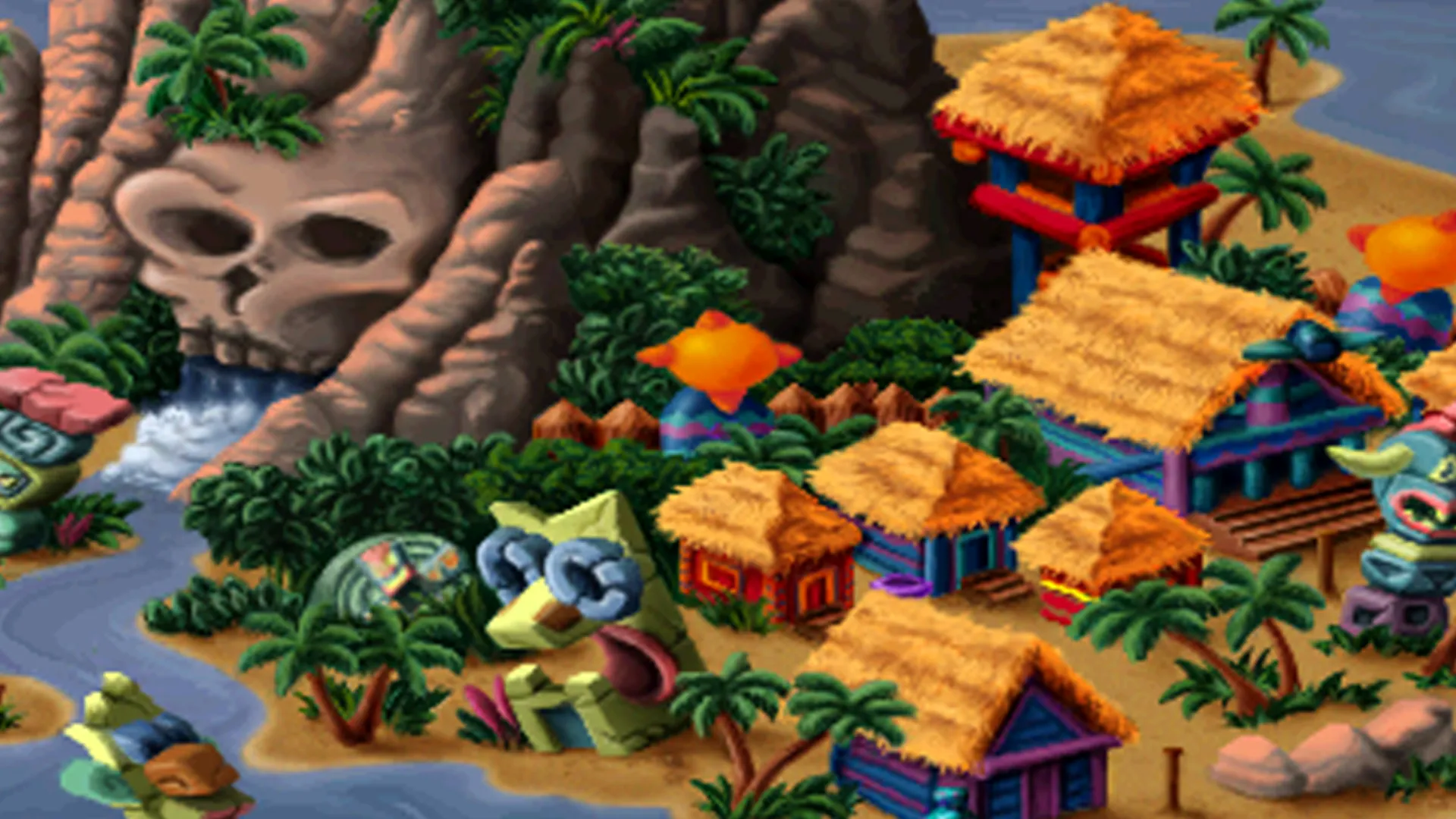
Crash's world map turns each completed stage into another step toward Cortex. You start among beaches and dense jungle, then move through temples, factories and machinery before reaching his stronghold.
The levels are narrow and keep you on a fixed route. Thick foliage crowds the early paths, old stone structures sit beyond them, and the industrial stages replace the greenery with pipes, metal platforms and dangerous machinery. There is little room to wander, so most of the detail is packed directly around the path you are following.
Crash keeps the setting playful. His exaggerated expressions and slapstick reactions give him far more personality than the simple rescue story ever does. The grin before a hog ride tells you exactly how seriously he is taking the situation, and even his deaths are funny. At least until the same mistake has made you watch one for the sixth time.
The soundtrack gives the islands a stranger edge. Jungle and temple stages use sparse melodies and percussion, while the factories become busier and more mechanical. Beneath the cartoon violence, the original Crash Bandicoot still has a slightly eerie atmosphere.
Jumping and spinning leave plenty to learn
Where in later Crash games you can slide, double jump and use a wider range of movement options, the original mostly sticks to jumping and spinning. Small platforms therefore demand precise positioning and timing, and the controls are often stiff when you need both.
Crates do a lot of the work in keeping those simple moves interesting. Ordinary boxes can be smashed with a spin, but stacked crates can also give you somewhere to bounce. Break the wrong one too early and you may have just removed the platform you needed.
TNT changes the same interaction again. Spin into it and it explodes immediately. Jump on top and a countdown starts, giving you a few seconds to get clear. A crate sitting beside a hazard can suddenly make the safe route much less tempting, especially when the sound of breaking boxes keeps convincing you that one more is probably worth it.
The crates were originally added because Naughty Dog needed something to fill the quieter stretches between enemies. The detailed environments left limited room for putting more creatures on screen, so boxes became rewards, platforms and hazards instead. It started as a practical solution and ended up becoming one of the things that defines Crash Bandicoot.
A different camera angle changes the same jump
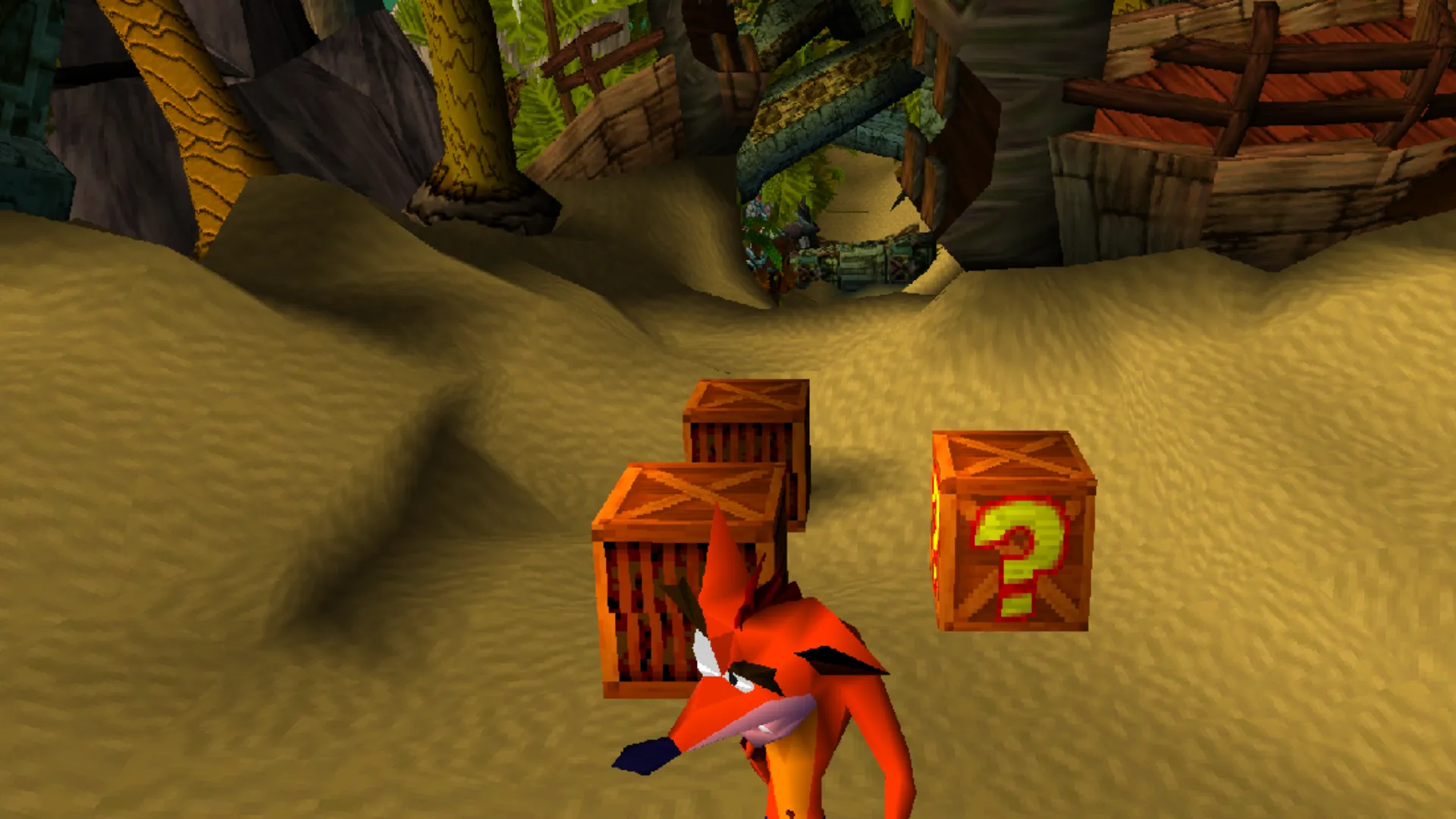
Those basic jumps do not always happen from the same perspective. Jungle Rollers keeps the camera behind Crash, with stone wheels crossing the path ahead. Heavy Machinery turns him sideways instead, so you are judging horizontal gaps and moving platforms rather than distance into the screen.
Hog Wild removes even more control. Crash rides a boar that keeps moving forward, leaving little time to stop and line up the next obstacle. Boulders keeps Crash on foot but turns him toward the camera, with a giant rock chasing him down the path. You see less of what is coming and have to react as the ground appears at the bottom of the screen.
Road to Nowhere shows the weakness of that fixed camera. Its broken bridge is full of narrow planks above a fatal drop, but the view sits directly behind Crash. A landing can be difficult to judge because you are trying to estimate depth from a camera you cannot move.
Miss one of those jumps and the problem is not always obvious. You may have jumped too early, or the plank may simply have been farther away than it looked. Aku Aku can take a hit from an enemy or hazard, but he cannot help much when Crash sails past the landing and disappears into the fog.
The changing perspectives give Crash Bandicoot much of its variety without adding new moves. They work best when the camera changes how quickly or carefully you need to react. Road to Nowhere is where that same fixed perspective starts making the jump itself harder to read.
One mistake can mean playing it all again
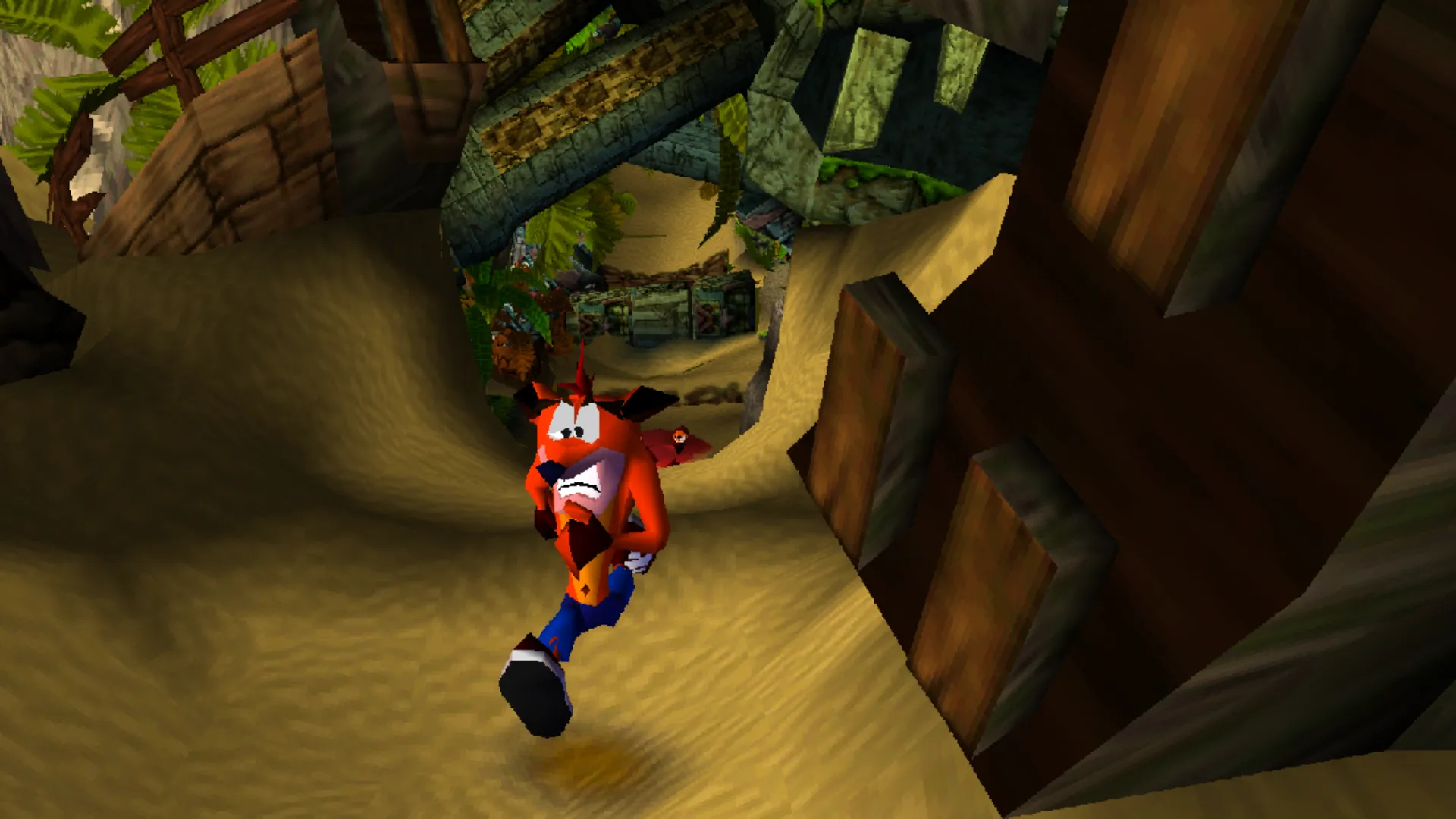
The camera problems become more annoying when you start hunting gems. Breaking every required crate only counts if you finish the stage without dying, so a mistake near the end can send you back through jumps and crates you already know.
Colored gems do make the effort worthwhile by opening new paths in earlier stages, but they are entirely optional.
Saving is harder to avoid. Collecting three Tawna tokens opens a bonus round, and completing it records your progress through the islands. Fail the bonus and you return to the stage without another immediate attempt.
Gems and keys provide additional opportunities to save, but simply reaching the end of a difficult level does not guarantee that the game will remember it.
That becomes especially irritating when you are ready to stop playing. Beating the main stage should be enough. Instead, another sequence of floating boxes can decide whether you keep that progress for the next session.
The N. Sane Trilogy replaced the system with manual and automatic saving. Plenty else changed in the remake, but this is one improvement the original could desperately use. Replaying a stage because you want its gem is a challenge you chose. Replaying it because the game did not save is just wasted time.
Worth finishing 30 years later
Thirty years later, the levels are still the best reason to play Crash Bandicoot. Jumping and spinning sound basic, but Naughty Dog keeps finding new uses for them through crates, moving platforms, chase sequences and changing camera angles. The three islands also give the adventure plenty of character, from its crowded jungles to the machinery surrounding Cortex's stronghold.
The fixed camera occasionally makes depth difficult to judge, and the original save system has aged far worse than the platforming around it. Neither ruins the main adventure. Getting Crash to Cortex is still worth doing, even if collecting everything asks for more patience than most players will want to give it.
The Verdict
Crash Bandicoot still works because its simple controls support an excellent collection of varied platforming stages. The fixed camera sometimes makes jumps harder to judge, and the original save system is needlessly punishing. Thirty years later, reaching Cortex remains great fun, even if full completion is harder to recommend.
The Good
- +Simple jumping and spinning support a surprisingly varied set of levels
- +Crates work as rewards, hazards and platforms rather than simple collectibles
- +Changing camera angles give stages like Boulders and Hog Wild their own identity
- +The islands, animation and soundtrack give the original plenty of character
The Bad
- -The fixed camera makes some depth-heavy jumps difficult to judge
- -Saving progress depends on completing bonus stages or earning certain collectibles
Crash Bandicoot
Crash Bandicoot is the first installment in the Crash Bandicoot series that established Naughty Dog's reputation in the video game industry. Its premises chronicle the creation of the titular Crash, a bandicoot who has been uplifted by the mad scientist Doctor Neo Cortex. The goa
Released
September 9, 1996
Developer
Naughty Dog
Publisher
Sony Computer Entertainment


Tagged In
Discussion
0We want to hear from you. Share your perspective in the comments below, and please keep the conversation respectful.
Log in to join the discussion - vote, reply, and share your take.
Log In