
Escape is not enough in Halloween: The Game
Haddonfield's residents turn a familiar 1v4 chase into a rescue operation, but the game teaches the killer far better than the people trying to stop him.
Haddonfield does not begin in panic. Residents go about their business without knowing Michael Myers is nearby, and four Heroes of Haddonfield must warn them before the player behind the mask turns the town into a graveyard. Escaping keeps a Civilian alive, but the final result also counts the people saved and killed. Teammates therefore prepare routes out and decide how much danger to accept for strangers. Winning is partly an act of evacuation, giving each darkened house a purpose beyond hiding or loot.
Michael is far easier to understand than the people opposing him. His stalking kit translates the patience of the 1978 film into clear decisions, and the solo campaign teaches those decisions one at a time. Civilians receive no equivalent preparation for a denser role built around persuasion, supplies, escape routes, and triage. Coordinated groups get a distinctive structure, while public-lobby newcomers must learn too much during a live hunt. Solo players receive even less beyond Michael's introduction.
The rules behind Michael's slow walk
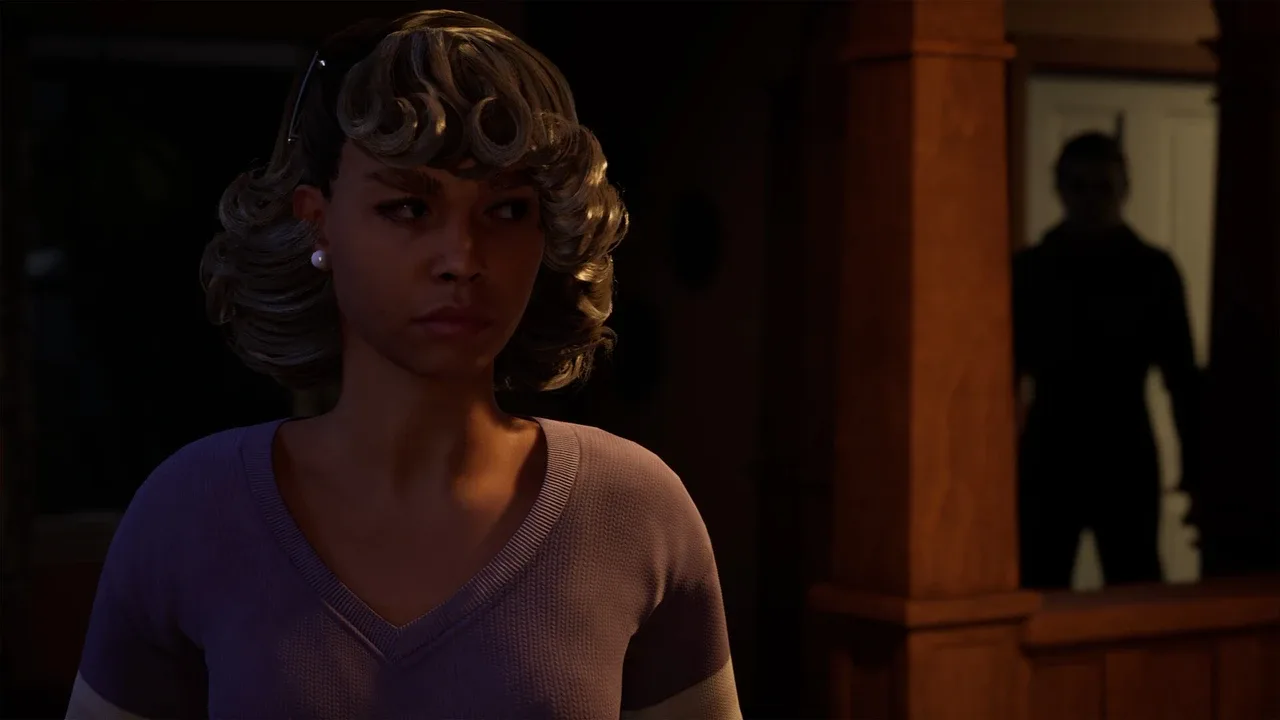
Michael's slow walk would leave him chasing Civilians down long streets if the game treated movement literally. Shape Jump avoids that problem by moving him into a shadowed version of Haddonfield. He becomes invisible, travels faster, and passes through doors, then returns to the normal map closer to a target. Direct light and a Civilian's gaze restrict where he can enter or leave that state, so the ability has a visible rule rather than acting as unrestricted teleportation.
Killer Sense turns time spent watching somebody into Stalk, making that person easier to locate and increasingly vulnerable. Blackout interferes with nearby lights and electronics, while Detection Pulse helps search interiors. The abilities form a recognizable sequence. Cut the power, observe the response, use the darkness to reposition, and approach after the target loses track of Michael.
Environmental executions provide the release after that quiet setup. A kitchen, fireplace, garage, or car can determine how a victim dies, making interiors relevant beyond their loot. Suburban houses and hedges create short sight lines, while East Haddonfield opens longer approaches around farmland and roadside businesses. John Carpenter's theme and Michael's breathing can announce danger before the mask appears.
Every Haddonfield resident affects the result
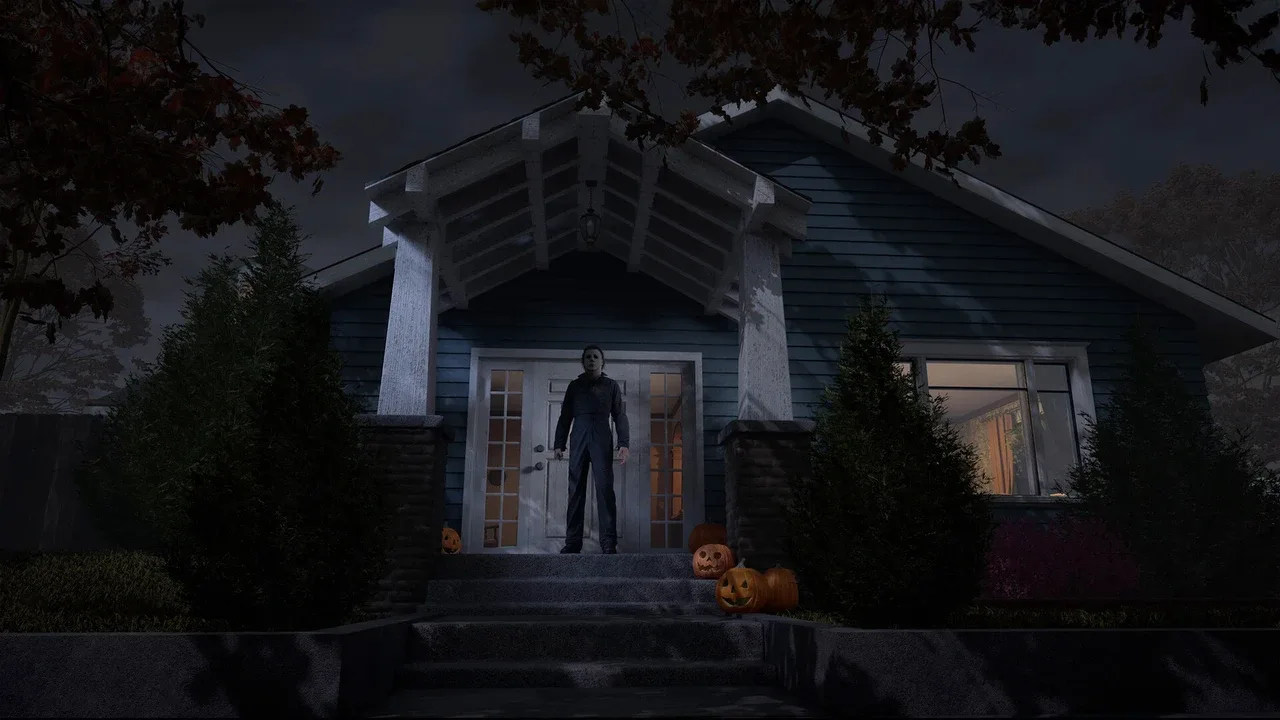
Residents begin a match unaware of Michael. A Civilian must find them and complete a short persuasion check before issuing an order. They can be told to hide, call the police, pick up a weapon, follow a player, or head toward an available escape. Special Targets carry greater value, although ordinary residents still contribute to the balance between survivors and bodies at the end.
That rule changes the obvious winning move. Repairing a vehicle or opening a gate creates an opportunity, not an automatic cue to leave. A player who escapes alone may surrender the neighborhood to Michael. Coordinated teams can divide the map, locate several routes, and move smaller groups of residents instead of leading everybody toward one crowded exit. Proximity chat also limits how easily that plan can be managed once teammates separate.
Civilian stats support different jobs. Personality affects persuasion and follower limits, while Resourcefulness helps with repairs and firearms. Michael receives a chapter-by-chapter introduction, but Civilians enter live matches with commands, items, exits, skill checks, and scoring rules competing for attention. Version 1.0.1 reveals exits from farther away, reducing one source of confusion without teaching how those parts connect. Eliminated players can complete support minigames for cards that help surviving teammates and may enable a return under the right conditions. The repeated inputs offer little when returning is no longer realistic.
Six chapters teach only the killer

The single-player campaign follows Michael through a prologue and five chapters inspired by the original movie. His escape from Smith's Grove leads into small Haddonfield sandboxes that explain Shape Jump, stalking, executions, body disposal, and the consequences of attracting police attention. The story also fills gaps around his return, including how he acquires the coveralls and mask that complete his familiar appearance.
Required targets give each chapter a route to completion, while optional challenges ask for specific kills, stealth, or close recreations of film scenes. Collectibles add background detail, and challenges unlock multiplayer executions and cosmetics. They add reasons to revisit the six chapters, but a direct run can reach the credits in roughly two hours. The campaign is an effective Michael tutorial and a thin standalone reason to buy the game, especially without a Civilian counterpart.
Progression asks for a longer commitment than launch can prove
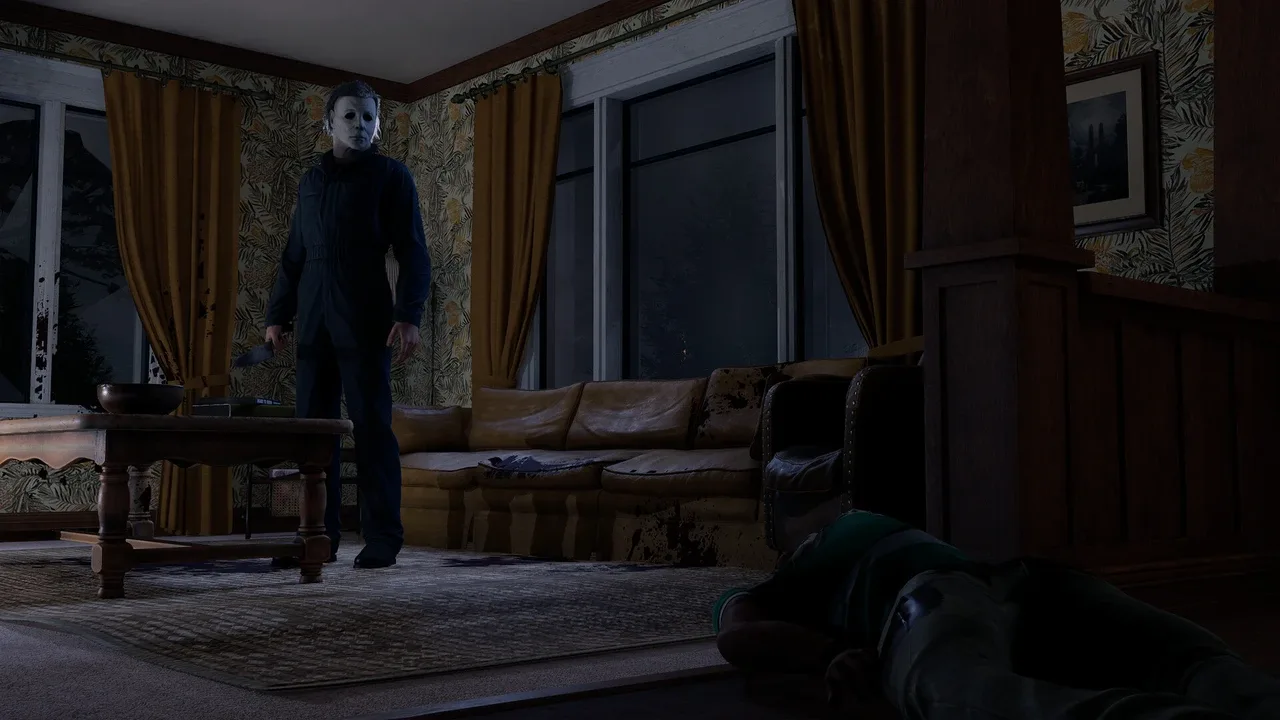
Profile, Killer, Civilian, and Weapon levels unlock characters, abilities, starting items, weapons, and executions. Civilians also assemble decks from randomly rolled Perk Cards, with higher spending improving the chance of a rarer card. Builds can reinforce a character's job, but the cards and currencies increase what a new player must understand outside the match.
Killer Tokens try to keep both sides populated. Playing Civilian earns tokens that can improve a player's position when queuing for Michael. The system gives players who want the mask a reason to spend time in the role that needs four participants. It cannot establish how healthy those queues will remain once the launch audience settles, and four maps with one killer are not enough to judge the long-term rhythm of updates or the eventual metagame.
Version 1.0.1 arrived with the full release after Early Access exposed problems in central systems. It addressed cross-play party drops, residents failing to reach escapes, disappearing prompts, crashes, and broken challenge tracking. It also changed stamina, scoring, and map rotation. The patch changed the state described during Early Access, but its changelog alone cannot establish stability across PC, PS5, and Xbox Series X|S.
Haddonfield is built for a group
Halloween: The Game is easiest to recommend to four or five friends who want the rescue plan to collapse as dramatically as Michael's ambush. His abilities capture the patience of the original film, and the resident system gives the other side decisions that extend beyond personal survival. Learning those rules together can absorb the weak Civilian onboarding.
Solo players receive a much poorer proposition. The campaign cannot carry the package by itself, while public-lobby newcomers must accept that the harder role is the one explained least. Players who need a settled technical picture should wait for platform-specific testing of version 1.0.1. The clearest invitation belongs to organized groups willing to learn Haddonfield together.
The Verdict
Halloween: The Game turns asymmetrical horror into a neighborhood rescue mission, supported by a thoughtful Michael Myers ability set and strong Haddonfield atmosphere. Weak Civilian onboarding, limited maps, and a brief solo campaign restrict its wider appeal, but coordinated groups can find a distinctive and tense multiplayer experience.
The Good
- +Resident rescue objectives add strategy beyond personal survival.
- +Michael’s stalking abilities capture his slow, methodical presence.
- +Haddonfield’s maps, lighting, music, and environmental executions build strong atmosphere.
- +Multiple escape routes and Civilian roles encourage coordinated team plans.
The Bad
- -The short campaign teaches only Michael, leaving Civilians without proper onboarding.
- -Four maps and one killer may limit long-term variety.

On Halloween night, 1978, no one is safe from Michael Myers. Become the Boogeyman or fight back against the face of evil itself in Halloween.
Released
September 8, 2026
Developer
Illfonic
Publisher
Illfonic


Discussion
0We want to hear from you. Share your perspective in the comments below, and please keep the conversation respectful.
Log in to join the discussion - vote, reply, and share your take.
Log In