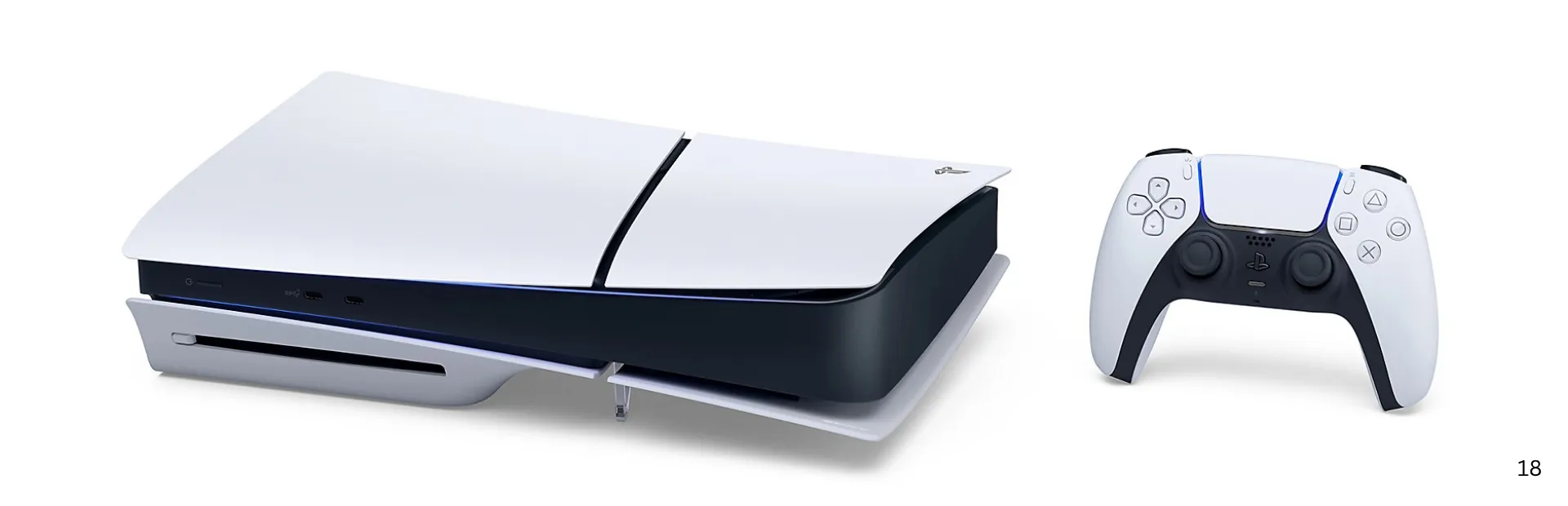
Credit: Sony Interactive Entertainment
featureFeature
The EU Will Not Save PlayStation Discs
July 13, 2026·Updated September 13, 2026·6 min read
EU rules are unlikely to force Sony to keep PlayStation discs alive, as consumer law focuses on clear disclosure rather than preserving physical games.
With Sony setting an end date for new physical PlayStation games, players have started looking to the EU for possible intervention. Brussels has forced hardware changes before, most visibly with USB-C as the common charging standard.
From January 2028, new PlayStation releases will no longer be produced on disc. Sony will move new games to digital sales through PlayStation Store and retail download codes, while existing disc releases and already scheduled physical editions remain unaffected.
The USB-C comparison made that hope understandable, since Brussels forced a common charging standard onto phones, tablets and handheld game consoles. Players who want physical games to survive hoped the same logic could apply to Blu-ray discs.
But it now seems Brussels will treat physical PlayStation games as a commercial choice, not as a hardware standard it needs to protect.
Consumer Protection Stops at Misleading Sales
EU consumer law does not give players a general right to physical media. It gives them a right to accurate information, fair commercial practices and remedies when a product or digital service does not match what was promised.
Under EU rules on unfair commercial practices, companies must give consumers enough accurate information to make an informed buying decision. Misleading information, hidden material facts and aggressive sales tactics can trigger consumer protection rules.
If we apply that to PlayStation, EU law mainly requires Sony to tell buyers clearly what they are getting before they pay.
Sony cannot sell a digital-only console as if it includes a disc drive. It cannot hide the fact that a game is download-only if that information affects the purchase decision. It cannot advertise a feature the product does not have.
But EU law does not force Sony to keep manufacturing Blu-ray players inside future PlayStation hardware. It also does not force publishers to press discs for every new game.
The obligation sits on disclosure, not format preservation.
Sony is legally safer if the box, store page and retail listing make the digital-only nature clear before purchase. For players who buy discs for ownership, resale or collecting, this feels like a weak answer. Legally, Sony mainly has to be clear before purchase.

The PS5 Online Handshake Is Hard to Attack
The PS5 disc drive issue follows the same logic. Sony's own support page says an internet connection is required to pair the detachable disc drive with a PS5 console during setup. That requirement applies to the disc drive pairing process, not necessarily to every disc play session after setup.
The online check changes the nature of the disc drive. It no longer works like pure offline hardware: connect, insert disc, play. On PS5, the detachable drive first needs an online validation step before the console accepts it.
Legally, the online check is difficult to challenge. EU rules already allow companies to protect copyrighted software with technical measures, including systems that limit unauthorized access or tampering.
That means Sony has a strong legal argument when it presents the disc drive pairing as platform security or anti-piracy protection.
For regulators, the bigger issue would likely be how Sony explains the requirement. If buyers are clearly told that the detachable disc drive needs an internet connection for pairing, EU consumer law gives them a right to clear information. It does not give them a strong right to demand a fully offline setup.
Publishers Still Control Long-Term Access
The PS5 pairing check shows that you can own the console, own the detachable drive and own the disc, but that the drive still needs Sony's online approval before it works with the hardware.
McGrath pointed to a broader version of the same problem in the Commission's response to Stop Killing Games. That campaign asked the EU to stop publishers from making games unplayable after commercial support ends. The Commission did not propose a binding duty to keep those games playable. It moved toward talks with the industry and consumer groups instead.
For players, both examples point in the same direction. Physical ownership gives more control than a digital library, but it does not remove publisher control over activation, online features, licensed content, patches or server support.
EU law can require Sony to explain those limits before purchase. It is not currently forcing Sony or publishers to keep every technical route open forever.

Sony Is Not Being Treated Like Apple
In Europe, Apple had to loosen control over iPhone and iPad software distribution under the Digital Markets Act. The App Store, iOS, Safari and iPadOS are designated gatekeeper services, so Apple must allow routes such as third-party app stores, web distribution and alternative payment options.
A digital-only PlayStation future creates a similar frustration for players. New game sales would move toward PlayStation Store, with retail download codes as the outside option.
Sony is not in the same legal position. The Commission's current DMA gatekeeper list does not include Sony, and PlayStation Store is not a designated core platform service. Apple is regulated under the DMA. PlayStation is not.
So the EU can pressure Apple's App Store in a way it cannot currently pressure PlayStation Store. Unless Sony is designated later, the DMA gives the Commission no direct route to force physical PlayStation releases or open PlayStation game sales to outside storefronts.
A Clear Path for an All-Digital PS6
McGrath's reading leaves room for digital-only PlayStation products when buyers are told clearly what they are buying and existing consumer rights still apply. The DMA forced Apple to loosen control over iPhone and iPad software distribution, but PlayStation Store is not under the same gatekeeper rules.
Physical games now depend more on business value than EU intervention. They still matter to players who collect, resell, lend, gift or keep discs because they distrust digital libraries. They also keep retailers in the chain. Brussels is not treating those reasons as a legal right to future disc releases.
An all-digital PlayStation 6 looks possible under current EU rules. Sony must label products clearly, respect existing consumer protections and keep its digital terms within competition law. Physical releases continue only if Sony and publishers still see enough value in producing them.
Tagged In
PlaystationPhysical GamesSony
Discussion
0We want to hear from you. Share your perspective in the comments below, and please keep the conversation respectful.
Log in to join the discussion - vote, reply, and share your take.
Log In