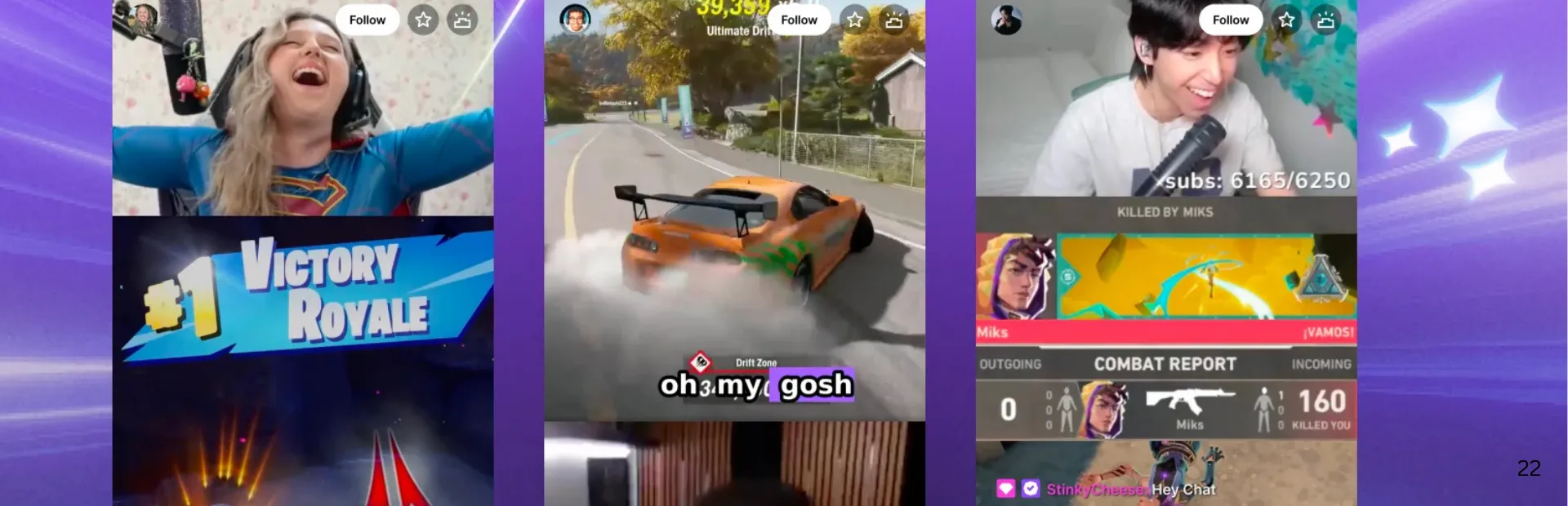
Credit: Twitch
featureFeature
Why Twitch Could Be the New College Admissions Test
July 16, 2026·Updated September 12, 2026·5 min read
A new $15,000 gaming scholarship rewards rare solo achievements, and Twitch streams may become the only way to prove a student really earned them.
For the 2026 academic year, the University of Silicon Valley (USV) launched the Max Achievement Scholarship, allocating up to $15,000 annually for specific single-player milestones.
Collegiate gaming grants traditionally funded competitive multiplayer rosters, but this new program assigns direct institutional value to solo achievements with sub-1% global completion rates.
However, monetizing a lonely, 500-hour gaming marathon requires strict academic verification. Currently, the university verifies these milestones through public PlayStation Network or Steam profiles and a graded academic essay that explains their methodology.
This dual requirement attempts to bridge the gap between a hobby and academic merit, but it introduces a very modern problem for admissions boards.
Tiered Payouts and the Essay Requirement
The scholarship pays out across three academic terms per year, utilizing a strict two-tier financial system based on global completion rates. The total payout caps at $15,000 annually.
- Mastery Tier: Awards up to $2,500 per term for achievements with a 1% to 5% global completion rate.
- Legendary Tier: Awards up to $5,000 per term for sub-1% feats, which typically require upwards of 500 hours of gameplay.
The university targets specific, time-intensive single-player milestones. Qualifying feats include unlocking the Platinum Trophy in Elden Ring, maximizing all combat and crafting jobs in Final Fantasy XIV, or reaching level 99 in every Old School RuneScape skill.
The admissions board also accepts volume-based applications, such as holding ten PlayStation Platinum Trophies or achieving a 100% completion rate in five separate Steam games where fewer than 5% of the player base has done the same.
However, these in-game metrics only act as the baseline requirement. Unlocking the achievement qualifies the applicant for the process, but the digital badge alone does not guarantee the payout.
The deciding factor is a 500-to-750-word essay. In this text, the student must translate their achievements into corporate and academic terminology, proving that their gameplay taught them tangible skills like "resource optimization" and "systems thinking."
The Skill-to-Résumé Translation (And Its Major Flaw)
To evaluate the application, USV maps in-game achievements directly to the cognitive competencies required in the tech and design sectors. Securing an S-Rank on all Cuphead bosses is supposed to demonstrate precision under pressure. A 100% completion rate in Stardew Valley indicates long-term resource management.
But should it be this easy for someone who simply spends a massive amount of time playing video games to secure a university grant?
The current verification model is structurally weak. A PlayStation trophy is nothing more than a static timestamp. It proves when a task was completed, but says nothing about how.
Furthermore, in the era of generative AI, a 750-word essay is virtually meaningless as a metric for human cognitive ability. Anyone can prompt a language model to generate a highly convincing, perfectly structured essay about how grinding levels in RuneScape taught them "iterative planning."
Relying on server-side timestamps and easily fabricated text documents makes this system highly vulnerable.
The Stream as an Academic Transcript
This is where platforms like Twitch and Kick could step in to solve the problem. By streaming the attempt, a static digital trophy becomes a live, transparent record of how a player actually thinks. A broadcast captures exactly what the admissions board wants to see, in a format that AI cannot fake: how an applicant fixes mistakes, changes tactics on the fly, and handles the frustration of a bad run.
Instead of just handing in a clean, finished result accompanied by a generated essay, the stream preserves the messy reality of problem-solving. It lets the committee watch exactly how a student diagnoses a failed boss fight, tweaks their route, and sharpens their execution.
Paired with server-side data, a Twitch broadcast functions as a live audit log. It replaces a static badge with an uneditable record of the actual work.
The Broader Collegiate Creator Ecosystem
In the wider collegiate gaming scene, this shift has already happened. Admissions boards and coaches are already using the broadcast as a verified portfolio.
Varsity programs and scholarship funds have realized that raw gaming skills are secondary to community building and content creation. Streamers and gamers are already earning funding through dedicated creator grants that look directly at their Twitch presence:
- Targeted Demographics: Initiatives like the 1,000 Dreams Fund's BroadcastHER Grant offer micro-grants ($500 to $1,500) specifically for women in high school or college who are active on Twitch, funding hardware upgrades and educational programs based on their broadcast footprint.
- Merit & Content Scholarships: Platforms like Bold.org now list dozens of achievement-based options tailored explicitly for gamers and streamers, awarding funding purely for campus gaming leadership and content creation rather than competitive wins.
- Varsity Recruitment: Hundreds of colleges (such as Ball State University) offer varsity recruitment scholarships where coaches actively scout candidates based on their Twitch streams and curated highlight reels, rather than just looking at their in-game matchmaking rank.
In this ecosystem, knowing how to manage broadcast software, moderate a community, and communicate live under pressure is exactly what organizations are looking to fund.
The Commercialization of Completion
We are witnessing a massive shift in how universities value digital labor. What started as competitive, multiplayer esports teams has evolved into a system that assigns a clear financial value to single-player focus. The USV has now priced a legendary solo grind at $15,000.
But as the financial stakes rise, the traditional academic essay is no longer a viable way to separate genuine problem-solvers from players who simply have too much time on their hands.
A digital badge merely timestamps the outcome, and generative AI has completely compromised the traditional essay as a reliable metric for cognitive skill.
To make these modern scholarships meaningful, the burden of proof has to move. A Twitch stream is quickly becoming the only uneditable, verifiable portfolio capable of proving that a student actually knows how to think.
Tagged In
TwitchGaming ScholarshipsStreaming
Discussion
0We want to hear from you. Share your perspective in the comments below, and please keep the conversation respectful.
Log in to join the discussion - vote, reply, and share your take.
Log In