Credit: Light Weight
featureFeature
The Cost of Perfection: How $300M Budgets Killed the Weird Video Game
July 13, 2026·Updated September 15, 2026·5 min read
Shawn Layden's warning on AAA budgets shows how $300M games pushed out AA releases, riskier ideas and the weird experiments players remember.
At Gamescom Asia, former PlayStation executive Shawn Layden described a games industry with less room for risk. His phrasing was blunt: "AA is gone." He linked the loss of mid-budget games to rising production costs, studio consolidation and what he called a "collapse of creativity." He also warned that relying on blockbusters alone is a "death sentence" for the industry.
Layden has used a stronger image for modern AAA development. He compared it to building cathedrals: huge projects that take too much labour, money and time to keep scaling forever.
The cost curve explains that metaphor. In the PlayStation 1 era, a typical game could cost around $1 million. Today, a major AAA release can hit $300 million. At that level, one flop can put a studio's future at risk.
At that scale, experimental ideas become harder to approve. A pitch without a proven audience is no longer a small creative risk. It becomes a financial threat.
When Risk Was Affordable
The original PlayStation era had room for games that would struggle to get approved today. Layden said a PlayStation 1 game could be made for about $5 million to $6 million, which meant a publisher could back ten different ideas and see what players responded to.
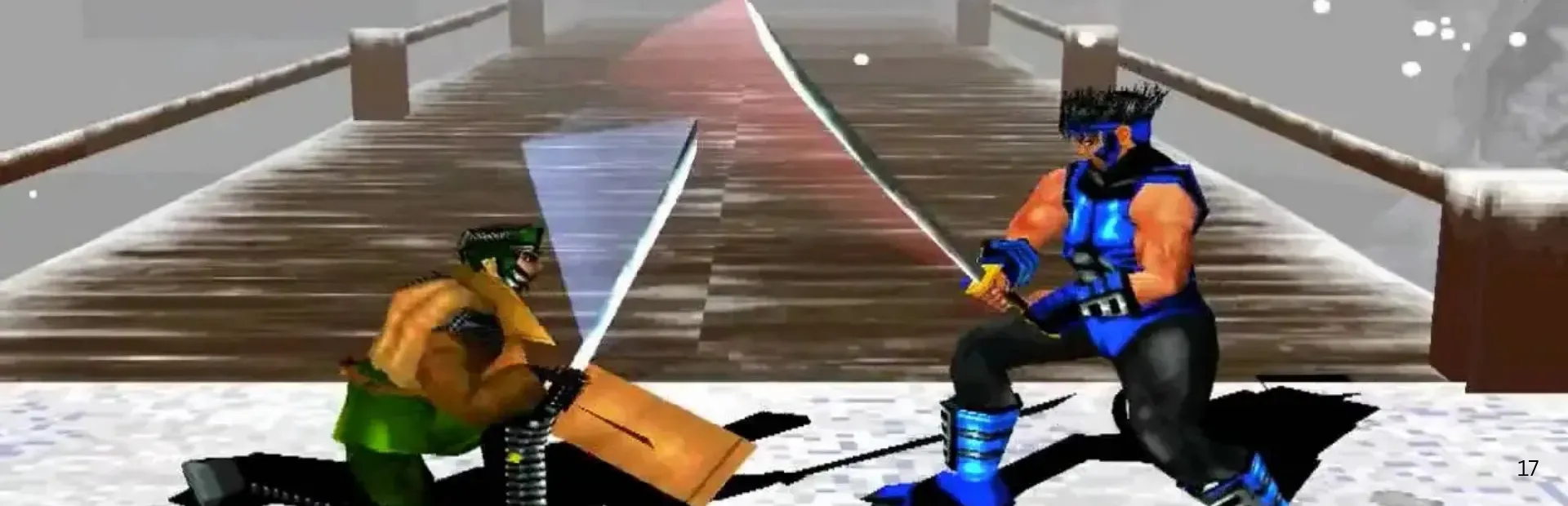
Bushido Blade is the example I always come back to. I played it with friends on PS1, and half the fun was how brutal and simple it felt. One clean hit could end the round. No long health bar, no 100-hour structure, no endless progression system. Just a sharp idea that worked because it stayed small.
PaRappa the Rapper came from the same kind of market. A rhythm game about a paper-thin rapping dog could become one of the console's most memorable releases because the financial risk was still manageable.
Modern AAA budgets are in a completely different category. As Layden pointed out, development costs have ballooned, with top-tier PS5 projects now pushing $300 million.
At that level, publishers choose safer bets: known franchises, proven systems, and post-launch revenue. A sharp idea like Bushido Blade becomes impossible to fund when the budget around it is simply too big to fail.

The $70 Game Has to Look Expensive
At $70, many players expect visible AAA production values before they buy: photorealistic character models, 4K presentation, ray tracing, cinematic animation, large open worlds and long runtimes.
Layden has criticized the focus on playtime in big-game marketing: 80, 90 or 100 hours of content, even when not every hour is worth the player's time. That pressure shapes what publishers approve. A shorter 12-hour game, a stylized art direction or a tight linear structure can be the better design choice, but at $70 it is often treated as less value.
Players say they want originality, but their spending habits reward scale. They buy the sequel, the open-world map, the long checklist and the game that looks expensive in a trailer. On Steam, Metacritic and Reddit, shorter premium releases are quickly attacked over length, graphics or "content."
Publishers react to that signal. Bigger worlds, longer campaigns, upgrade systems, side quests and post-launch roadmaps are safer to fund than focused AA games. The result is not only a publisher problem. Players helped train the market to choose quantity over risk.
The AA Game Got Squeezed Out
AA games used to carry the middle of the console market. They gave publishers enough budget for sharp mechanics, strong art direction and proper visibility, without demanding blockbuster sales. Max Payne sold itself on bullet time, noir style and tight pacing. SSX turned arcade snowboarding into a console showpiece. Neither needed a 100-hour map or a ten-year content plan.
Today, that middle budget sits in the worst possible place. A $20 million game costs too much to treat like an indie, but too little to market like a global tentpole. It needs serious sales, yet it cannot promise the scale, brand safety or post-launch revenue that executives want.
Publishers now push money upward or downward. The top end goes to sequels, remakes and live-service bets. The bottom end goes to small teams that can survive on lower sales. The middle loses oxygen.
With it goes the layer of the industry that did the work blockbusters avoid. They tested ideas with real production values. They gave console libraries personality between the giant releases. They let a game feel complete without turning it into a platform for years of monetization.
Indies still carry a lot of creative risk. They do not replace the lost AA game. A brilliant indie is not the same thing as a $20 million console game with full production backing. That layer of the industry has been cut away.

Realism Reduced Variety
Players and publishers asked for bigger worlds, sharper graphics and longer campaigns. The industry delivered. Modern AAA games can show detail and scale that PS1 and PS2 developers could not build.
The bill shows up in the release calendar, where big games take longer, publishers back fewer projects, and failed live-service bets can shut studios down. New IP has to defend itself against budgets that can reach $300 million.
Layden's warning is not nostalgia, but a budget argument. Creativity needs failure to be survivable. A publisher can take a chance on PaRappa the Rapper, Katamari Damacy or Bushido Blade when the downside stays limited. At $300 million, the safer question wins: which existing audience will buy this, and which proven model does it follow?
The price of realism was variety. Experimental games did not disappear because players stopped liking them. They disappeared because the budget no longer gives them room to fail.
Tagged In
AAA GamesShawn LaydenGame Budgets
Discussion
0We want to hear from you. Share your perspective in the comments below, and please keep the conversation respectful.
Log in to join the discussion - vote, reply, and share your take.
Log In