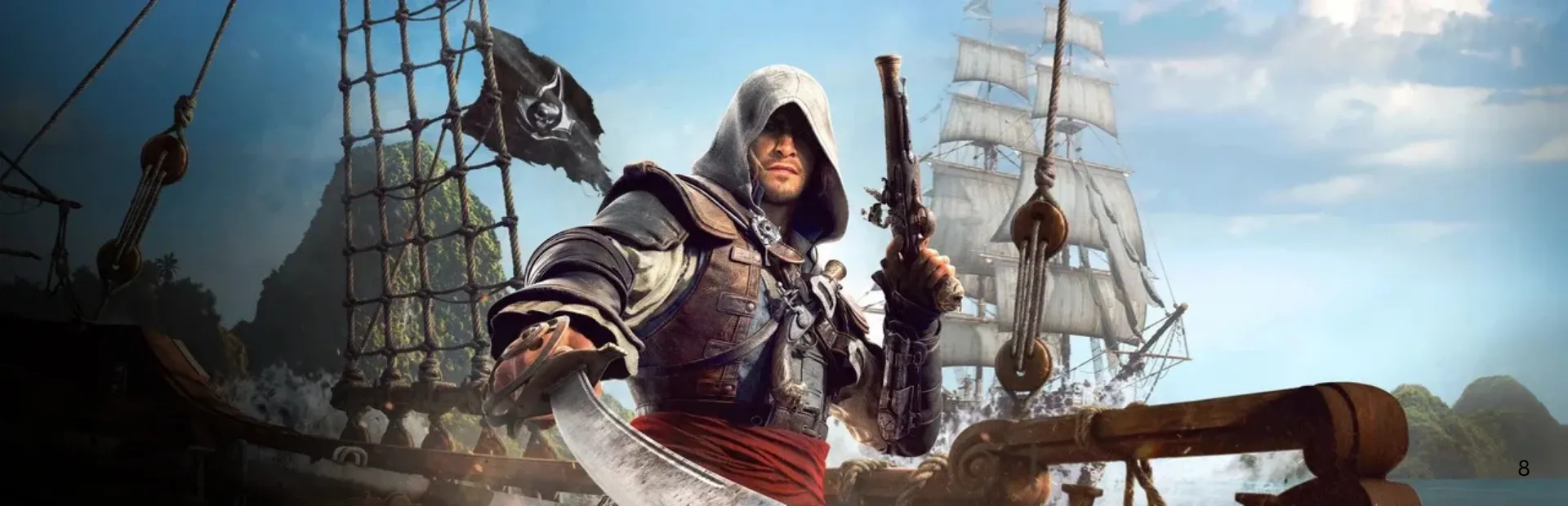
Credit: Ubisoft
featureFeatureassassins-creed-black-flag-resynced
Black Flag Resynced Could Be Ubisoft's Best Argument Against Map Bloat
June 26, 2026·Updated September 15, 2026·6 min read
Black Flag Resynced is not chasing a bigger Caribbean. Ubisoft’s remake has to prove a faithful open world can still feel modern with smarter systems.
Assassin’s Creed Black Flag Resynced brings back one of Ubisoft’s most beloved worlds at a moment when open-world games are judged very differently than they were in 2013.
Ubisoft has framed the remake as a faithful return to Edward Kenway’s pirate adventure, rebuilt on a modern game engine but still rooted in the 2013 original world. That means Resynced is not facing the usual open-world challenge. It does not need to prove that Assassin’s Creed can still build enormous maps.
The harder question is whether Black Flag’s original open-world structure can still feel modern when its boundaries stay familiar, while the systems inside them change.
Black Flag was the bridge to Ubisoft's bigger future
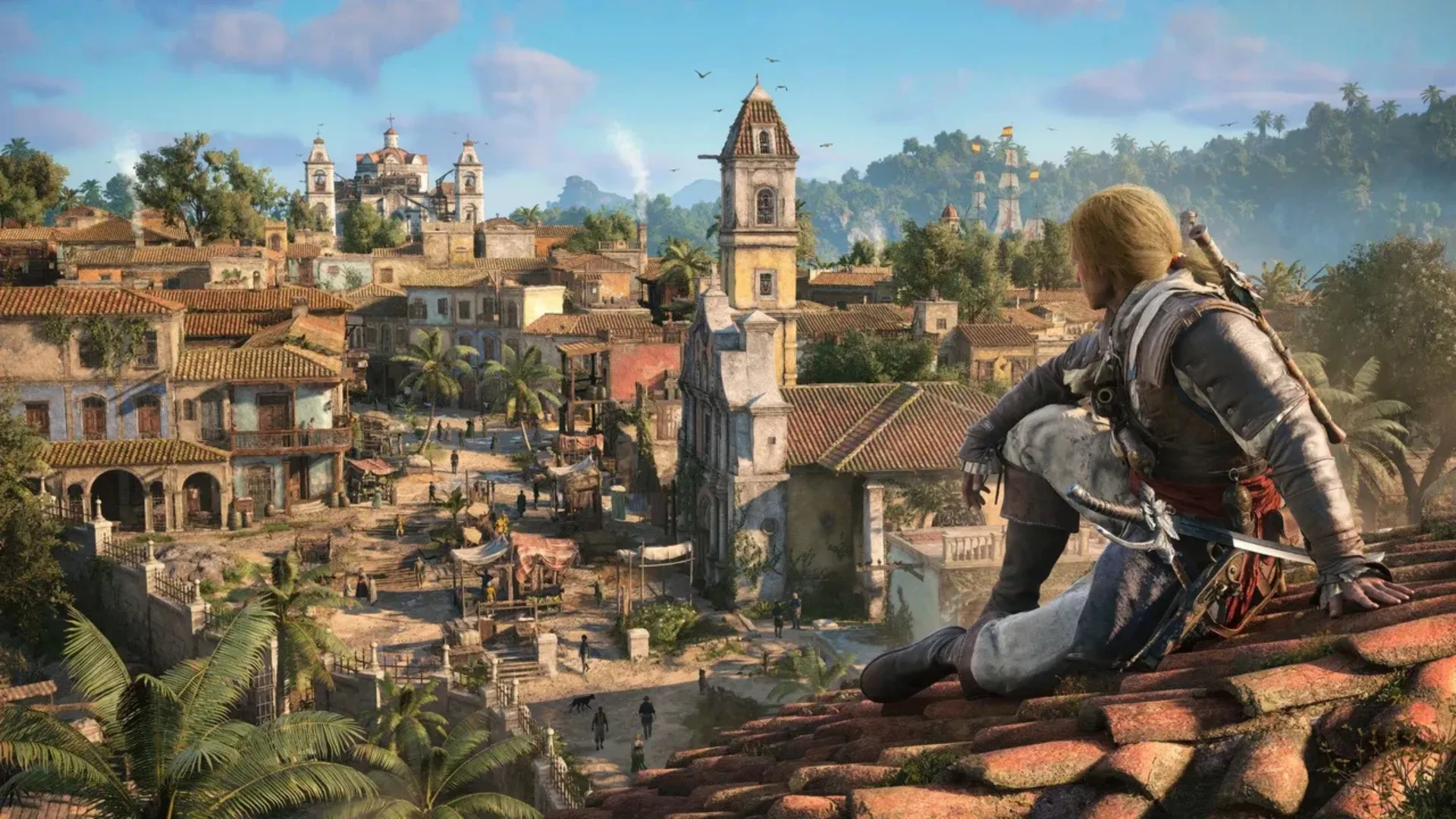
Black Flag sits in a strange place in Assassin’s Creed history. It was not an RPG in the way Origins, Odyssey, Valhalla, and Shadows later were, but it clearly stretched the series beyond its older city-focused gameplay.
Before Edward Kenway took the Jackdaw to sea, Assassin’s Creed was still mostly defined by rooftops, stealth, assassinations, and dense urban spaces.
Black Flag kept parts of that formula, but wrapped them inside something much wider: naval combat, ship upgrades, resource hunting, forts, islands, contracts, collectibles, and a world where the journey between missions became the best part of the game.
Black Flag was already ambitious, it’s bigger and more open than the older city-focused games, but it still had a more linear path than the RPG-heavy entries that came later.
Its world was wide, but not endless. Its systems were broader, but still easy to read. That balance is exactly why the remake is more interesting than how other games attempted to make Assassin’s Creed larger.
Modern open worlds raised the bar for Assassin's Creed Black Flag Resynced
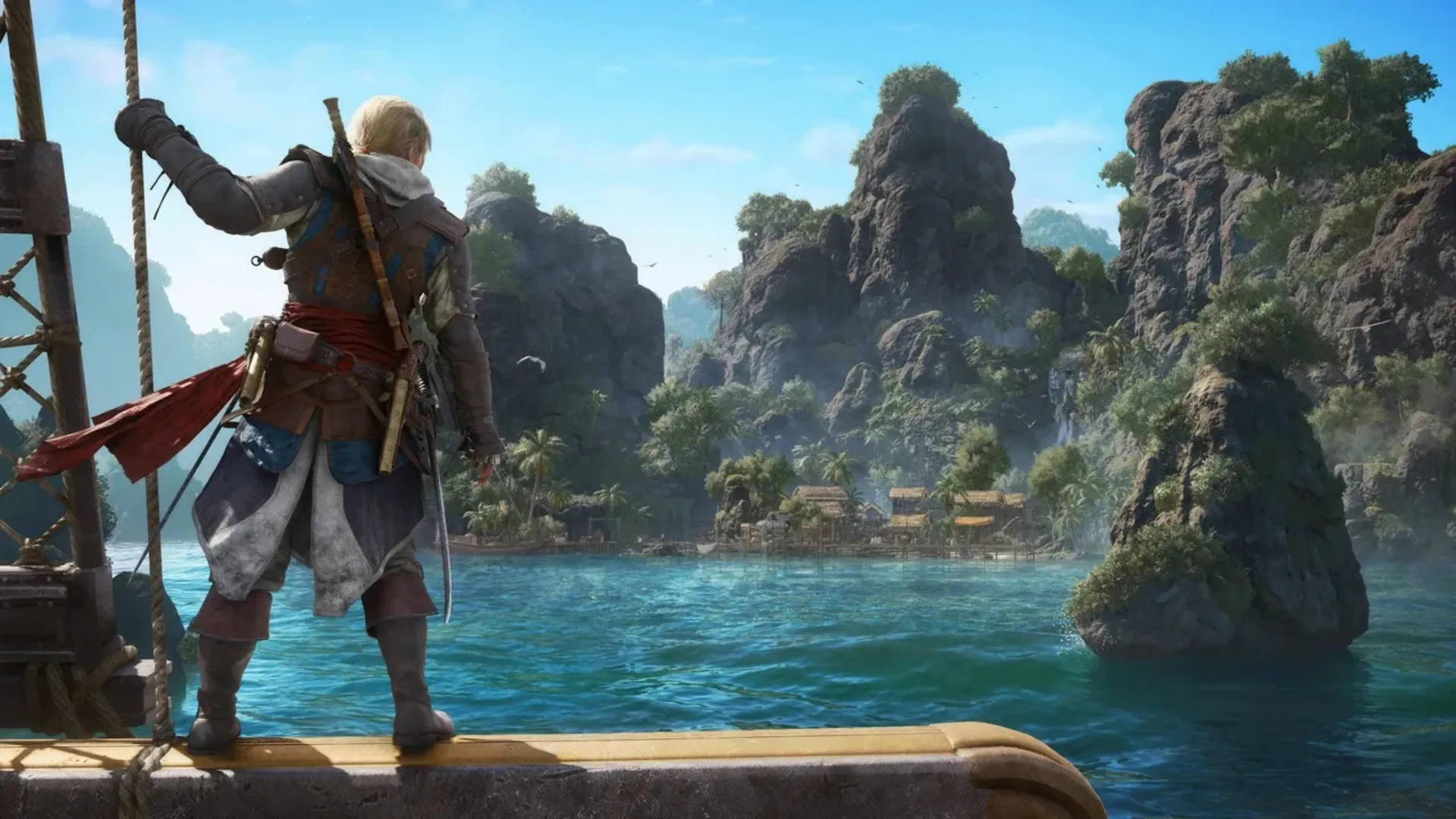
Open-world games have moved a long way since Black Flag first launched, but the lesson was never as simple as making every map larger. If anything, some of the strongest examples since 2013 proved the opposite.
The Yakuza: Like a Dragon games keep returning to compact city spaces, but those streets work because they are dense, familiar, and packed with things that feel specific rather than just questmarkers on an ever-expanding map.
That is the standard Black Flag Resynced should care about the most. Not size for its own sake, but how much meaning Ubisoft can pull out of a world players already know. A larger Caribbean might sound good in a trailer, but a better-crafted Caribbean would matter more for players who are returning to the high seas.
Other modern open worlds make the same point in different ways. The Witcher 3 raised expectations for side quests that feel written, not filled in. Elden Ring reminded players how powerful exploration can be when the world trusts them to notice things without constant hand-holding.
None of that means Resynced should become a CD Projekt RPG or a souls-like at sea. The real lesson is sharper: a faithful remake cannot rely on the old map simply because players remember it. The existing world has to reward more attention to players than it did in 2013.

The map does not need new borders, it needs new behavior
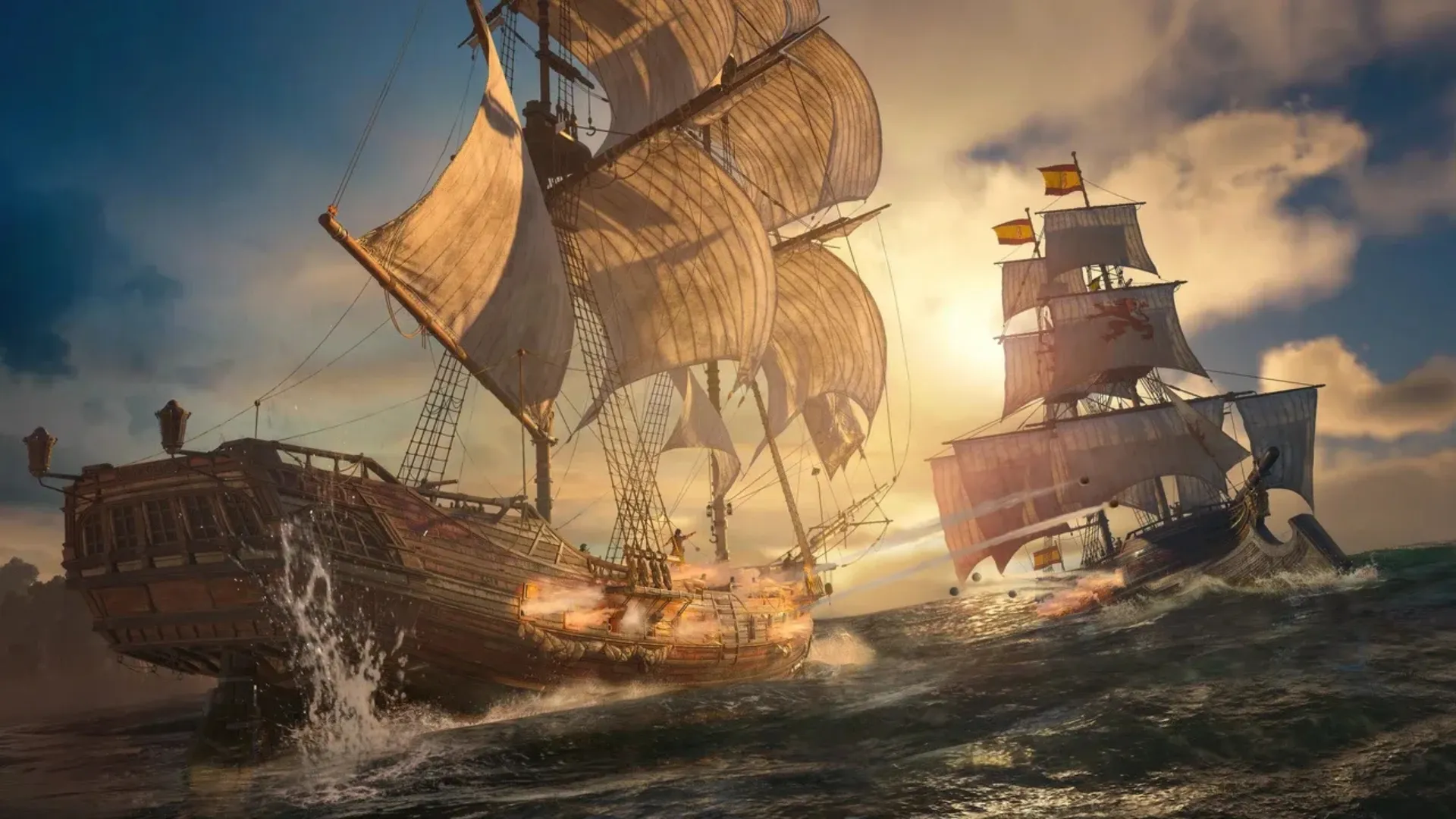
If modern open worlds are judged by how well they use space, then Ubisoft seems to be taking the right lesson from the last 13 years. The remake is not being sold on a larger Caribbean, but on making the familiar one less segmented, less static, and more playable.
Seamless movement between naval gameplay and major cities removes one of the old breaks in the world. Free underwater diving should make the ocean feel less like a backdrop between fixed diving-bell spots.
Dynamic weather gives voyages more uncertainty, with storms, rogue winds, waves, waterspouts, and lightning able to change the rhythm at sea. Great Inagua also seems to get a clearer progression role, with materials and gold feeding into buildings, upgrades, and new benefits.
Those changes make sense because they work inside the existing shape of Black Flag. They do not ask players to learn a new Caribbean. They ask the old one to do more. That is the right bet for a faithful remake, as long as the new density creates stronger play instead of just more boxes to tick.
Fixing Black Flag should not mean flattening it
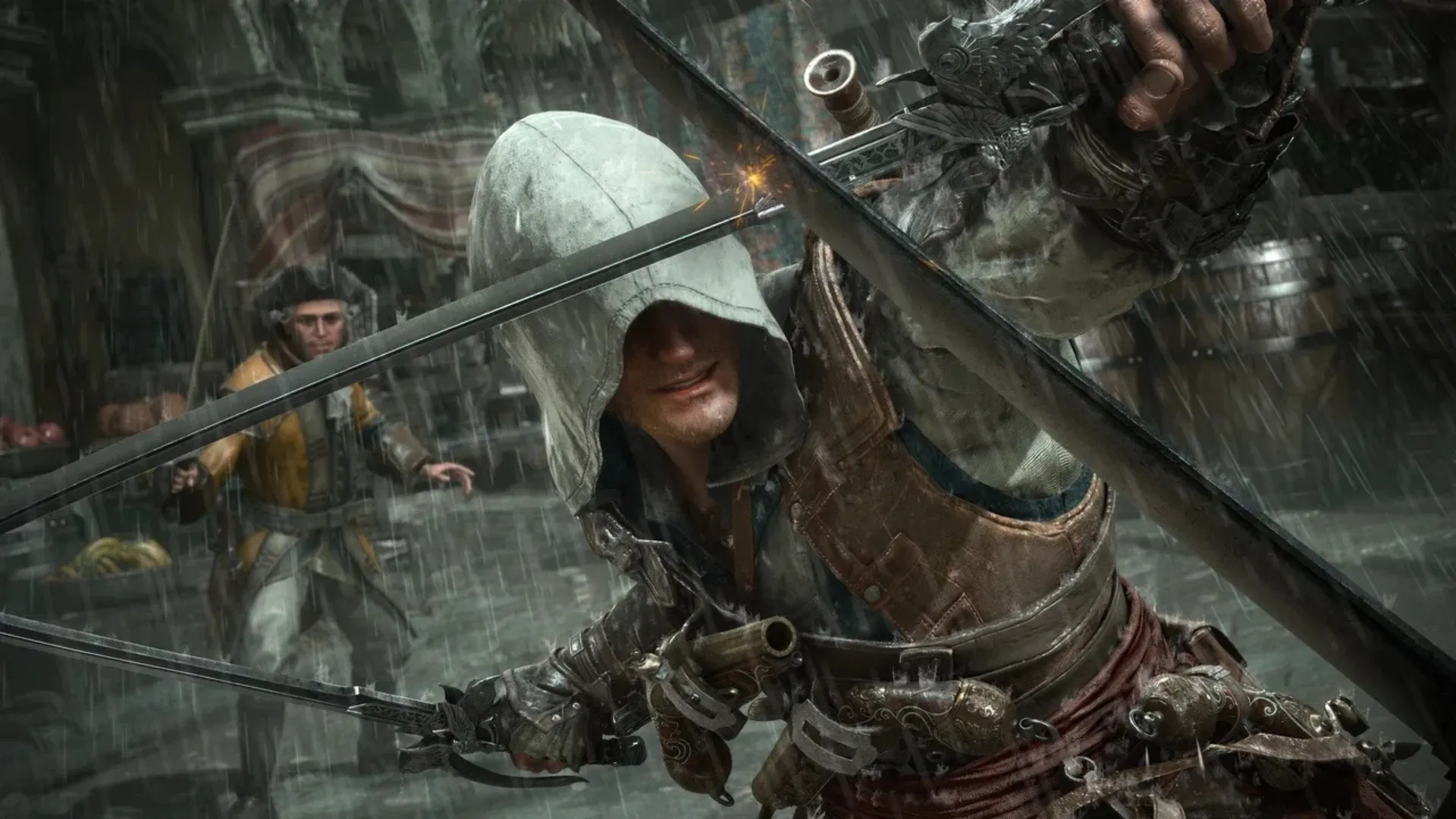
Black Flag was at its best when the Caribbean felt open, readable, and driven by movement. Its weakest moments came when that same world suddenly narrowed into one strict route.
Tailing and eavesdropping missions are the clearest example. In the original, being discovered or losing the target could mean desynchronization, which turned stealth into obedience: stay close, stay hidden, and do not push too far against the script.
The ship tailing missions made that tension even stranger, because they forced the Jackdaw, the game’s strongest open-world system, into one of its most restrictive mission types.
Ubisoft seems to know this is the right place to intervene. In Resynced, getting spotted or losing the target will no longer automatically restart the mission. Players can still recover the situation, with other ways to reach the information the mission is built around.
That is exactly how an open world becomes better without becoming bigger. It gives failure a direction instead of turning it into a reset screen.
A faithful open world can still make a modern point
Black Flag Resynced does not have to prove that a larger Assassin’s Creed map is the answer. The series has already explored that direction, and Mirage has shown that Ubisoft still sees value in a smaller approach. Resynced seems to be chasing something more specific: a familiar Caribbean that behaves better than it did in 2013.
That is the real promise of a faithful remake. Seamless travel, open diving, dynamic weather, denser locations, and more flexible missions all point toward the same idea. The world does not need to be replaced. It needs to react more often, interrupt players more naturally, and reward attention in more places.
If Resynced gets that right, it can prove that Assassin’s Creed does not need a larger world or another RPG framework to feel current. If it fails, it will not be because the Caribbean needed to be larger. It will be because the new systems did not give the familiar world enough new life.
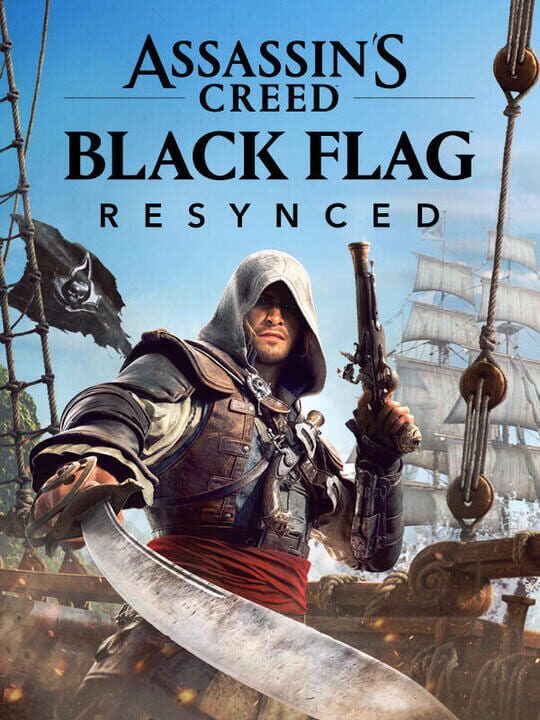
The iconic solo pirate adventure returns with Assassin's Creed Black Flag Resynced, launching on July 9, 2026. Sail the Caribbean as Edward Kenway during the Golden Age of Piracy in this faithfully enhanced remake featuring stunning visuals, upgraded gameplay, and new content.
Released
July 9, 2026
Developer
Ubisoft Singapore
Publisher
Ubisoft Entertainment
Systems


Tagged In
Assassin's CreedBlack Flag ResyncedUbisoft
Discussion
0We want to hear from you. Share your perspective in the comments below, and please keep the conversation respectful.
Log in to join the discussion - vote, reply, and share your take.
Log In