
Credit: Paralives Studio
featureFeatureparalives
Paralives is starting to look like a real threat to The Sims 4
June 10, 2026·Updated September 15, 2026·7 min read
Paralives is finally playable in Early Access, and its building tools, autonomy, and free-update model make it a real Sims 4 rival.
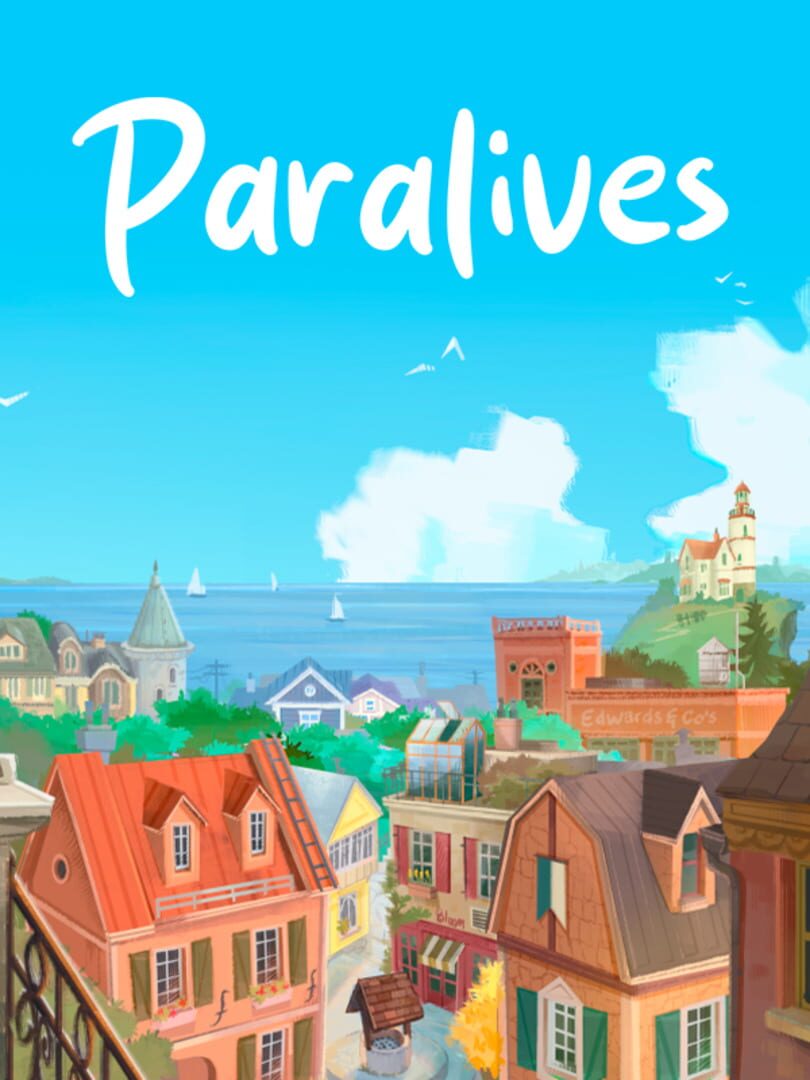
For years, Paralives lived in the same category as every other would-be Sims rival: promising, stylish, and still too unfinished to matter. That is harder to say now. The game launched into Early Access on May 25, 2026, is sitting on a “Very Positive” Steam rating, and has finally moved from concept-stage curiosity into something players can actually spend time with.
That does not mean The Sims 4 is suddenly in immediate danger of being displaced. EA’s life sim still has a huge install base, years of added systems, and a content library that no newcomer can match overnight. But Paralives no longer needs to “beat” The Sims 4 to become a threat. It only needs to look credible enough, different enough, and appealing enough to start pulling attention away from a game that is now more than a decade old and still publicly promising quality-of-life fixes to some of its basic behaviors and legacy systems.

It matters that Paralives is finally real, not just aspirational
That shift starts with the obvious point: Paralives is out. After years of dev diaries, clips, and wishlist momentum, the game is now in players’ hands, and its first public response has been strong enough to give the project real standing inside the genre. Steam lists it as “Very Positive,” and the studio’s own development page shows it has already moved into a live Early Access cycle of hotfixes, optimization work, and quality-of-life updates.
That sounds basic, but it changes the whole conversation. A life sim can look clever in trailers for years and still fail the moment people have to actually live in it. The first thing Paralives needed to prove was not that it could outperform The Sims 4 feature for feature. It needed to prove it could exist as a playable alternative at all. Early Access does not settle everything, but it has moved the game past the point where it can be dismissed as a nice idea.
Its strongest weapon is that it attacks old Sims frustrations directly
The reason Paralives feels more dangerous now is not only that it has launched. It is that its best ideas line up neatly against complaints Sims players have had for years. PC Gamer’s recent hands-on coverage focused heavily on the building tools, praising the game’s architectural freedom, scalable furniture, and more tactile approach to designing homes. That matters because building has always been one of the clearest places where The Sims 4 feels powerful but also constrained by habit and old assumptions.
The same pattern shows up in the simulation itself. GamesRadar highlighted one small but telling example last year when it reported on Parafolk automatically washing their hands after using the toilet, part of a broader push toward more sensible autonomy. That is a tiny feature on paper, but it speaks to a larger design promise: a life sim where characters behave a little more like people and a little less like a queue of broken routines. In a genre where players spend hundreds of hours noticing bad AI habits, those details carry more weight than they might in almost any other kind of game.
That is where the threat becomes real. The Sims 4 still does many things Paralives cannot yet match in scope, but Paralives is choosing its battles well. It keeps landing on the places where Sims players have learned to tolerate friction, odd behavior, and limitations because there was no serious alternative. A competitor does not need to be bigger to be dangerous. Sometimes it only has to look sharper where the market leader has grown complacent.
The business model makes the contrast with The Sims 4 even harder to ignore
This is the point where Paralives starts to feel less like a niche indie and more like pressure. On Steam, the studio says the game will rise in price over the course of Early Access but that it “will only ever be free updates” after purchase, with no paid DLC planned. GamesRadar’s recent reporting on the team’s Reddit AMA pushed that point further, saying the developers believe early sales are strong enough to sustain development for years and repeating the promise that expansions and future content will not be sold as paid add-ons.
That lands directly against the shape of The Sims 4 in 2026. EA’s official store still stretches across expansion packs, game packs, kits, and other paid layers, and GamesRadar recently described the full DLC stack as costing more than $1,500 at full price. That scale is not only a meme at this point. It changes how any rival is judged, because even a smaller, earlier, less feature-complete game can look attractive if it feels coherent and affordable by comparison.
None of this means Paralives has solved the business side forever. Free updates are easier to promise at the start than to maintain across years of development. But as a market position, it is smart and unusually sharp. It tells tired Sims players that they are not being asked to buy into another long treadmill of fragmented content. In a genre where the dominant game has taught players to expect endless add-ons, that alone makes Paralives look disruptive.
The biggest reason it can threaten The Sims 4 is that the genre still wants a challenger
The wider context helps Paralives too. PC Gamer wrote at the start of 2026 that the much-hyped life sim revival had not really arrived, with other challengers stumbling, delaying, or failing to make the expected impact. That left The Sims 4 in the familiar position of being the default option more than the universally loved one. Paralives has stepped into that gap at exactly the right moment.
It is also benefiting from the fact that The Sims 4 still looks like a game carrying too much weight. EA’s own 2026 quality-of-life roadmap promised further work on dining behavior, family trees, and relationship tracking. Those are not small cosmetic touch-ups. They are the kind of systems players expect a mature life sim to have under better control by now. When the market leader is still publicly reassuring players that it is trying to make core behaviors feel better, it opens the door for a newcomer to look fresher than its actual feature count might suggest.
That is why Paralives is starting to feel like a threat in a meaningful sense. Not because it has already won, and not because The Sims 4 is about to collapse, but because it has become plausible. Players can now look at it, look at the current state of The Sims 4, and make a serious comparison instead of a hypothetical one. That is a much more dangerous place for EA to be than having no credible rival at all.
The next step is whether Paralives can turn promise into staying power
That is still the open question. The roadmap PC Gamer summarized shows a long Early Access run ahead, with bug fixes and feature work through 2026 and bigger additions like weather, seasons, pools, and pets planned over roughly two years. The game also launched with bugs serious enough to generate their own strange stories, which GamesRadar picked up on almost immediately. That is not disqualifying for an Early Access life sim, but it is a reminder that Paralives is still trying to grow into the role people want it to play.
Even so, the competitive dynamic has changed. Paralives no longer looks like a someday answer to The Sims 4. It looks like a real one, even if an unfinished one. For a genre that has spent years waiting for a credible challenger, that is already enough to matter.


Tagged In
ParalivesThe SimsLife Sims
Discussion
0We want to hear from you. Share your perspective in the comments below, and please keep the conversation respectful.
Log in to join the discussion - vote, reply, and share your take.
Log In