WoW: Forever's realmless design makes streamer guilds harder to avoid
Asmongold’s Olympus network has grown enormous during the WoW: Forever beta. Without separate PvP realms, players who want to avoid major streamer communities have fewer options.
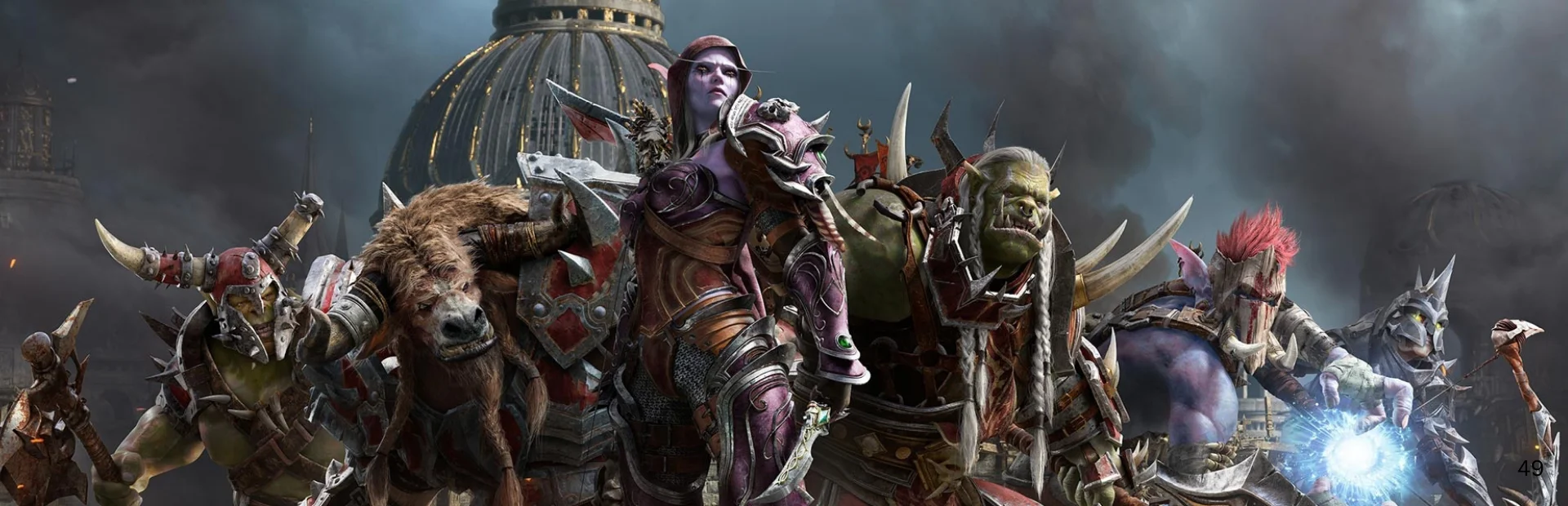
Asmongold's Olympus guild network has reportedly grown to nearly 74,000 members during the World of Warcraft: Forever beta. At that size, the guild reaches far beyond its own chat. Thousands of organized players can fill zones, form groups quickly and turn world PvP into something everyone nearby has to deal with.
Older versions of WoW gave players an easy way around that. If a major streamer rolled on one realm, anyone who wanted a quieter experience could pick another.
Forever is removing that option with its realmless design. Asmongold's community and everyone trying to avoid it will share the same larger world. Blizzard now has to make sure one enormous guild network cannot end up deciding what grouping, PvP and social life look like for everyone else.
PvP players can no longer just pick another realm
Forever will launch with Normal, PvP and Roleplaying rulesets, with Hardcore following later. Normal keeps world PvP optional, while the PvP ruleset lets Horde and Alliance attack each other in contested zones. What disappears is the familiar list of separate realms running those same rules.
That used to matter when a large streamer announced where they were playing. Someone who wanted world PvP without thousands of that streamer's followers could simply roll on another PvP realm.
In Forever, choosing PvP places everyone in the same much larger regional population. Language preferences remain, but there is no second PvP realm waiting underneath them. Switching to Normal avoids the problem by changing the rules of the game, not by finding another PvP community.
Starting over elsewhere is not simple either. Blizzard says characters generally cannot move freely between rulesets, so leaving PvP usually means rolling a new character.
Layers can keep all of those players from appearing in the same version of a zone at once. They can split a crowd temporarily, but they do not recreate the separate realm communities WoW players used to choose before creating a character.
Olympus already has ways to regroup
The reported 74,000 members are spread across multiple Olympus guilds, each capped at 1,000 characters. That total will include alts and inactive members, so it should not be read as 74,000 people ready to show up in one place.
The network around those guilds is more important. The Olympus Guild addon shows affiliated guilds, their leaders, open spots and members who are online, making it easier for new players to join without losing contact with the wider community.
It also helps members move between layers. Players can request invitations from someone on Asmongold's layer, while other layers can be reached through the same system. If the game spreads Olympus across several copies of a zone, the network already has tools to pull people back together.
Lowering the guild cap would do little to change that. Olympus already operates across dozens of separate rosters, so splitting the same audience into even more guilds would mostly add administration.
This would mean that Blizzard can't assume that layers alone will keep a rather large streaming community scattered. Even a small share of a network of this size can crowd a quest hub, a farming route or PvP objective faster than an ordinary player can respond.
Balanced factions can still produce one-sided fights
A balanced PvP population does not mean every fight will be balanced. If an organized group decides to hold a dungeon entrance, quest hub or farming route, anyone from the other faction passing through can suddenly be dealing with dozens of players instead of one or two.
Blizzard plans to use faction controls similar to Season of Discovery, including temporarily restricting character creation when one side grows too large. That can stop a region from drifting heavily toward Horde or Alliance, but it cannot decide where those players spend their evening.
Large guild battles belong in WoW, and they can be some of the best parts of a PvP realm. The problem starts when the same organized network repeatedly controls places other players need for ordinary questing or travel. On an old realm, someone tired of that environment could roll somewhere else without giving up world PvP entirely. Forever removes that escape route.
The pressure is not limited to the opposing faction either. A smaller Alliance guild sharing the same population as a huge Alliance network has to recruit from the same pool of players.
Olympus can offer dungeon groups, crafters and scheduled events almost immediately. A guild started by a few friends has to build those connections over time by meeting people in the world and bringing them back for another run.
If most new players naturally end up inside the largest network, Forever could have thousands of guild names while much of the actual grouping and organization still flows through the same few communities.
Larger populations can help smaller guilds too

Going back to a long realm list would bring back some familiar problems. Friends can roll on different servers without realizing it, while a guild can spend months building itself on a realm that later struggles to fill groups or replace departing players.
Forever avoids much of that by keeping a larger regional population together. A smaller guild has more people to recruit from, more chances to fill a dungeon group and a better shot at finding players who are online at the same odd hours.
The economy benefits from that scale as well. More gatherers, crafters and buyers make it harder for any one group to dominate a market for long. Olympus may be huge, but its roster size alone does not tell us who controls materials, crafting or spending across the whole population.
Blizzard also wants those larger populations to keep some familiarity. Its realmless overview talks about running into recognizable names while questing and gathering instead of constantly seeing strangers you never meet again.
That part is important for smaller guilds. Seeing the same healer in a few dungeon groups can turn into a guild invite. Running into the same rival guild in contested zones can turn into a rivalry that lasts for weeks. A large population works best when those repeated encounters survive inside it.
Players need more control over the communities they keep
That is where Forever still needs more player control. Friends and guilds should be able to stay close to the people they already know, while players who dislike the local crowd should have some way to move without rerolling under a different ruleset.
Persistent community groups inside the same PvP population could help. Blizzard could keep the larger economy and grouping pool while letting players settle around familiar guilds, rivals and social circles instead of relying entirely on whatever layer they happen to enter.
Olympus already shows how easily players can organize beyond one guild roster. Blizzard cannot solve that by lowering guild caps or punishing people for simply playing together.
It's much harder to make sure that smaller communities can grow just as naturally. A player choosing PvP should be able to also find regular allies, recognize rival guilds or build their own corner of the world around them without having to plan around whichever streamer brought te biggest crowd that night.

World of Warcraft: Forever
World of Warcraft: Forever is an invitation to take your first steps in a legendary world of untamed frontiers, warring factions, untold perils, and unseen mysteries. Experience an Azeroth that grows from the roots of WoW’s first age, continually evolving through regular content
Released
November 4, 2026
Developer
Blizzard Entertainment
Publisher
Blizzard Entertainment


Tagged In
Discussion
0We want to hear from you. Share your perspective in the comments below, and please keep the conversation respectful.
Log in to join the discussion - vote, reply, and share your take.
Log In