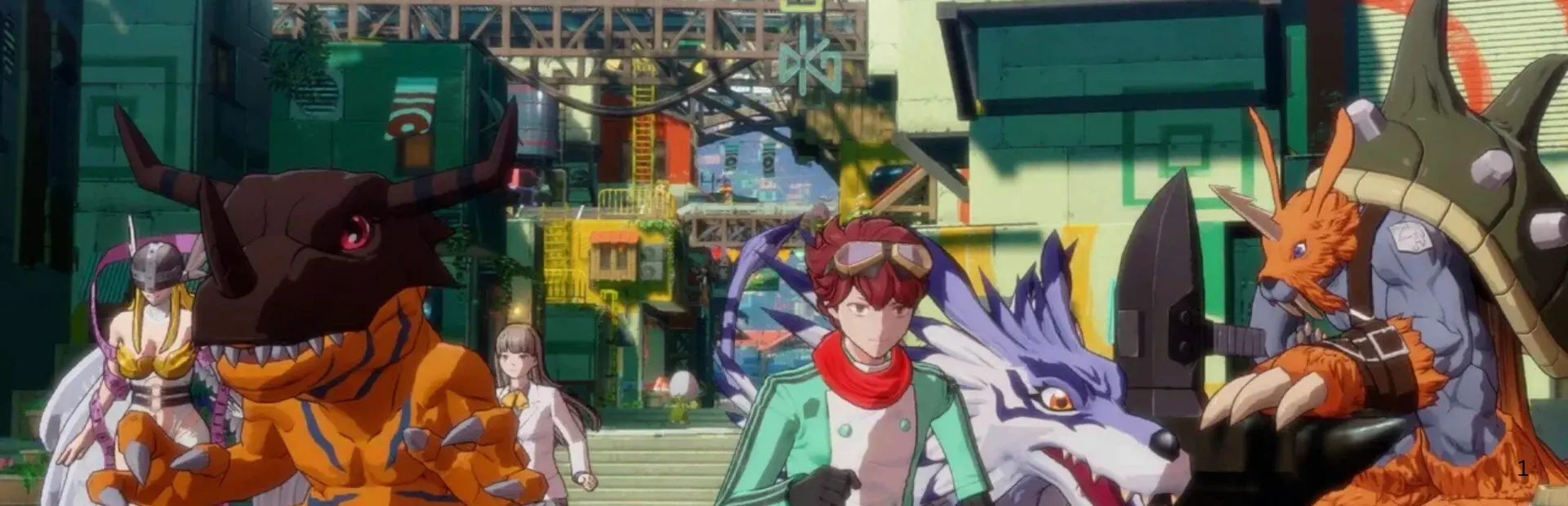
Credit: Bandai Namco Entertainment
reviewReviewdigimon-story-time-stranger
Switch 2 Is the Perfect Home for Digimon Story: Time Stranger
July 13, 2026·Updated September 13, 2026·6 min read
Digimon Story: Time Stranger finally arrives on Switch 2 with smart combat, a surprising story, and performance that makes the wait worth it.
Digimon Story: Time Stranger debuted on other platforms in 2025 and quickly earned strong reviews, leaving Switch players waiting longer than they would have liked. I came into the Switch 2 version as someone who has mostly followed the series from a distance, because Pokémon won the battle for my attention when I was a kid. After more than thirty hours, though, I can say the wait was worth it. Instead of a rushed port tacked on as an afterthought, we got a release that feels like it was put together with real care.
More importantly, this feels like a version designed with the Switch 2 in mind rather than a belated port released out of obligation. Combat demands planning, growing your team rewards patience, and the story can still surprise you despite a familiar time-travel setup. The game has its weaknesses, particularly the uneven level of detail between the colorful Digital World and the less polished human world, but they do little to undermine the overall experience. On Switch 2, everything runs well enough that it's hard to resent waiting for this version.
Combat Finally Makes Tactical Sense
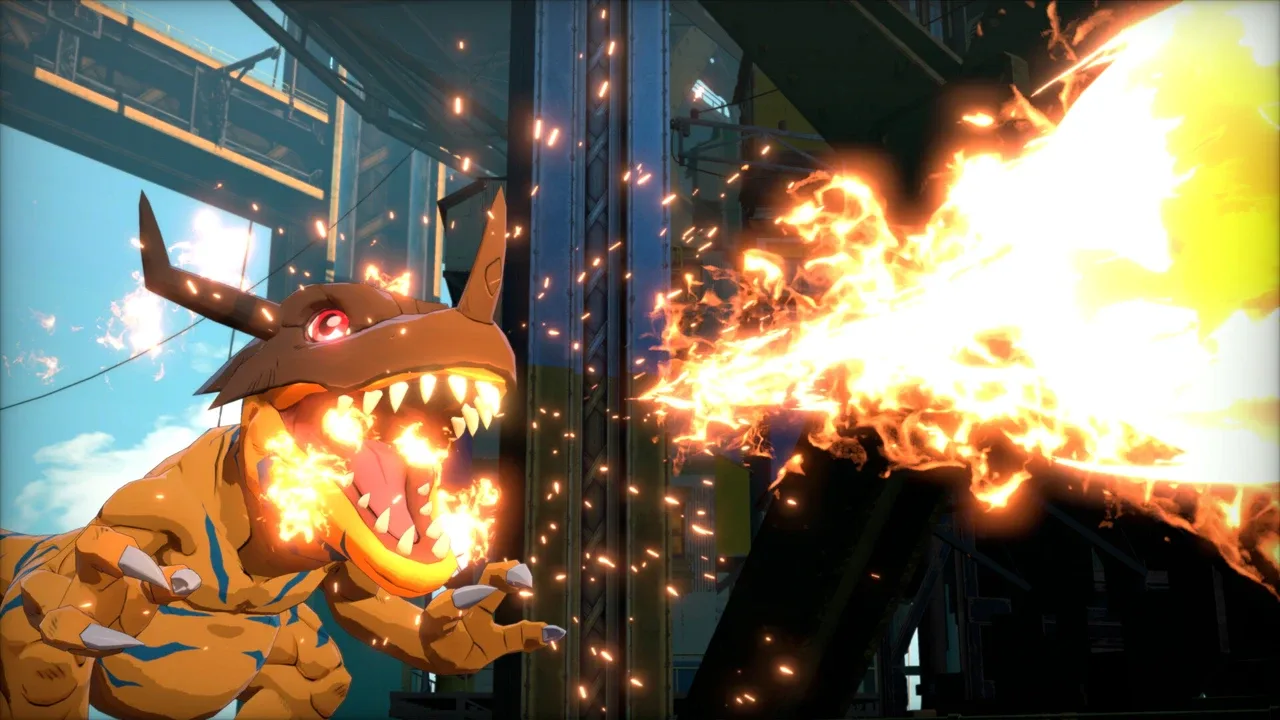
The Digimon collection system fixes a problem that's always bothered me about creature-catching games: randomness. Instead of trying to catch an enemy on the fly, I gather data on it during battle. That data is shown as a percentage, and once it hits a hundred percent, I can create a copy of that Digimon for my own team. I can keep collecting data up to two hundred percent, which produces a stronger version of the same Digimon from the start. Even repeating the same fights feels worthwhile when I'm targeting a particular Digimon.
In combat itself, what matters is a Digimon's type and its elemental weaknesses. Landing an attack that exploits both layers at once can deal genuinely huge damage. Before a tough fight, I actually stop to think about who to send in instead of always fielding the same three strongest Digimon. Boss fights follow the same logic and require you to pay attention to resistances and status effects, so raw attack power was rarely enough on its own.
The Story Surprises Despite a Familiar Setup
The story opens with a massive Digimon attacking Tokyo, and amid the chaos of the evacuation, I choose my first partner to rescue a girl trapped in the danger zone. I wake up eight years in the past and meet the same girl, Inori, along with Aegiomon, a mysterious horned Digimon. From there, the story carries me through an investigation for an organization called ADAMAS, tying together cases in the human world with events unfolding in the Digital World.
The time-travel setup isn't anything new on its own, but the game consistently pays off the threads it opens early on. I rarely felt like a question got raised just to be forgotten. The relationship between my character, Inori, and Aegiomon became the emotional core of the whole adventure, and how it resolves in the second half genuinely got to me, even though I went in with no particular attachment to the series.
Raising Digimon Rewards Planning, Not Grinding
Digivolution isn't as simple as pressing a button once you reach the right level. Stronger forms require a specific Agent Rank, certain stats, and sometimes even the right personality for that particular Digimon. Before investing in a particular path, I have to check whether it actually leads toward the form I want. Choosing the first available evolution can steer a Digimon away from other branches. I can always de-digivolve it and rebuild from there, but deciding whether that extra effort is worthwhile becomes part of the strategy.
Then there are field battles, where noticeably weaker Digimon can be beaten without triggering a full turn-based encounter, which genuinely cut down the time I had to spend leveling up after every new evolution. Agent Ranks earned through side quests unlock passive bonuses, and some of them, like increased experience gain or permanent stat boosts, stay useful for the whole game. Side content rarely felt like filler as a result.
Exploration Rewards Curiosity, Just Not Evenly

Tokyo and the Digital World are full of reasons to stray from the main path. Dimensional rifts scattered across the map hide optional battles and extra Digimon to scan. Chests and items turn up even in trash piles and back alleys I wouldn't normally bother checking. I rarely walked away from a side area feeling like I'd wasted my time.
It's just a shame the Digital World feels so much more alive and carefully designed than Tokyo, which comes across as noticeably less polished despite a few interesting locations. That gap is especially noticeable after hours spent in the colorful, bustling digital world, when I head back to the capital to handle another case for ADAMAS and it feels like walking into a far less polished version of the same game.
The Switch 2 Version Genuinely Runs Well
The game offers a choice between quality and performance modes, and the latter appeared to hold a steady 60 frames per second throughout my playthrough. When played in docked mode on a 4K display, the game looks surprisingly sharp for a title running on hybrid hardware. This is exactly the kind of title that benefits from being able to suspend a session at any point and pick it back up later, since a thirty-hour adventure is well suited to shorter bursts of play.
At launch I ran into brightness issues that made darker parts of some areas hard to read, but a patch issued shortly after launch fixed the problem, and the rest of my playthrough went smoothly. The fact that the developers fixed it that fast gives me more confidence in this port than in plenty of others that leave similar issues unresolved for months.
Digimon Story: Time Stranger Is an Excellent Entry Point
Digimon Story: Time Stranger combines combat that demands real planning, a story that can still surprise despite a familiar setup, and a Digimon progression system that rewards patience over mindless grinding. The uneven level of detail between Tokyo and the Digital World was the only thing that occasionally broke my immersion, but it was nowhere near enough to overshadow the rest of the package.
The Switch 2 version holds up on its own, with solid performance in both modes and a portable format that suits a game this long perfectly. If you've been waiting for this on Nintendo hardware, the wait paid off, and if you've never touched the series before, there's no better time to jump in.
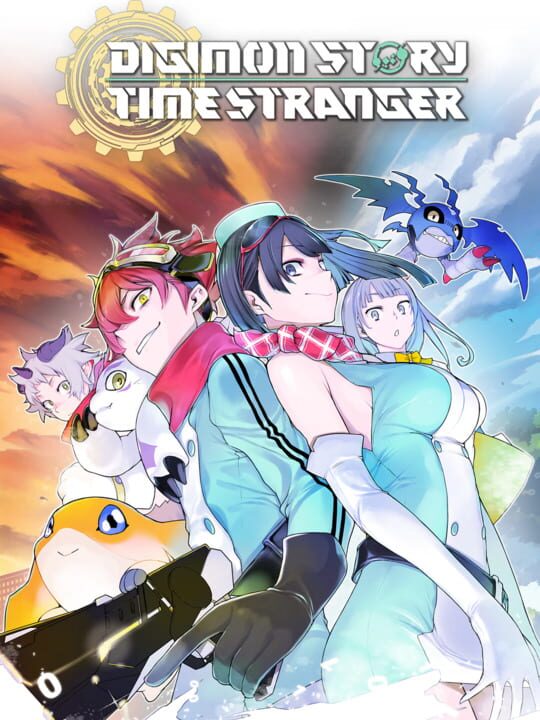
Digimon Story: Time Stranger
The latest in the Digimon Story series is finally here! In this RPG, unravel a mystery that spans across the human world and the Digital World, collecting and raising a wide variety of Digimon to save the world.
Released
October 3, 2025
Developer
Media.Vision
Publisher
Bandai Namco Entertainment
Systems


Tagged In
Digimon Story Time StrangerDigimon Story
Discussion
0We want to hear from you. Share your perspective in the comments below, and please keep the conversation respectful.
Log in to join the discussion - vote, reply, and share your take.
Log In