Why Game Pass Misunderstood the Modern Gamer
A Forza director says Game Pass failed. Here is how a great deal for players became a slow-motion trap that led to studio closures and layoffs.
Mike Brown, the creative director of Forza Horizon 5, recently said out loud what a lot of people in the industry have only muttered: Xbox Game Pass was a good idea that did not work.
Speaking to MinnMax, Brown cut straight to the core issue. The service was a fantastic idea for gamers, but it simply failed to generate the massive subscriber base needed to survive. Now, that lack of revenue is actively shutting down studios and costing jobs.
The harsh truth is that Brown is absolutely right. Even Xbox leadership has admitted their $80 billion Game Pass bet did not pay off. Microsoft now concedes that the service eats into full-game sales, slowly starving the studios that supply the platform.
Getting day-one releases for a few dollars feels like a dream for any player, but Microsoft completely misjudged how that model breaks the developers.
The Audience Was Never Going to Use It
The mainstream gaming market runs on routine, not variety. Recent industry data proves exactly this. According to Newzoo's latest reporting, over sixty percent of all global playtime is spent entirely on games that are six years old or older.
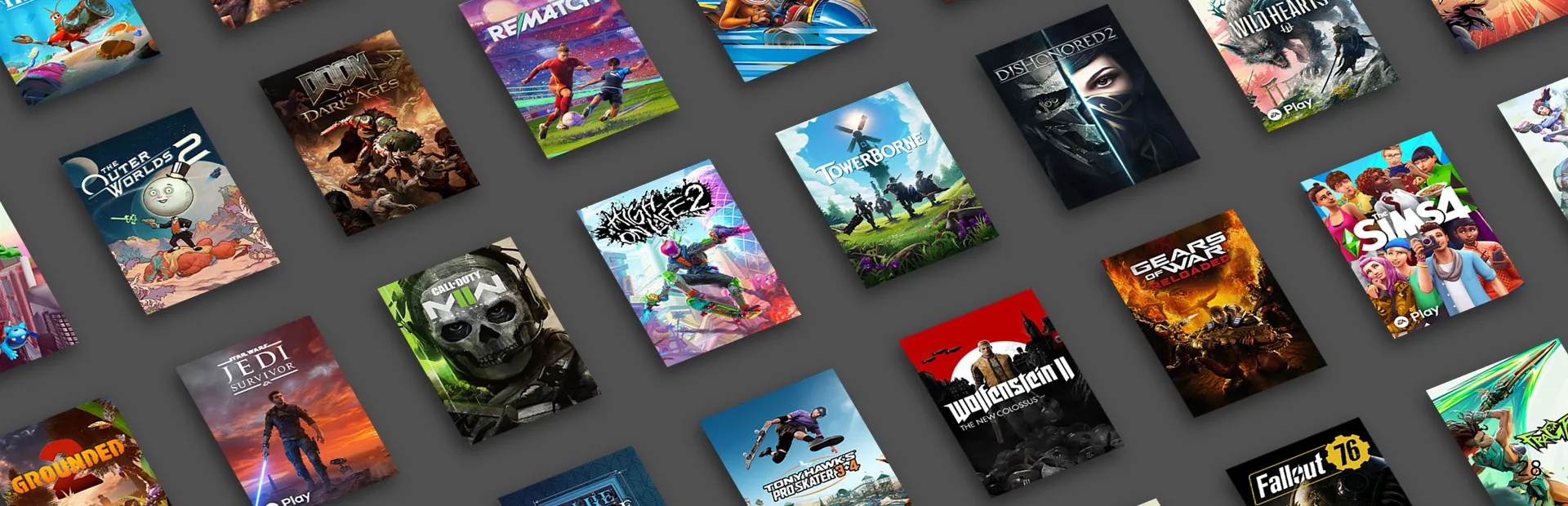
The largest chunk of the audience does not graze across a huge library. They pour hundreds of hours a year into two or three specific titles, logging in most nights to the exact same ones: Call of Duty, Fortnite, Roblox, or EA Sports FC.
For that player, a library of 400 games is worth almost nothing. They are not hunting for something new to try on a Tuesday. The data shows that barely eight percent of total gaming time goes toward brand new releases.
Instead, players are queueing up with the same friends in the same shooter they were playing last month. This routine exposes exactly why the 'Netflix of gaming' model was always doomed to fail. Passive media allows you to watch a different film every night with zero commitment, but an interactive medium demands a serious time investment.
A giant buffet is useless to a consumer who only wants to eat the exact same meal every single day.
The Race to Zero
Now take the players who do use Game Pass the way Microsoft hoped, the ones happily working through single-player games. Here the service created a different, quieter problem. By dropping huge AAA releases onto the service on day one for the price of a couple of coffees a month, Xbox trained its own audience out of ever paying full price again.
It is a rational response by the consumer. Why spend $70 on a new game when the whole model has taught you that new games are just content that turns up in your subscription for pennies?
A former Xbox studio lead put it bluntly to Windows Central, saying that launching titles straight into Game Pass "almost creates an assumption that these titles could not sell on their own," and that it "felt like a race to zero." Microsoft has now acknowledged the cannibalization itself.
The clearest signal of all is how Microsoft handled Call of Duty, their crown jewel. Realizing the massive financial hit, they fundamentally restructured Game Pass, stripping day-one releases from the basic tier and locking their biggest game behind the most expensive premium subscription.
When you condition an audience to treat games as disposable and cheap, you eventually have to build a paywall just to stop defunding the people who make them.

When the Math Stops Working
Put those two failures together and you get a business that cannot close its own equation. On one side, the massive multiplayer crowd never really subscribed, because Game Pass offered them nothing they actually wanted.
Microsoft was reportedly aiming for 77 million subscribers. The real figure sits at around 30 million, and Sharma has conceded that both the player base and total playtime have been shrinking.
On the other side, the studios handing their games to the service lost the retail revenue those games used to bring in. You cannot fund a modern AAA project, the kind that now runs well past $200 million, on subscription numbers that stopped climbing.
Something had to give, and it did. In July 2026 Microsoft carried out the most sweeping gaming layoffs in years. Thousands of jobs gone and five first-party studios closed or spun off, with reports tying the decision directly to Game Pass accounting that denied studios retail income even when their games hit big player milestones.
Ninja Theory, the team behind Hellblade, was reportedly told it was closing just nine days after standing on the Xbox showcase stage to announce a new game. That is the model doing exactly what its own internal memo warned it would.
A Great Deal, A Terrible Business
This does not mean Game Pass was a bad idea for the player. For anyone who loves exploring different genres, it still stands as one of the best values in the medium. Microsoft is also perfectly safe, with the broader company continuing to post record-breaking profits. The problem is entirely localized to the Xbox business, which is actively bleeding revenue as a direct result of this model.
It is specifically the Xbox business that is bleeding. But as a foundation for a healthy games industry, Game Pass has proven to be a failed experiment, and even the people who built it are now saying so on the record.
Microsoft essentially tried to sell a 500-channel cable package to a generation that only tunes in for one specific live match, quietly defunding the studios making the rest of the programming.
It was a wonderful gift to consumers and a slow-motion trap for the business behind it, and the layoffs landing right now are the bill finally coming due.
Tagged In
Discussion
0We want to hear from you. Share your perspective in the comments below, and please keep the conversation respectful.
Log in to join the discussion - vote, reply, and share your take.
Log In