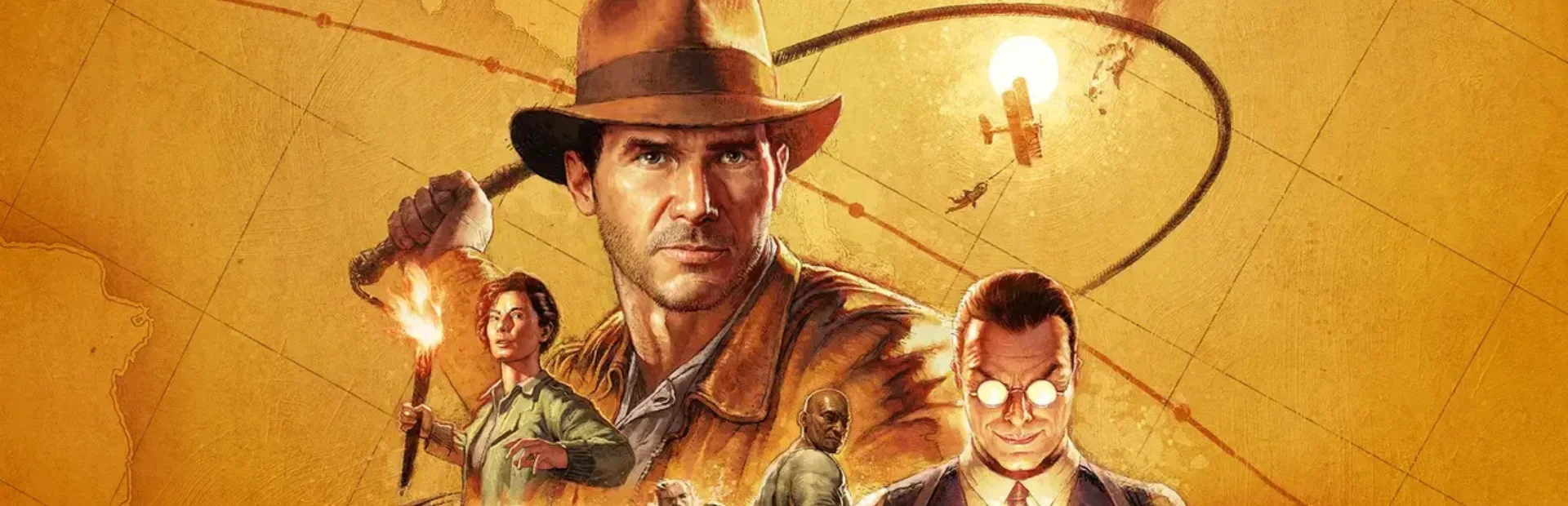
Credit: MachineGames
reviewindiana-jones-and-the-great-circle
Indiana Jones and the Great Circle is the Indy game I stopped expecting
June 4, 2026·Updated September 4, 2026·7 min read
Indiana Jones and the Great Circle works because it understands that Indy is not just a man with a whip and a hat. He is a teacher who keeps getting punched, a skeptic who cannot resist a mystery, and a stubborn improviser who usually survives because he thinks quickly after the plan has already gone wrong. This game gets that rhythm better than I expected.
It is not the most graceful action game, and its combat can feel clumsy when too many enemies crowd the space. But the longer I played, the more that clumsiness started to feel like part of the character. The Great Circle is not trying to make Indy into a smooth superhero. It makes him vulnerable, nosy, funny, and reckless, then builds an adventure around exploration, disguises, fistfights, puzzles, and the pleasure of poking around places I probably should not be.
First-person Indy works better than it should
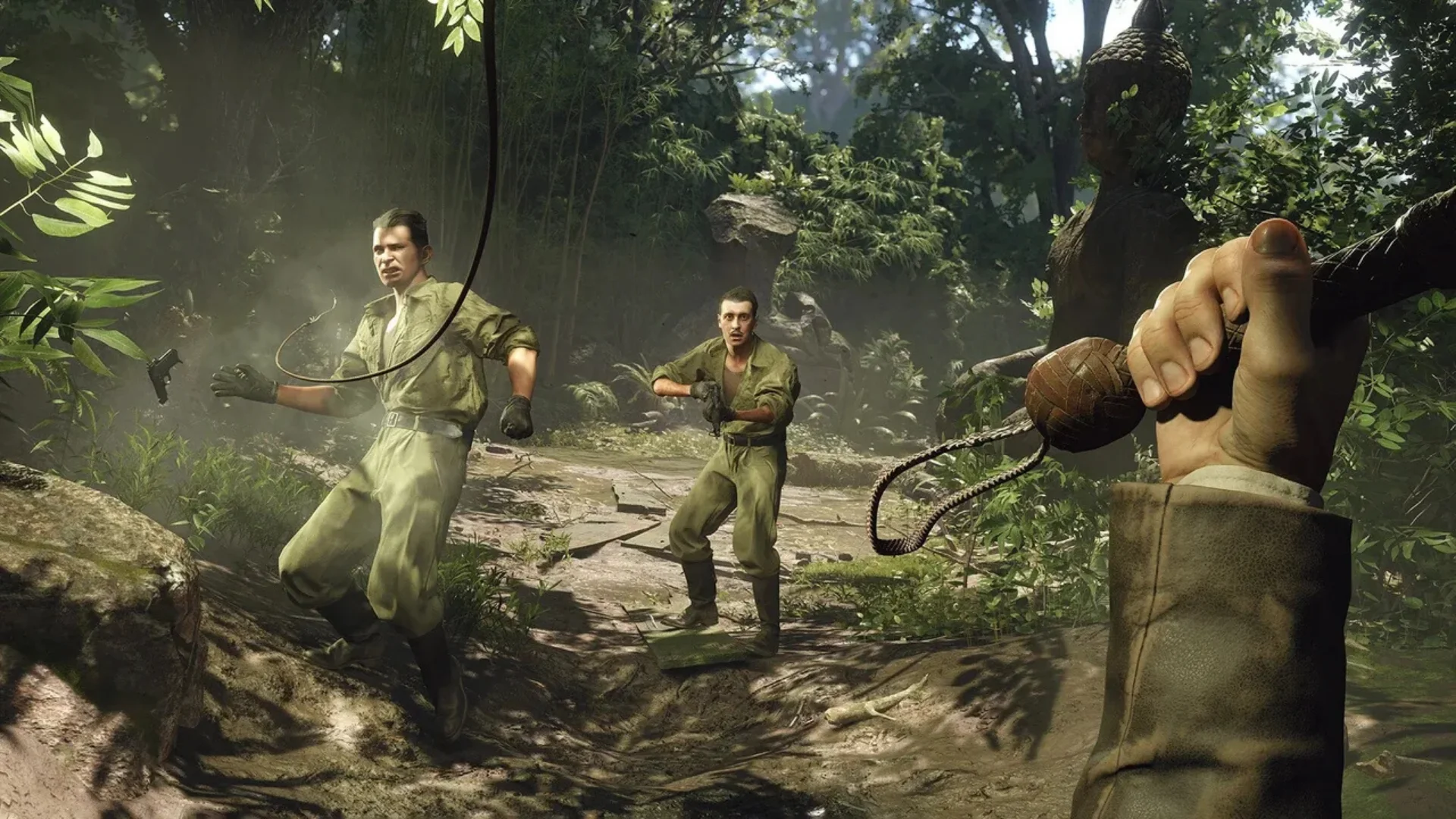
The first-person perspective sounded like the biggest risk before release. Indy is such a visual character that it was easy to imagine the game losing something by putting me behind his eyes. Instead, the perspective gives the adventure a surprising intimacy. I am not watching him study a room. I am opening drawers, reading notes, turning objects over, and leaning into every suspicious corner myself.
That choice changes the pace in a good way. The Great Circle is not built like a third-person action showcase where every climb and punch needs to look dramatic from the outside. It feels more tactile. Picking up a bottle, cracking a guard over the head, pulling out the camera, or using the whip to cross a gap all has a scrappy physicality that suits Indy’s world.
It also makes the tombs and ruins more convincing. A narrow corridor feels tighter. A hidden clue feels more personal. A trap feels less like a set piece I am watching and more like something I have stepped into before fully understanding it. The game gains a lot by letting me feel like the one doing the looking.
The adventure is strongest when I am exploring
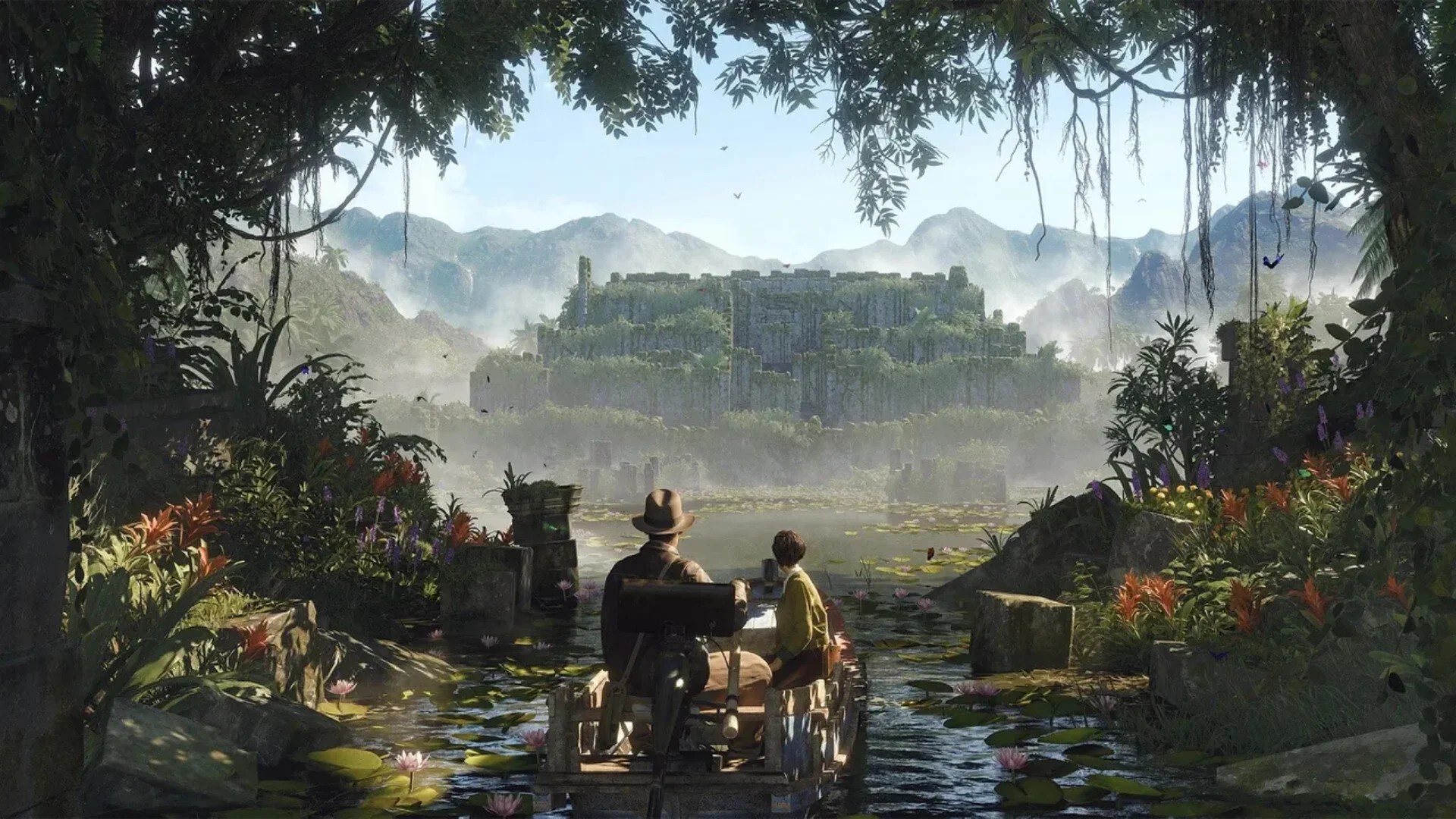
The best parts of The Great Circle are not the loudest ones. They are the stretches where I arrive in a new location, get a loose objective, and start working out how the space fits together. The game has larger areas that give me room to sneak, investigate, take photos, follow clues, and get distracted by side mysteries without losing the main thread.
That freedom is where the game feels most like a proper Indiana Jones adventure. I liked chasing optional discoveries because they usually felt connected to the world rather than bolted on for completion. A locked room, a strange symbol, a hidden document, or a side puzzle could pull me away from the obvious route for long enough that the place started to feel real.
The pacing benefits from that curiosity. Instead of rushing me through one scripted scene after another, the game often lets me wander into trouble at my own speed. It still has cinematic moments, but they work better because they sit between quieter stretches of exploration. Indy should stumble into revelations, not sprint from cutscene to cutscene.
Stealth makes more sense than constant gunfire
MachineGames could have leaned harder into shooting, but The Great Circle is better because it does not. Indy is not a soldier clearing rooms with perfect efficiency. He is usually outnumbered, underprepared, and better off avoiding a fair fight. The stealth gives the game a more fitting shape.
Disguises, patrols, restricted areas, improvised weapons, and environmental routes all help sell that fantasy. I liked sneaking through spaces while pretending I belonged there, then watching the situation collapse because I pushed too far or missed a guard around the corner. The game gives enough tools to make stealth flexible without turning it into a sterile puzzle.
The AI can be inconsistent, and stealth is not always as sharp as the best games in the genre. Guards can be strangely forgiving, then suddenly irritating. But the overall tone works. The slight looseness makes the game feel less like a technical stealth test and more like an adventure where luck, timing, and improvisation all matter.
Fistfights are messy in the right way
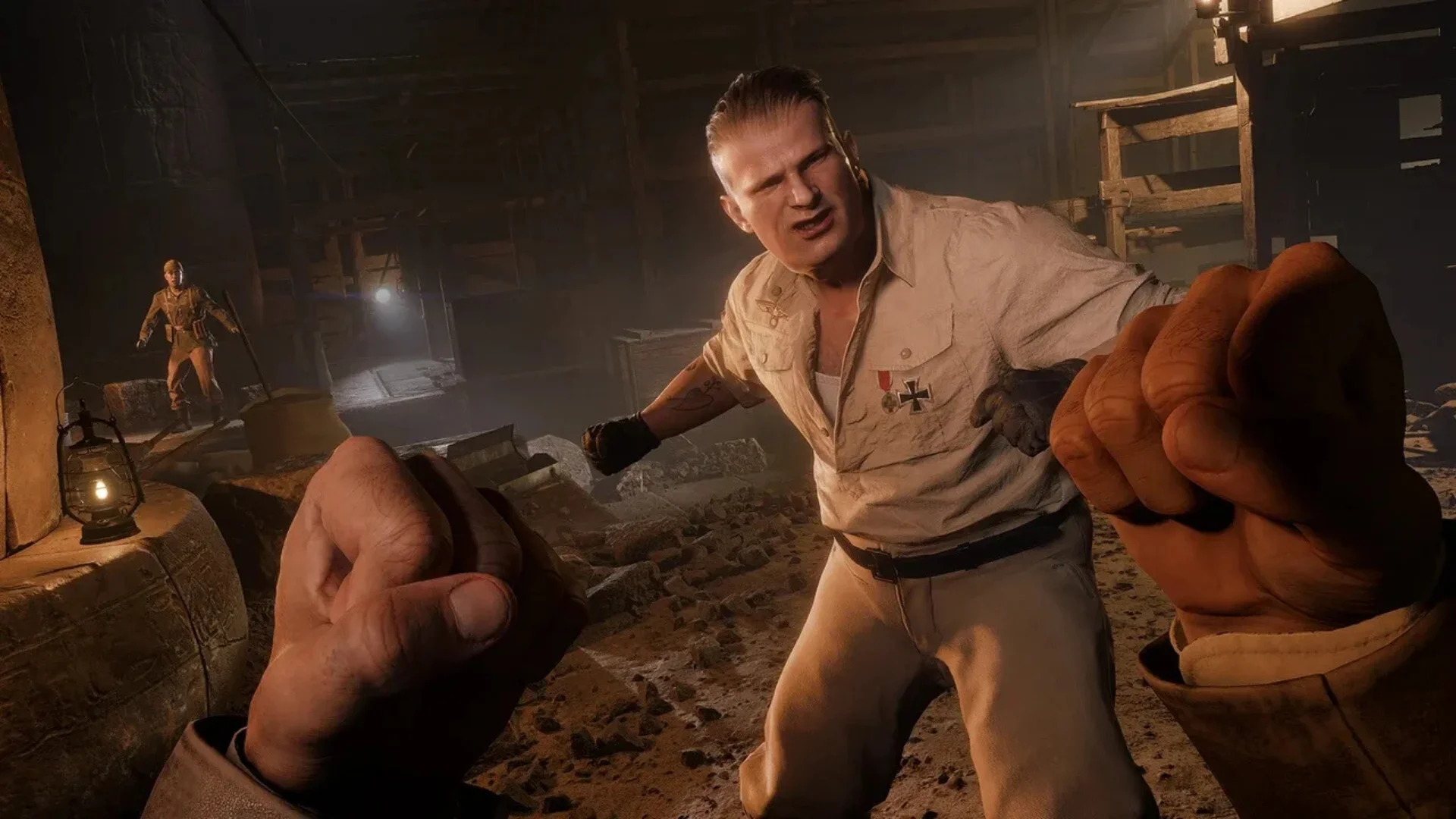
The hand-to-hand combat is awkward, but not in a way that ruined it for me. Punches have weight, enemies stumble around, objects become weapons, and fights often look like two people making a bad situation worse. That fits Indy better than polished martial arts ever would.
I enjoyed how often the game let a fight become ridiculous. A guard might go down after a clean punch, a bottle might save me, or a crowded room might turn into a desperate scramble for anything I could pick up. The slapstick edge is important. Indiana Jones has always mixed danger with embarrassment, and The Great Circle understands that a good fight should sometimes look ugly.
It does fall apart when the game asks too much of the system. Larger fights can become clumsy, and gunplay is rarely the highlight. When the action gets too busy, I started missing the slower rhythm of sneaking, searching, and solving. The combat works best as punctuation, not as the main language of the game.
The puzzles respect the character
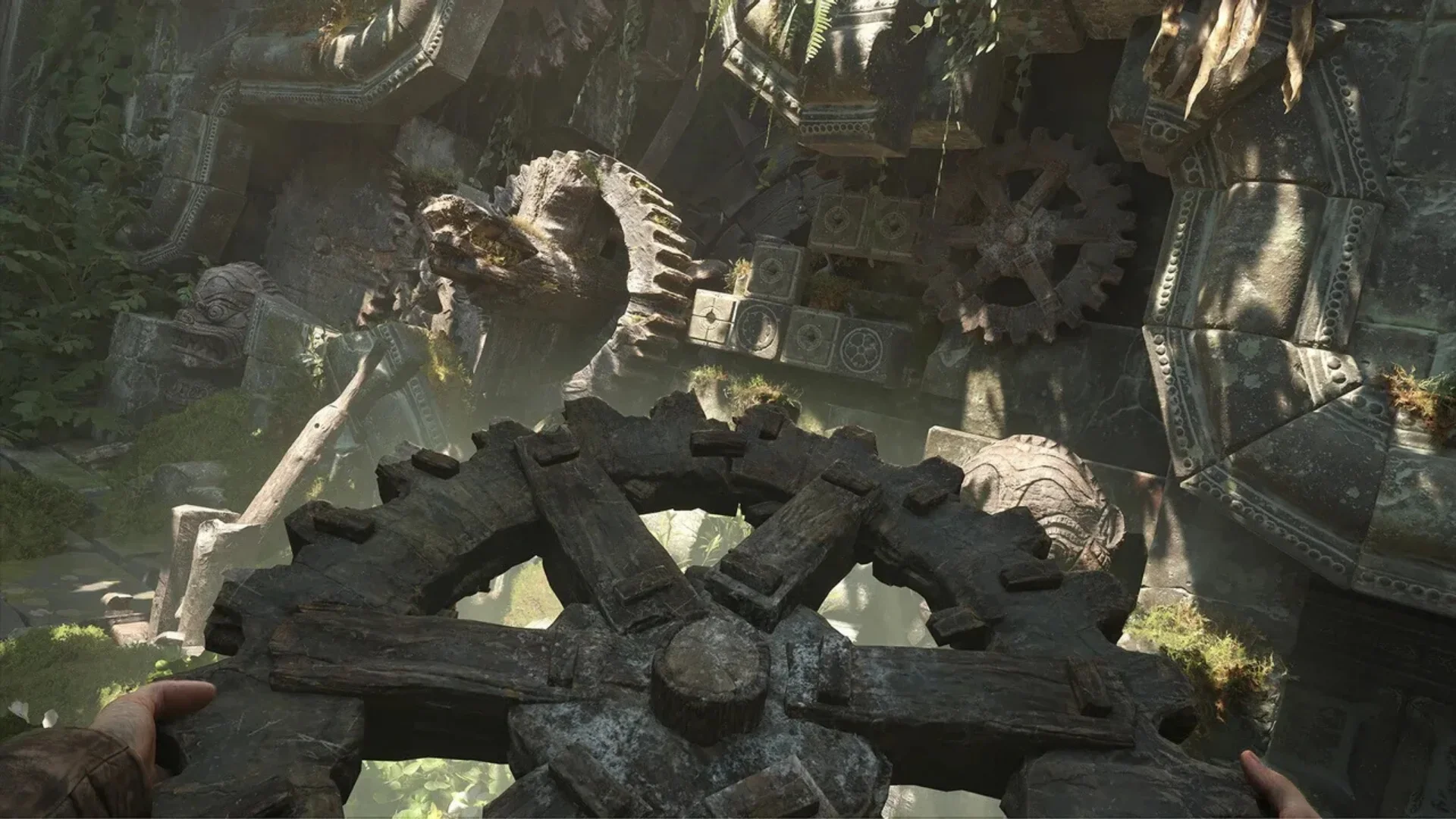
The puzzles are one of the game’s biggest strengths. They usually sit in the right place between readable and satisfying, with enough clue-gathering to make me feel involved without turning every room into a wall of obscure logic. I had to look, think, and connect details, but the game rarely made me feel like I was wrestling with nonsense.
The camera is a smart part of that design. It encourages observation, and it fits Indy’s academic side without slowing the game down too much. I liked using it to document artifacts, symbols, and hints because it made investigation feel like part of the role rather than a separate mechanic.
The best puzzles also carry the tone of the films. They feel ancient, theatrical, and slightly dangerous, but not so overdesigned that they stop feeling like physical spaces. I believed in them just enough to enjoy them. That is the line this game keeps walking well.
The story feels like a missing film
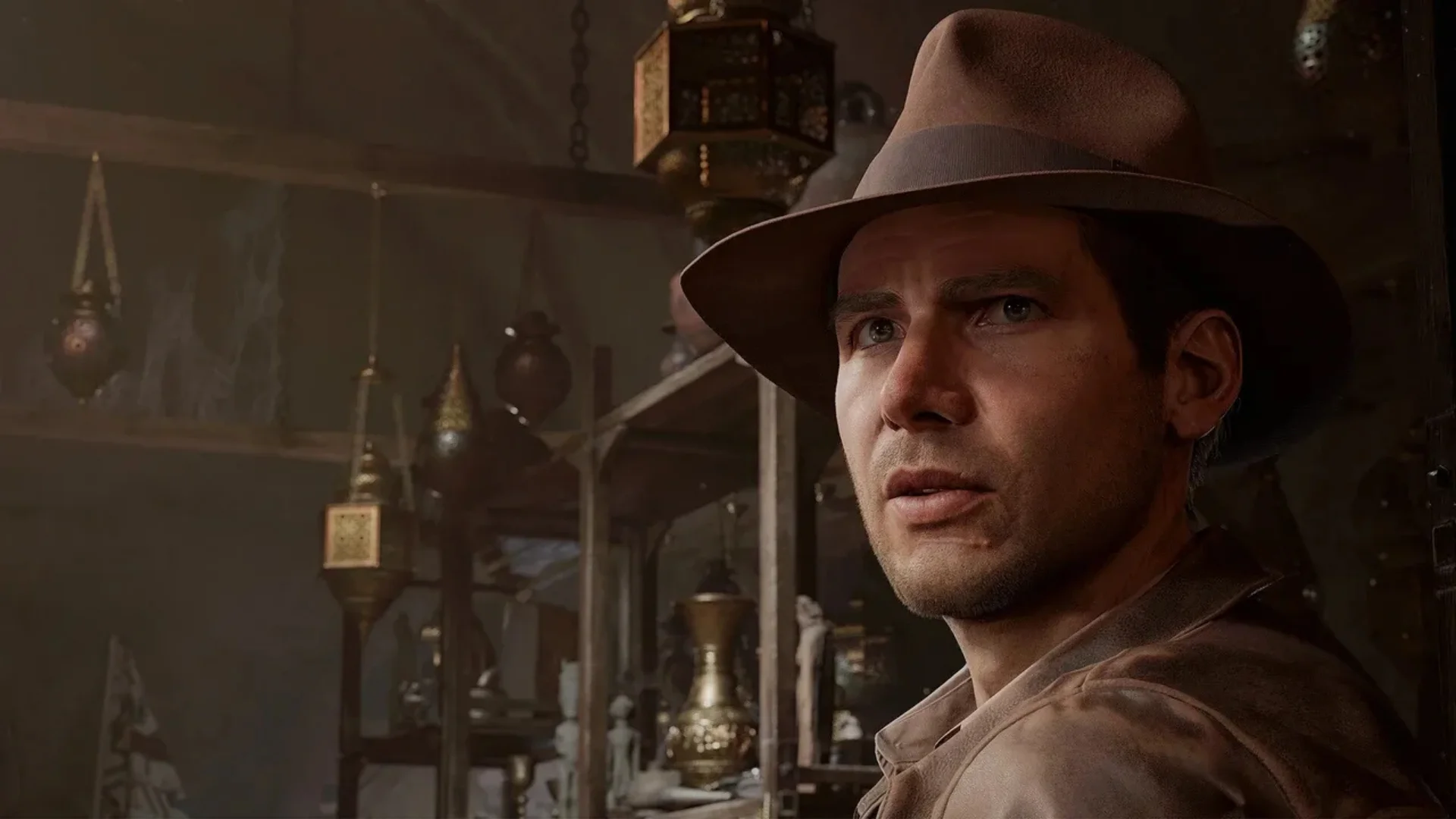
The story works because it does not treat the license like decoration. It understands the cadence of an Indiana Jones adventure: the academic opening, the stolen artifact, the globe-trotting mystery, the rival powers chasing something they do not fully understand, and the final sense that history is always stranger than the people trying to exploit it.
Troy Baker’s performance does a lot of heavy lifting, but the game also gives him strong material. Indy sounds tired, amused, irritated, and curious in the right proportions. The supporting cast gives the journey enough warmth, and the villains fit the pulpy tone without dragging the story into parody.
It can still overextend itself. Some stretches are stronger than others, and not every dramatic beat hits with the same force. But the overall adventure feels authentic without becoming a museum piece. It captures the spirit of the older films while still working as a game with its own pace and structure.
The Great Circle belongs beside the films
Indiana Jones and the Great Circle is not flawless. The combat can get clumsy, stealth has soft edges, and some action-heavy moments are less interesting than the exploration around them. But the game understands Indy in a way that matters more than perfect systems. It makes curiosity feel active. It makes trouble feel funny until it becomes dangerous. It makes ancient places worth touching, reading, photographing, and getting lost in.
I would recommend it to players who want an adventure game first and an action game second. Anyone expecting a slick shooter may find it uneven, but fans of puzzles, exploration, stealth, and old-fashioned pulp adventure have a lot to enjoy here. The Great Circle is the rare licensed game that does not just borrow the costume. It understands the rhythm, and that is why it works.
Discussion
0We want to hear from you. Share your perspective in the comments below, and please keep the conversation respectful.
Log in to join the discussion - vote, reply, and share your take.
Log In