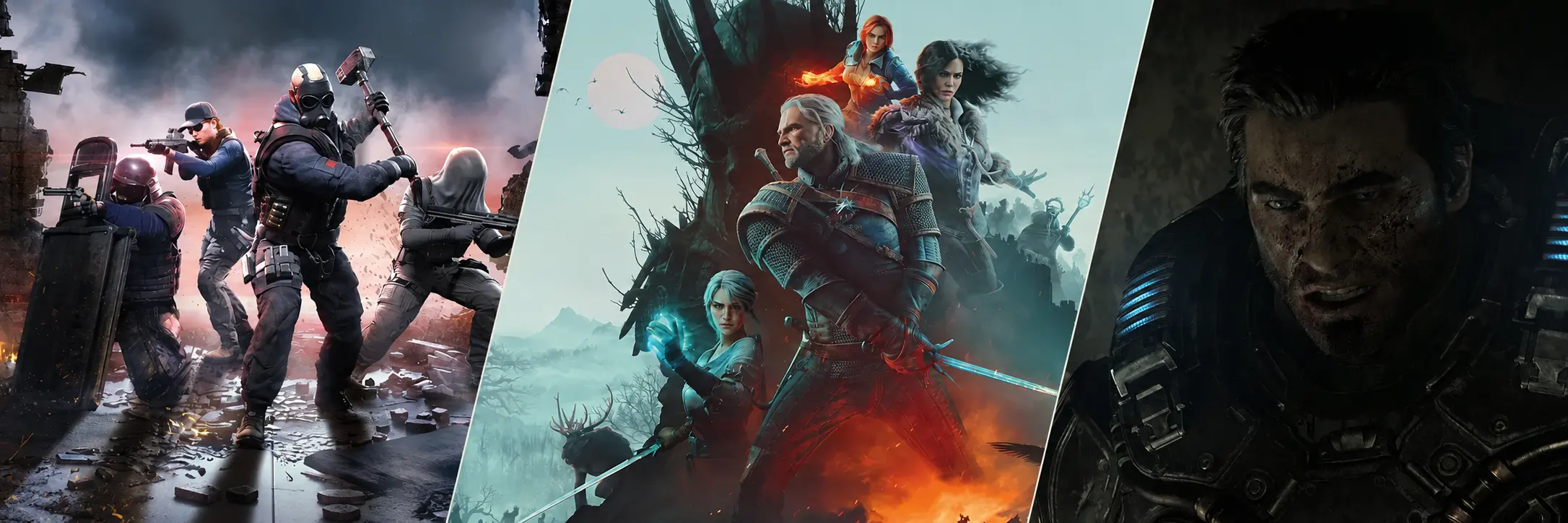
Gamescom Opening Night Live 2026 made reinvention the main event
Geralt returned twice, Rainbow Six became turn-based, and familiar names earned their spotlight by refusing to stand still.
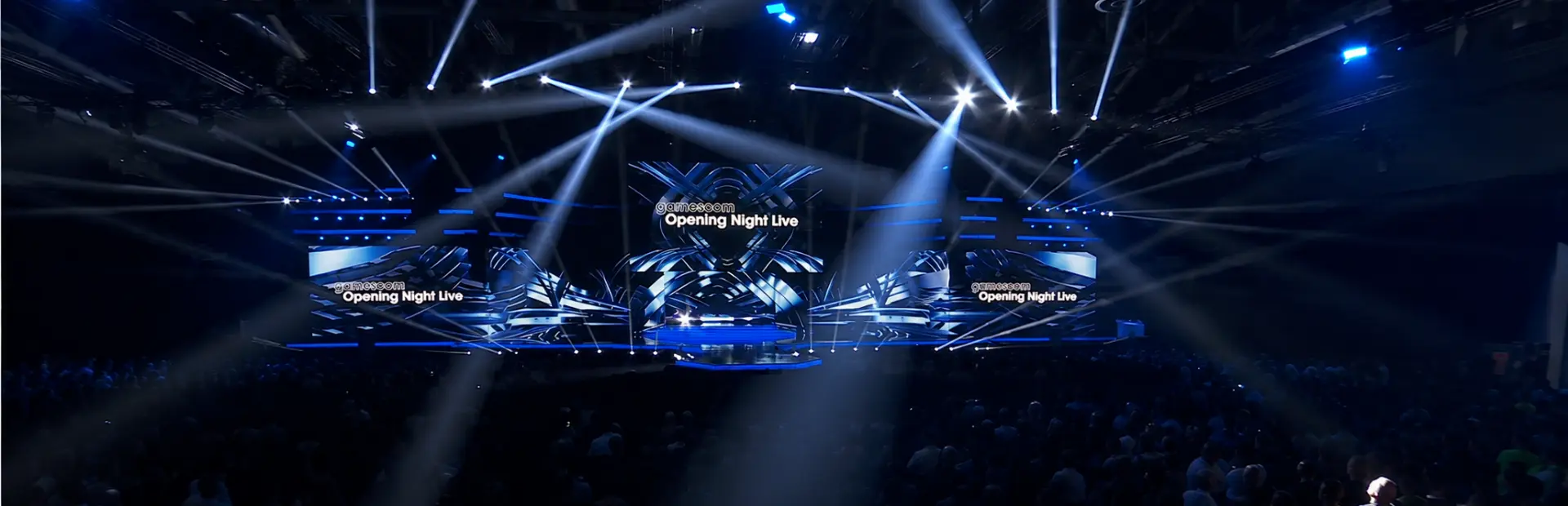
Gamescom Opening Night Live 2026 tried to fit nearly 70 games into one evening. At that scale, a complete recap quickly becomes a list of logos, dates, and trailers competing for the same few seconds of attention. The more useful question is which announcements actually changed how a game or series should be understood.
The strongest moments shared a pattern. They did not depend on a familiar name alone. Instead, they changed genre, visual identity, scale, or the terms of a return. That made reinvention the show's clearest theme, even when the biggest publishers were working with worlds players already knew.
The Witcher 3 returned with two reasons to care
CD Projekt Red closed the show by turning one return into two. The Witcher 3: Wild Hunt – Remastered will launch on September 29, 2026, bringing the RPG to Nintendo Switch 2 and Battle.net alongside upgraded versions for PC, PlayStation 5, and Xbox Series X|S. Existing owners on qualifying platforms will receive the remaster as a free upgrade, while Hearts of Stone and Blood and Wine will be included at no extra cost.
The value is obvious, but the extent of the work matters more. CD Projekt Red has outlined revised combat and movement, better mount handling, altered monster behavior, a rebuilt skill tree, transmog, new finishers, and expanded photo tools. That list suggests an attempt to address the parts of Geralt's adventure that have aged, not merely sharpen its textures. The challenge will be preserving the deliberate rhythm of the original while making its rougher systems feel less stubborn.
The more surprising announcement was The Witcher 3: Wild Hunt – Songs of the Past, a paid expansion planned for 2027. Co-developed with Fool's Theory, it sends Geralt and Dandelion to Letten, Dandelion's homeland, with new monsters, mutagens, and a chain weapon built for crowd control. Returning to a finished game after more than a decade is risky, but pairing a free modernization with a genuinely new journey gives old and new players different reasons to come back.
Rainbow Six Tactics slows the breach down
Rainbow Six Tactics is a smarter spin-off than another attempt to imitate Siege. Ubisoft is taking the series' familiar Operators, gadgets, destructible environments, and planning phase into a single-player, turn-based tactics game. Players act as Six, make strategic decisions at headquarters, and deploy four-Operator squads across hostage rescue, bomb disposal, and target elimination assignments.
The shift sounds dramatic, yet it fits the fantasy that Rainbow Six has always sold. Breach Planning allows synchronized actions before a room is entered, while 15 Operators bring individual abilities, equipment, and skill trees. More than 45 locations should give those tools room to interact. Real-time multiplayer rewards communication under pressure. Turn-based play can instead make every angle, wall, and gadget a visible decision. Ubisoft still needs to show how much variety exists beyond the three mission types, but the concept understands that tension can come from consequence as easily as speed.
Nodusfall gives HoYoverse a new visual language
Nodusfall was striking because it did not immediately look like a HoYoverse project. The studio known for the anime-inspired worlds of Genshin Impact, Honkai: Star Rail, and Zenless Zone Zero introduced a darker cooperative action game with realistic characters, heavy armor, and enormous mythological enemies. Built in Unreal Engine 5, it casts teams as Weavers trying to rebuild divine order across a world shaped by multiple mythologies.
That change in visual language is the announcement. Large enemies and cooperative battles are familiar trailer material, but HoYoverse stepping outside its established presentation creates a different set of expectations. The reveal did not confirm platforms, a release window, or enough systems to explain how the long-term game will work. It would also be premature to assume a business model based on the publisher's previous releases. For now, Nodusfall is compelling as evidence that one of gaming's most recognizable studios does not want to be trapped by its own house style.
Heroes III remembers that a remake needs an archive
Ubisoft's Heroes of Might and Magic III Remake has the easiest sales pitch of the night and one of the hardest jobs. The 1999 original remains a strategy touchstone because its factions, maps, campaigns, and multiplayer rules continued to support a community long after its technology became dated. Rebuilding that history in the Snowdrop engine will mean little if the remake only preserves its surface.
The initial feature list shows encouraging priorities. The 2027 release will include the original continent, Armageddon's Blade, The Shadow of Death, all nine factions, Hot Seat play, and online multiplayer for up to eight players. A new prologue, simultaneous turns, updated map-making tools, and an in-game hub for user-created content expand the package. Most importantly, Ubisoft says thousands of existing community maps and campaigns will remain compatible. Modern lighting and a free camera may make the reveal trailer, but continuity with decades of player-made work is the feature that could make this remake last.
Gears of War: E-Day makes history frightening again
Gears of War: E-Day was already scheduled for October 6, but its Opening Night Live story trailer gave the prequel a clearer threat. Set 14 years before the original game, it follows Marcus Fenix and Dom Santiago through the first Locust assault. Players know where that war leads, so surprise has to come from scale, character, and atmosphere rather than the outcome.
The Coalition appears to understand that limitation. The studio is presenting Emergence Day as horror before it becomes military history, using a darker tone and reimagined enemies to make familiar creatures feel dangerous again. The full game will support solo play, console split-screen co-op, and online squads of up to four, alongside Horde Siege and four-versus-four multiplayer. Those modes provide the expected Gears structure. The story's job is different. It must make a catastrophe players have discussed for years feel immediate instead of inevitable.
Familiar names worked because they refused to stand still
Opening Night Live 2026 did not solve the problem of showcase overload. Important games still flashed past too quickly, while expensive trailers sometimes offered more mood than information. Yet its best announcements made a case for themselves in mechanical terms. Rainbow Six changed pace, HoYoverse changed style, Heroes III protected its community history, and The Witcher 3 combined preservation with expansion.
That is a stronger result than a night built entirely around unexpected sequels. Recognition may earn the first cheer, but change gives the announcement somewhere to go after the stream ends. Gamescom's opening showcase was at its best when it treated nostalgia as a starting point, not the finished product.
Tagged In
Discussion
0We want to hear from you. Share your perspective in the comments below, and please keep the conversation respectful.
Log in to join the discussion - vote, reply, and share your take.
Log In