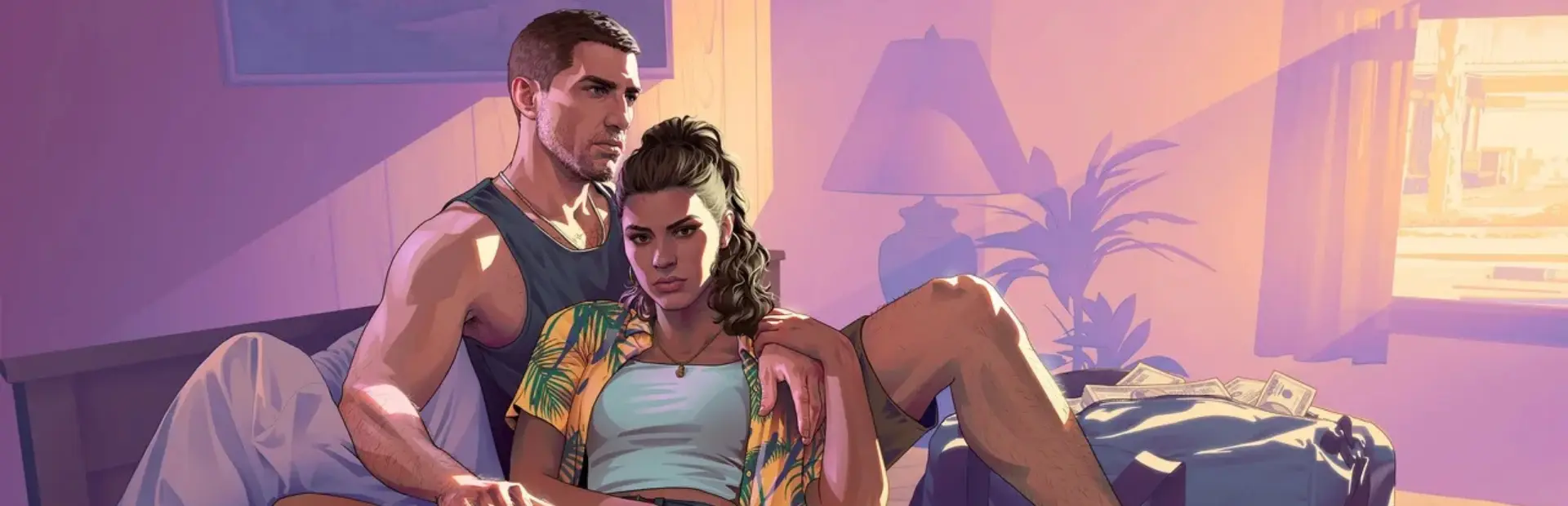
The 8 Biggest Reveals From GTA VI's Extended Look
Rockstar's longest look at Grand Theft Auto VI yet finally showed how Jason and Lucia play, how police hunt them, and just how much more simulation is hiding beneath the chaos.
For almost three years, Rockstar has sold Grand Theft Auto VI through snapshots. A convenience-store robbery here, a packed Vice City beach there, Jason and Lucia arguing about trust while Leonida supplied the inevitable alligators, influencers, nightclubs, and deeply questionable local news stories. The August 27 Extended Look was different. Running for nearly 27 minutes and captured entirely from the PlayStation 5 version, it finally spent enough time with the game to show how many of those ideas connect once somebody has a controller in hand.
Some of its most important details were easy to miss between shootouts and spectacular views of Vice City. Rockstar is making car theft more involved, police can remember exactly what they are looking for, pedestrians have considerably more awareness of the player, and Jason and Lucia's relationship extends beyond cutscenes. Information released alongside the showcase also put startling numbers on the size of Rockstar's new world. With Grand Theft Auto VI now scheduled for November 19, 2026 on PS5 and Xbox Series X|S, these are the eight reveals that tell us the most about what Rockstar has actually been building.
1. The wanted system is much smarter than five flashing stars
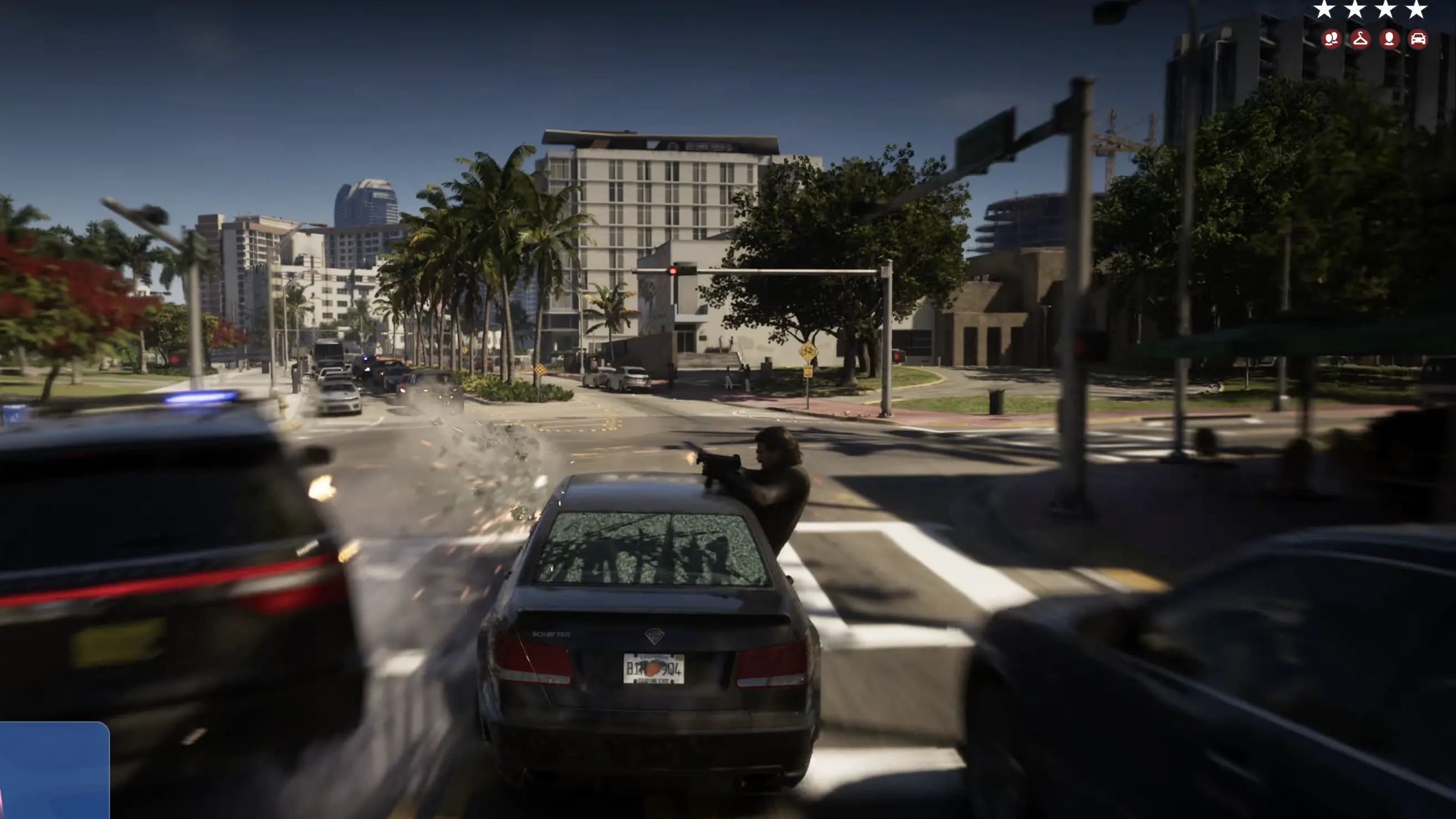
Escaping the police in older Grand Theft Auto games can eventually become a familiar routine. Break line of sight, get away from the search area, wait for the stars to disappear. GTA VI is adding another layer by making the police care about what they actually know.
Crimes first need to be witnessed or reported through an alarm. Once the police identify Jason and Lucia, icons underneath the wanted level can show that authorities recognize their faces, clothing, vehicle, and the fact that they are traveling together. During the Extended Look, the pair ditch a known vehicle and continue their escape in another. A police cruiser subsequently passes without recognizing them. Rockstar North co-studio head Rob Nelson also says splitting Jason and Lucia up can reduce how easily officers identify the suspects they are searching for.
The six-star wanted level also returns after GTA V capped its system at five. More important than the extra star, however, is what happens before reaching it. Changing cars, covering faces, disappearing into alleys, and separating the protagonists now appear to be practical ways of managing a pursuit rather than role-playing flourishes. That could make committing a crime and escaping from it almost as important as the crime itself.

2. Stealing a car now involves actually stealing a car
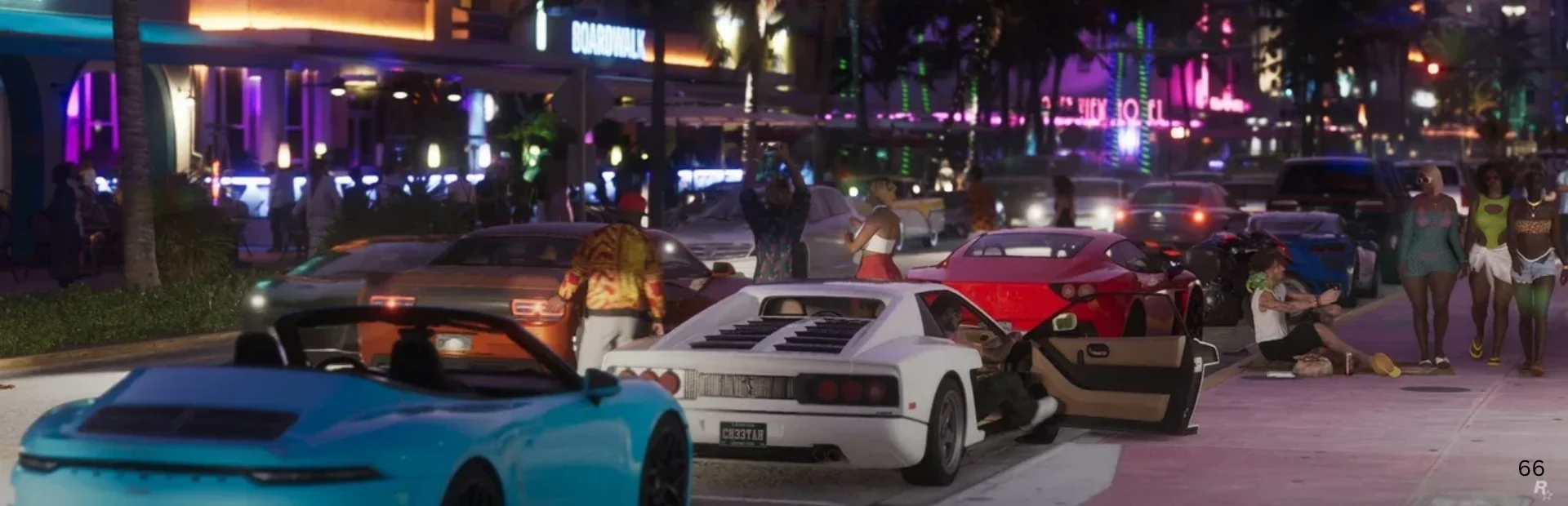
For a series with "Grand Theft Auto" in its name, taking vehicles has traditionally required surprisingly little thought. Walk up, press a button, get in.
The Extended Look shows Jason approaching a parked vehicle and receiving two choices. He can smash the window for the quick and noisy approach, or use a slim jim through a brief interaction to unlock it more discreetly. Rockstar says other vehicles will require different equipment, with some remaining inaccessible until players acquire the necessary tools through progression. Cars can have alarms and trackers, while a phone app can provide information about what is required to steal one and how much it might be worth.
Drivers themselves remain fair game, so Rockstar is not turning GTA VI into Locksmith Simulator. A player who wants a particular car can still drag somebody out of the driver's seat.The difference is that parked vehicles are becoming little problems to solve. Whether a car has an alarm, whether breaking a window attracts attention, whether the police already know what vehicle you are using, and whether you possess the right tool can all feed into the larger crime system.
It is a small mechanical change with potentially enormous consequences in a game where stealing cars happens constantly.
3. Jason and Lucia really do function as a criminal pair
Rockstar confirmed two protagonists long ago, but the Extended Look finally showed how naturally control can move between them. One sequence follows Lucia as she base jumps from a skyscraper before the player switches to Jason elsewhere in the city. The transition only lasts a few seconds. Other missions show one character fighting while the other moves independently, Lucia communicating with Jason through an earpiece, and the pair covering one another during shootouts.
The showcase also suggests that some jobs may send only one protagonist while others are built specifically around the two operating together. Their relationship is not purely mechanical either. Rockstar says Jason and Lucia will always remain partners in crime, but the romantic side of their relationship is something the player can nurture or largely ignore.
Those choices can affect how their story develops without turning the campaign into a dating game with a failure state for saying the wrong thing. GTA V used Michael, Franklin, and Trevor largely as three separate perspectives that frequently converged. GTA VI appears much more interested in what happens when two playable characters share a life, a home, jobs, problems, and the consequences of each other's behavior.
4. Rockstar is bringing Red Dead Redemption 2-style consequences into GTA
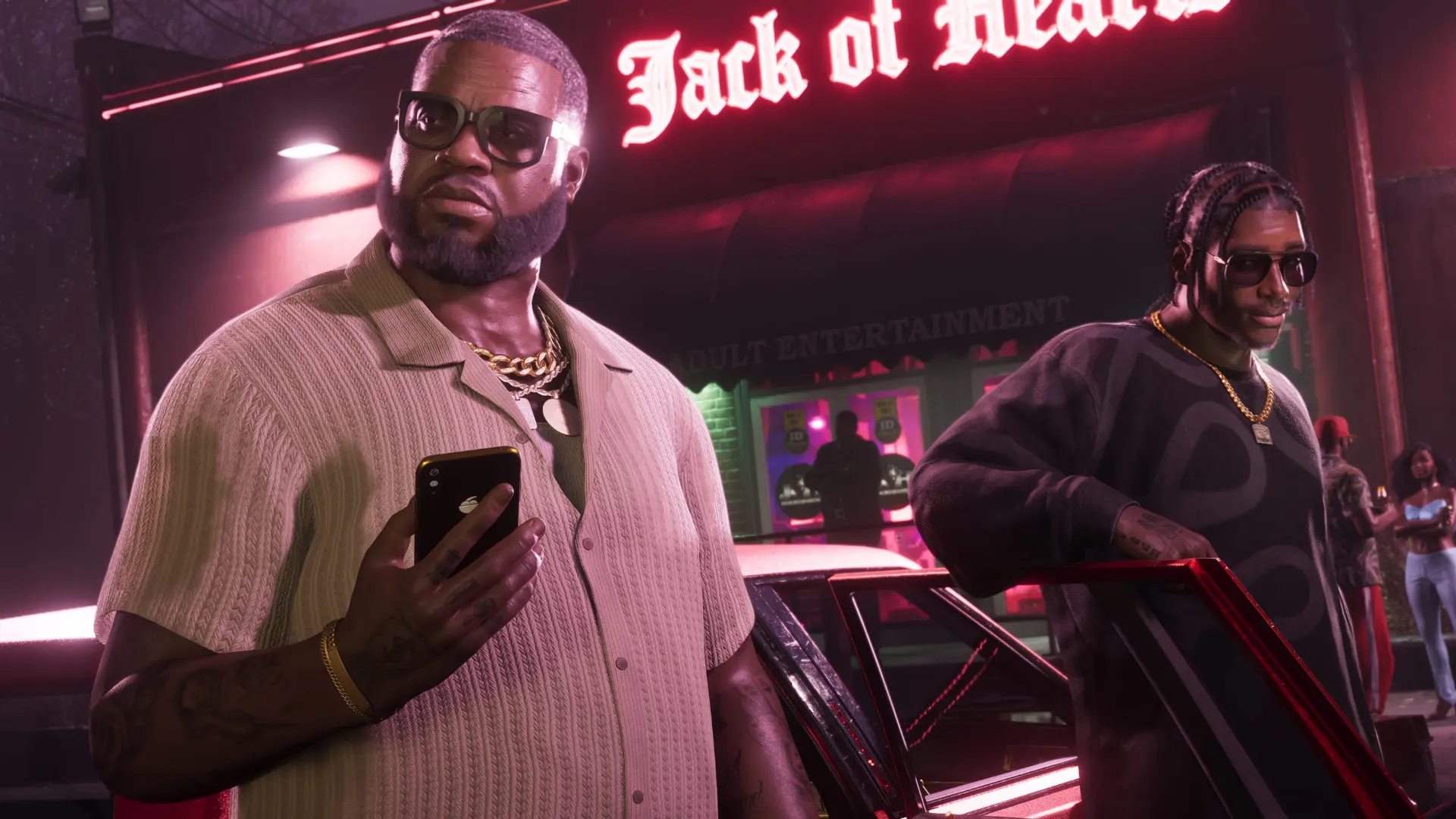
The most revealing new system might not be visible on the HUD at all.
Rockstar says GTA VI keeps a "criminal profile" influenced by how players behave. Necessary violence during a mission is treated differently from repeatedly escalating situations or hurting people when there was no need to do so. Nelson compared the thinking behind it with Red Dead Redemption 2's Honor system, although Rockstar has not yet explained every consequence attached to the new mechanic.
That sounds like a deliberate response to one of Grand Theft Auto's oldest contradictions. Rockstar wants Jason and Lucia to function as recognizable characters inside a serious crime story, but GTA players have always been free to leave a mission and immediately turn the nearest intersection into a disaster zone. GTA VI is not removing that freedom. Rockstar instead appears to be making the world remember what kind of criminal the player chooses to be.
Nelson has also said players will be less uniquely powerful than in earlier games. NPCs can be armed, dangerous, unpredictable, and capable of initiating violence themselves. Leonida is not intended to sit passively until the player decides to cause trouble. For a series famous for giving players a sandbox and encouraging them to wreck it, adding persistent consequences could be one of GTA VI's biggest changes.
5. NPCs notice what you are doing now
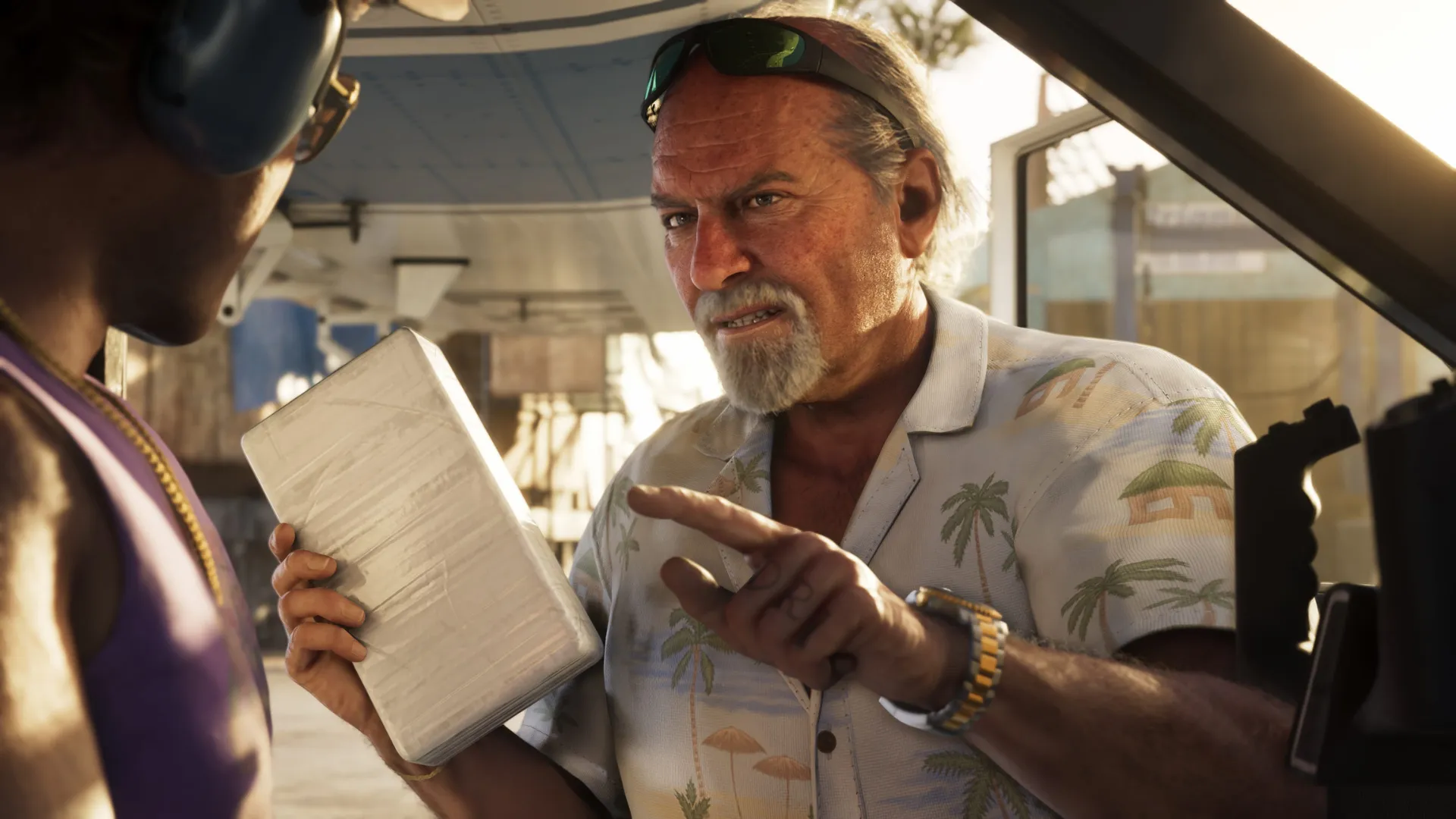
Rockstar spent much of Red Dead Redemption 2 experimenting with ways to make strangers feel like people rather than walking scenery. Players could greet them, antagonize them, calm situations down, or provoke completely unnecessary fights. That interaction system is returning in a considerably denser setting.
The Extended Look shows contextual options appearing around characters and animals. Jason can interact with a dog using several different responses rather than simply triggering one canned animation. When Lucia approaches a store wearing a mask and carrying a gun, nearby pedestrians notice enough to quietly move away. Rockstar says people can also react if the player stands too close and listens to their conversation, potentially becoming suspicious or aggressive because somebody is obviously eavesdropping.
Vice City makes that system much more ambitious than it was in the countryside of Red Dead Redemption 2. Streets, clubs, stores, beaches, apartment buildings, and public events can contain far more people in much tighter spaces. Rockstar is effectively trying to take its most detailed NPC system and drop it into a packed modern city. If those reactions remain convincing once players are free to deliberately stress the simulation, wandering around Vice City could become as entertaining as following its missions.
6. Leonida is full of things that have nothing to do with the story
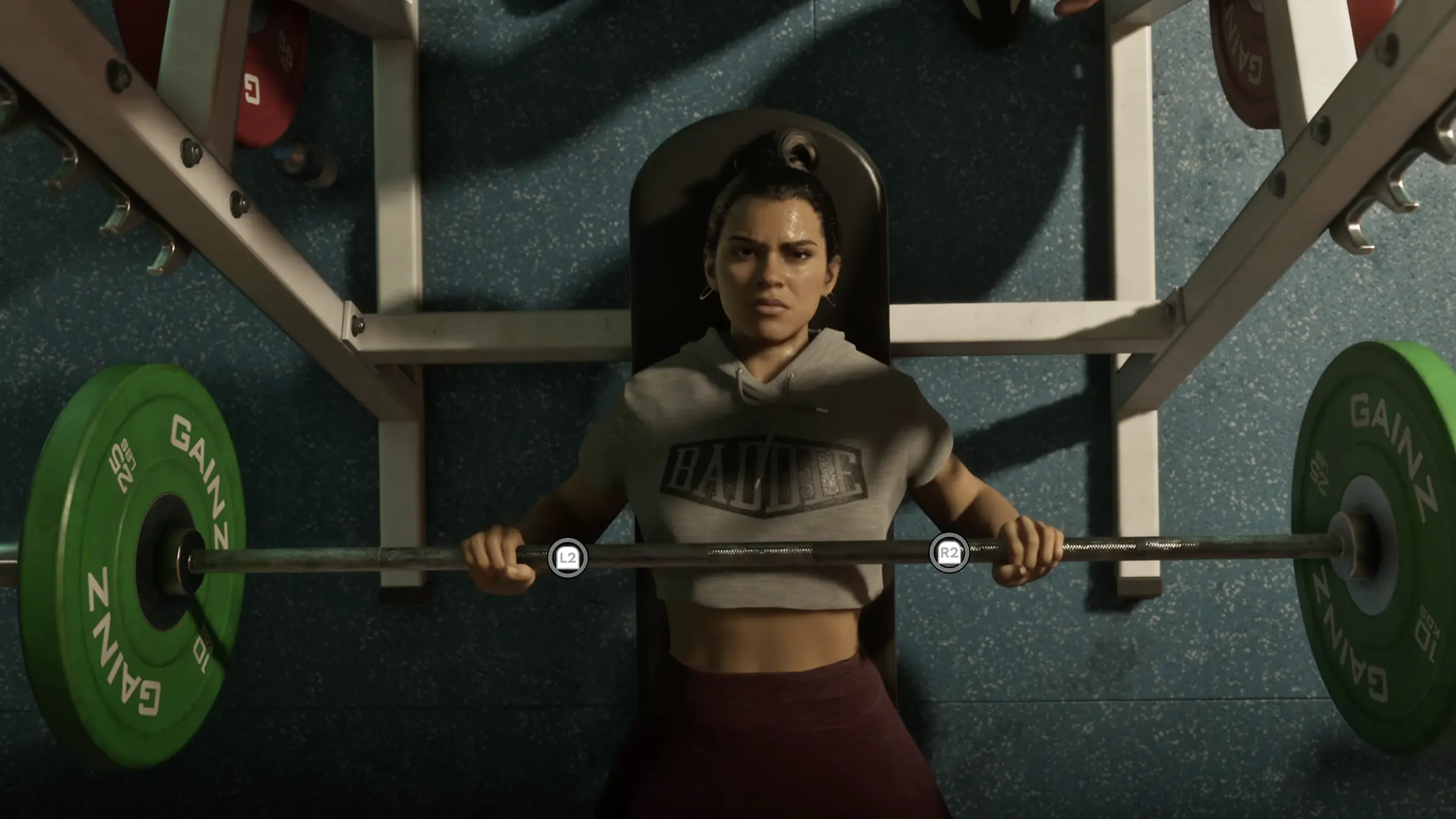
Rockstar used one stretch of the Extended Look almost like a challenge to anyone planning to finish GTA VI quickly. Jason and Lucia can work out at a gym, shoot basketballs, drive airboats through the wetlands, use jet skis, kayak, race cars, attend clubs, explore underwater with scuba equipment, and base jump from skyscrapers. The footage also shows backyard wrestling, street racing, public transportation, nightlife, and the usual assortment of robberies and questionable distractions.
That breadth matters because Rockstar appears to be treating ordinary routines as part of the fantasy. Nelson has spoken about players being able to wake up, eat, shower, exercise, get dressed, and simply go somewhere rather than constantly moving between missions. Food and other routines can have mechanical effects, and the protagonists' bodies can change according to habits involving eating, exercise, and sleep.
That philosophy is much closer to Red Dead Redemption 2 than GTA V. Rockstar is not merely building activities to complete. It wants Leonida to be somewhere players occasionally waste an evening without progressing anything at all. Considering how many years some people spent doing exactly that in GTA V, Rockstar knows what it is encouraging.
7. GTA VI is enormous even by Rockstar standards
The trailers already made Leonida look large. The figures released around the Extended Look put that scale into perspective. Rockstar says GTA VI's map is roughly three times the size of Red Dead Redemption 2's world, while reporting from the preview event indicates Vice City itself is around twice the size of Los Santos. Rockstar North's Rob Nelson also completed a personal playthrough in February that lasted approximately 80 hours. That run included the story and some optional objectives with narrative consequences, so 80 hours should not be treated as an official average campaign length.
The more interesting part is what Rockstar appears to be doing with all that space. The showcase moves from dense Vice City streets to swamps, waterways, beaches, highways, clubs, apartments, luxury buildings, industrial areas, and smaller communities without presenting the state as one enormous city surrounded by empty wilderness. Raw map size has never been what makes Rockstar's worlds memorable. Density does. A three-times-bigger map only matters if there is a reason to stop the car. The Extended Look spent 26 minutes demonstrating that Rockstar has plenty of ideas for making players stop.
8. This was all running on a standard PS5
Rockstar saved perhaps the most technically impressive detail for the simplest piece of text: the entire Extended Look was captured from the PlayStation 5 version of the game. Not a high-end PC build and not footage identified as coming from PS5 Pro. Rockstar's official page specifically states that the presentation was captured entirely from in-game footage on PlayStation 5.
That matters after watching the density of what Rockstar showed. Streets are crowded with pedestrians and vehicles. Interiors transition into gameplay without an obvious visual collapse. Police cars crash through scenery during pursuits. Waterways are packed with reflections and wildlife. Character switching sends the camera soaring across the city before dropping back into play.
There are still technical questions Rockstar will need to answer before launch, and a carefully edited showcase cannot tell us how the finished game will perform under every circumstance. But there is no longer any question that the absurdly detailed Vice City shown in previous trailers is intended to resemble the game players will actually control.
That might be the Extended Look's biggest achievement. Rockstar did not need another montage proving that GTA VI has expensive sunsets. It needed to show that there was a game underneath them.Now we finally have a much better idea of what that game is.
Tagged In
Discussion
0We want to hear from you. Share your perspective in the comments below, and please keep the conversation respectful.
Log in to join the discussion - vote, reply, and share your take.
Log In